Brushes and a hopper — pushed, or towed behind a tractor
The best lawn sweepers for 2026
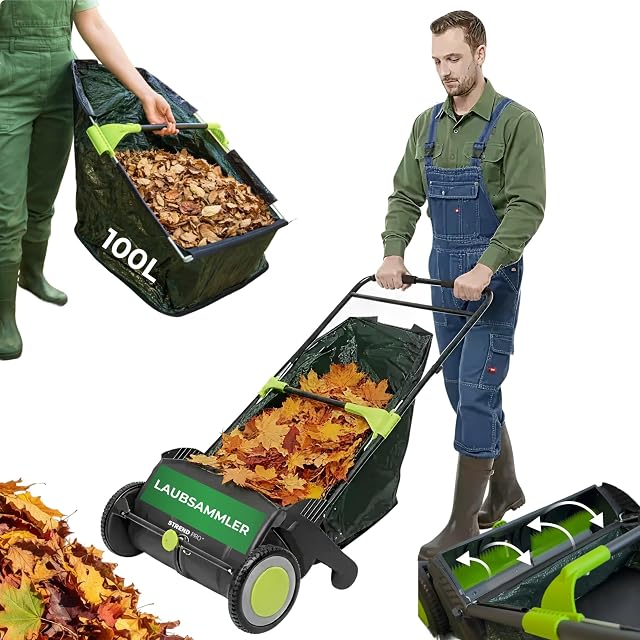
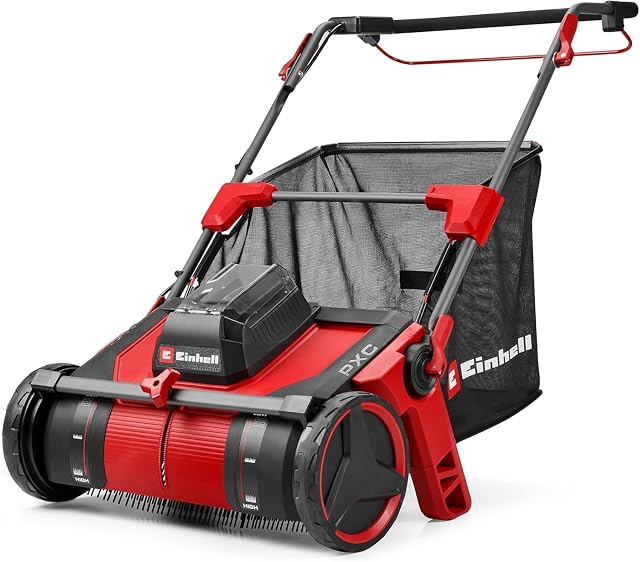
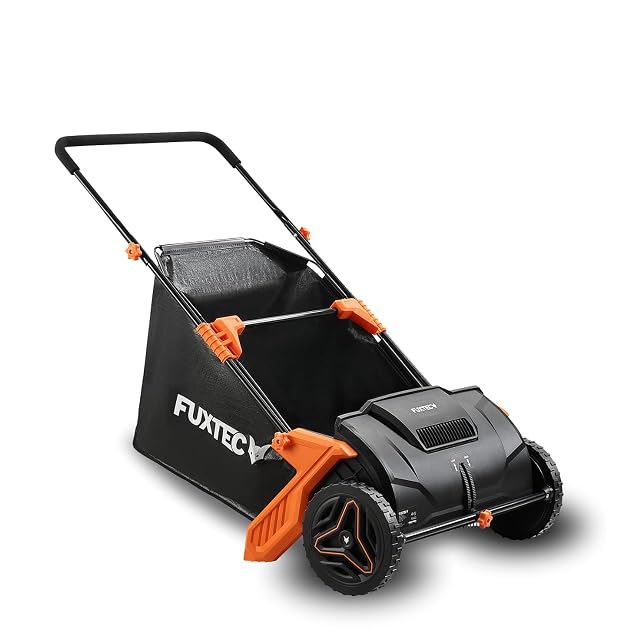
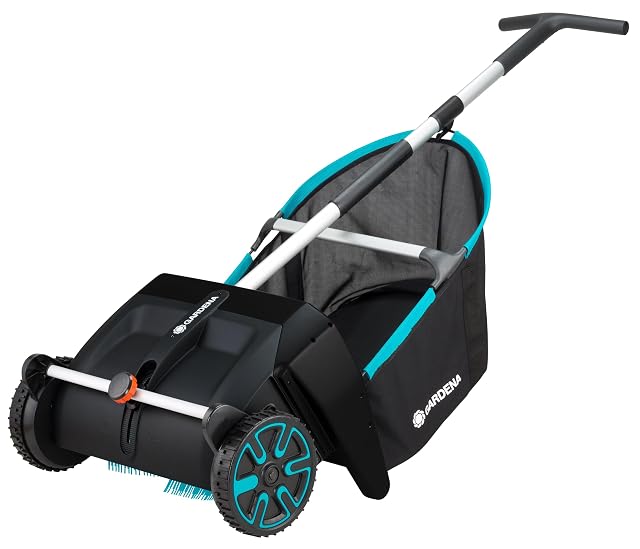
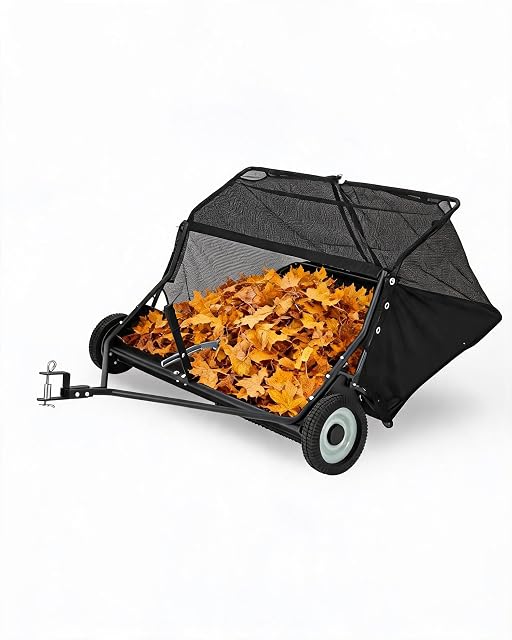
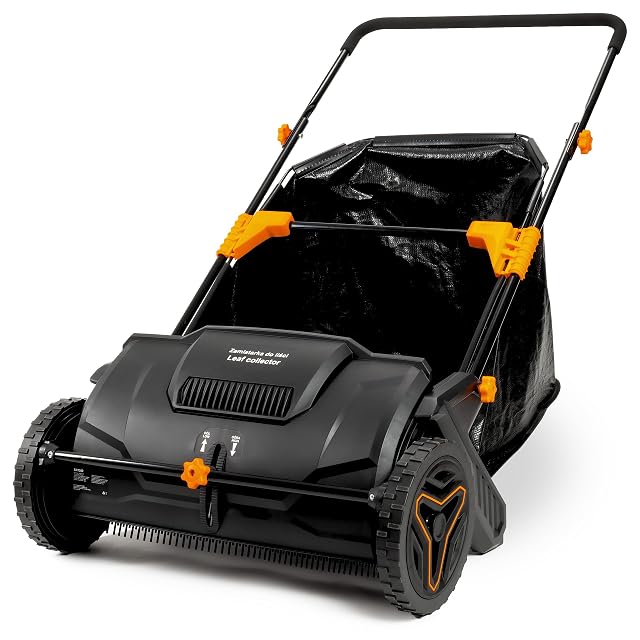
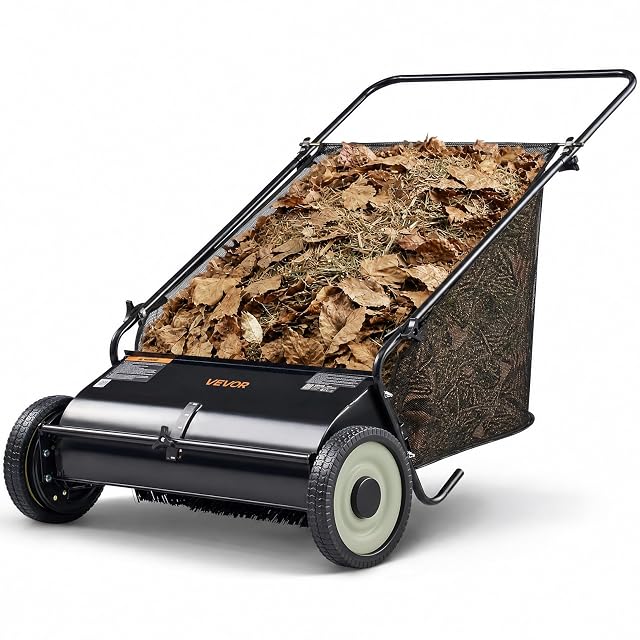
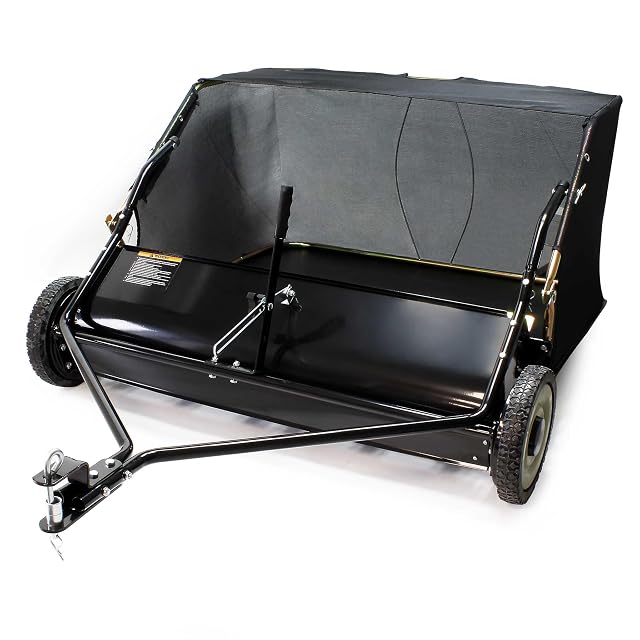
A lawn sweeper is a hopper on wheels with brushes underneath: the wheels turn the brushes, the brushes flick leaves, cuttings and moss up into the bag, and nothing is powered. That mechanical simplicity is why the shelf contains machines separated by a factor of five in every dimension, and why the first thing to establish is which of the two families a listing belongs to. The pushed sweepers run 53 to 66 cm of working width with a catcher volume around 100 litres, weigh little, and are walked across a lawn like a mower. The tow-behind ones run 96 to 120 cm and 340 to 566 litres, and are pulled by a ride-on: the same product category, a different afternoon, and a machine that is useless without something to tow it. The drive column is where that difference is written down. After that the shelf is about two things. The brushes — how many, and whether they are adjustable — because a four-brush system flicks more consistently than two, and the bristles are what wears. And the height adjustment, which is the setting that decides whether the machine sweeps the lawn or scrapes it: too low and the brushes drag and shed, too high and the leaves stay where they were. A sweeper competes with a rake and with the vacuum function of a blower, and it beats both on one axis only: area covered per hour, with no power source at all. We compare working width, drive, catcher volume, brushes, height adjustment and weight.