Skip to content

Choosing a garden shredder

Shredder listings compete on a single number: maximum branch diameter, from 44 mm to 120 mm. It is the least useful figure on the shelf, because it is measured on whatever material suits the machine and a dry hardwood branch at two thirds of the rating will stop the same shredder. The distinction that decides the purchase is the cutting system, and it splits these six almost in half.

The number everybody quotes and nobody can use

Maximum branch diameter. Across these six: 44 mm, 44 mm, 45 mm, 45 mm, 89 mm and 120 mm.

It is the headline on every listing and it is close to useless on its own, for one reason: it is not a property of the branch, it is a property of the wood.

A green willow or buddleia shoot at the stated diameter goes through easily — it is soft, wet and fibrous, and it crushes.

A dry seasoned hardwood branch at two thirds of the same diameter will stall the same machine. It does not crush; it has to be cut, and it is hard enough to resist.

One listing on this shelf is honest about exactly this. It states 76 mm and then, in the same breath, 45 to 60 mm on hardwood — which is the most useful sentence in the family and the only place the gap is admitted.

The distinction that actually decides it

Roller or blade.

A roller — three of these six — is a slowly turning toothed cylinder that draws material in against a fixed plate and crushes it. One publishes a three-stage planetary gearbox behind it, which is how a small motor makes a great deal of torque at low speed.

What a roller does well: woody prunings. It is self-feeding — you put a branch in and walk away — it is quiet, and it produces crushed, splintered material that rots quickly. Two of these publish a noise figure or a claim about it, which nothing else on this shelf manages.

What a roller does badly: soft leafy material. A handful of wet hedge trimmings compacts against the roller instead of breaking, and the machine stops. That is the single failure mode of the type, and it is why two of the three roller machines here publish an answer to it: automatic reverse on a blockage and a supplied plunger on one, and a reversible direction on another.

A blade or flail system — three of these — chops at high speed. One publishes a flail drum at 2 400 rpm, one publishes 2 reversible blades, and one publishes a self-feeding blade system.

What a blade does well: everything green, fast. Hedge trimmings, leafy prunings, soft growth — the material a roller jams on.

What it does badly: it is loud, it needs feeding rather than self-feeding, and it throws material. It also dulls, and a dull blade shredder stops working long before it stops turning.

So the purchase follows the garden, not the rating

A garden of shrubs and fruit trees produces woody prunings in winter. That is a roller.

A garden of hedges produces soft green material in volume. That is a blade.

A garden with both — which is most gardens — ends up wanting the roller and accepting that the hedge trimmings go on the compost heap instead, because that is where they should go anyway.

Mains or petrol, and the figure that answers it

Not power. Weight.

The four mains machines here are 2500 W, 2800 W, 2800 W and 3000 W, and not one of them publishes a weight.

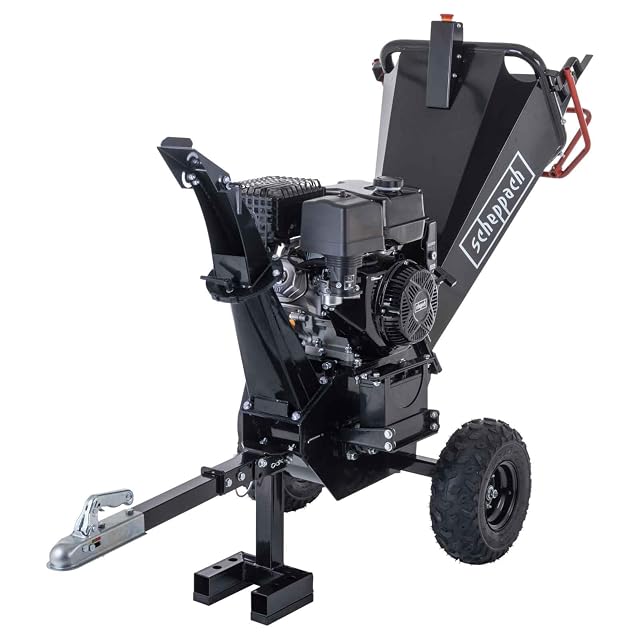
The two petrol machines publish 389 ccm at 9.7 kW / 13 PS, and 420 cm³ at 9 kW / 12 PS with 120 kg — which is the only weight anywhere in this group.

One hundred and twenty kilograms is the number that decides the purchase. A machine that weighs as much as a person is one that lives in a shed and is dragged out twice a year for a day of work. It has a ball hitch and folding support legs for exactly that reason, and the other petrol machine has pneumatic tyres and a drawbar.

A mains roller at 2800 W is a machine that stands next to the compost heap all season and takes a branch whenever one appears. That is a different relationship with a tool, and for most gardens it is the more useful one.

The collection box, which is not a detail

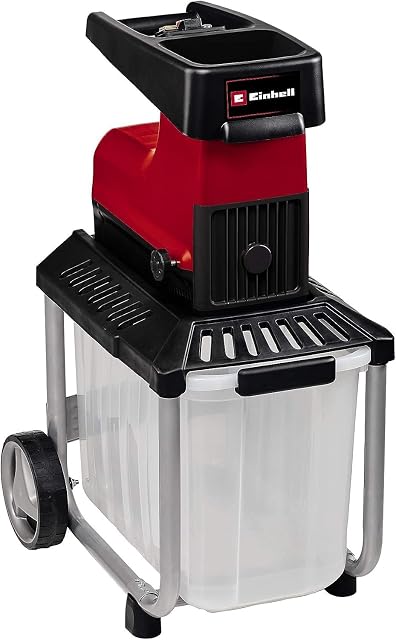
Four of these publish one: 60 L transparent, 60 L with an integrated safety switch, 60 L bag, and 45 L bag.

The transparent one is the interesting specification, and the reason is mechanical rather than cosmetic.

A full box is how a shredder jams. Material backs up from the box into the chute, the chute into the cutting chamber, and then the roller stalls on its own output rather than on a branch.

A box you cannot see into gets emptied either too often or too late, and too late is the one that causes the jam. One listing here publishes a transparent box, and two publish a safety switch on it — which stops the machine when the box is removed, and which is the part that stops people reaching into a running chute.

The output, and what to actually do with it

Volume reduction is the point. A trailer-load of prunings becomes a wheelbarrow of chip, and that alone justifies the machine for anybody who has driven to a tip.

Fresh chip on a bed is not neutral. Woody material rotting down consumes nitrogen, and microbes take it from the surrounding soil — so a thick layer of fresh chip dug into a bed starves what is planted in it.

The fix is simple: stack it for a season and it becomes a soil conditioner rather than a nitrogen sink. Or spread it on the surface as a mulch, where it suppresses weeds and holds moisture and only affects the top centimetre.

On a path, fresh chip is fine immediately, and it is the best use for the coarse fraction that a roller produces.
The short list, and the reasoning behind its order

  1. Einhell GC-RS 60 CB

    2800 W roller, 45 mm branches, transparent 60 L box, reversing

    A roller machine with a transparent 60-litre box, a reversing switch and a safety cut-out when the box is removed.

    Best for: A medium garden where the shredder is used in long sessions and the box will be emptied repeatedly

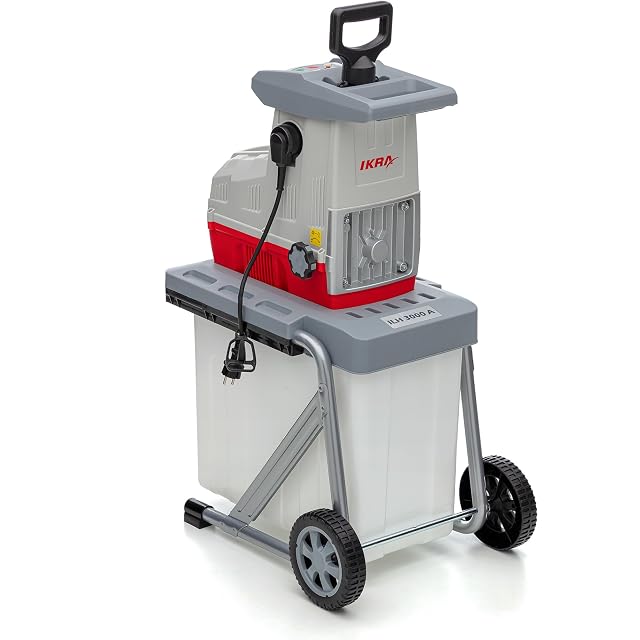
  2. IKRA ILH 3000A

    3000 W roller, 44 mm, 3-stage planetary gearbox, 60 L box

    A three-stage planetary gearbox, a kickback-free roller, automatic reverse on a jam, and a storage compartment for the plunger.

    Best for: Regular, heavy hedge and shrub work where the machine will be fed continuously and left to pull

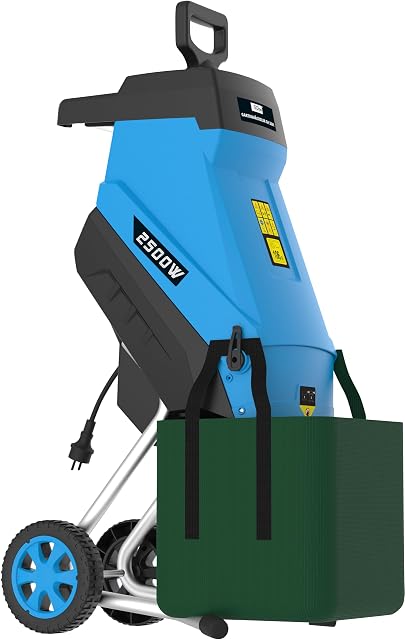
  3. Güde GH 2501

    2500 W blade system, 45 mm branches, 45 L bag, self-feeding

    A blade shredder with self-feeding, overload protection and a 45-litre bag — 45 mm branches on the cheapest machine here.

    Best for: Occasional hedge and shrub prunings on a small garden, at the lowest entry price

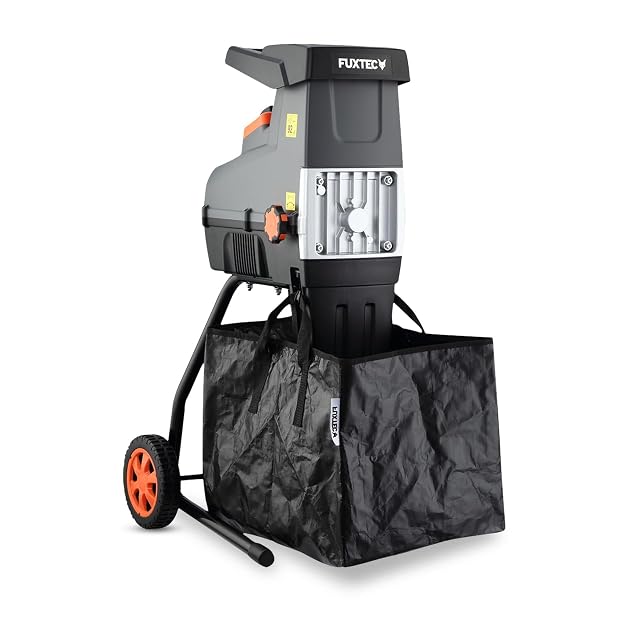
  4. Fuxtec FX-EGH2800T

    2800 W roller, 44 mm branches, 92 dB(A), 60 L bag, reverse

    The only shredder here with a published noise level — 92 dB(A) — on a quiet roller system with reverse and an adjustable counter-plate.

    Best for: A garden with neighbours and a lot of hedge trimmings, where the noise and the self-feeding both matter

What this guide tends to leave open

Roller or blade?

A roller crushes woody material slowly, quietly and self-feeding, and it jams on soft leafy prunings. A blade or flail chops fast and loudly and handles green material well, and it needs feeding. Three of these six are rollers, and the choice follows from what your garden produces rather than from the specification.

Is the maximum branch figure reliable?

It is the makers' own maximum on material that suits them. Across these six it runs 44, 44, 45, 45, 89 and 120 mm — and one listing elsewhere on the shelf is unusually honest, stating 76 mm and then 45 to 60 mm on hardwood. Dry seasoned wood at two thirds of any rating will stop a shredder that manages green willow at the full figure.

Do I need petrol?

Only for genuinely large material. The four mains machines here take 44 to 45 mm, which covers almost all domestic pruning; the two petrol ones take 89 and 120 mm, and one of them weighs 120 kg. A 120 kg shredder is a machine you pull out twice a year, not one you keep by the compost heap.

What do I do with the output?

Stack it and wait, or spread it. Fresh woodchip on a bed locks up nitrogen as it rots and is better left in a heap for a season first; a thin layer on a path is fine immediately. Either way the volume reduction is the point — a trailer of prunings becomes a wheelbarrow of chip.

Why each one, and for whom

Einhell 3430635

For : A medium garden where the shredder is used in long sessions and the box will be emptied repeatedly

Main strength : A transparent box, so the fill level is visible without stopping

Main limitation : No noise figure, on a machine sold as a quiet shredder

Read the full review →

IKRA 81002880-AZ

For : Regular, heavy hedge and shrub work where the machine will be fed continuously and left to pull

Main strength : The transmission is described, which nothing else here does — and on a roller it is the whole machine

Main limitation : No noise figure, on a machine described as noise-reduced

Read the full review →

Güde 94372

For : Occasional hedge and shrub prunings on a small garden, at the lowest entry price

Main strength : Overload protection and a no-volt release, both stated — the machine will not restart by itself

Main limitation : A blade system is noisier than a roller, and no noise figure is published

Read the full review →

Fuxtec FX-EGH2800T

For : A garden with neighbours and a lot of hedge trimmings, where the noise and the self-feeding both matter

Main strength : The only published noise level on this shelf, and it is on the quiet type of machine

Main limitation : No weight published

Read the full review →

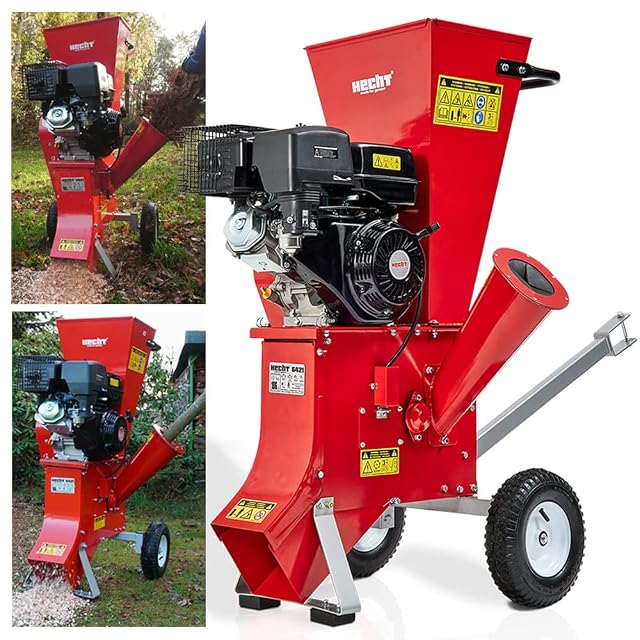
Hecht Häcksler Benzin

For : A smallholding or a large wooded garden, where the machine is towed to the heap

Main strength : A published drum speed, which only one other machine here gives

Main limitation : No weight at all, on a machine with a towing bar

Read the full review →

Scheppach 5904418903

For : A smallholding, a large wooded plot, or shared use between neighbours

Main strength : The largest capacity on the site, with the weight published alongside it

Main limitation : A 120 kg machine needs a vehicle and a place to live — this is not shed equipment

Read the full review →

Useful comparisons

Head-to-heads already published between two models from this guide or this aisle.

How this guide is built

The models here come from the catalogue of this site. Specifications are those published by the manufacturer and on the Amazon product page; prices are what Keepa reported on the date below, and both move. The ranking uses declared specifications, the balance of stated strengths and limitations, and price. No product on this site has been physically tested, and nothing here claims otherwise.

Last checked on

The tool we use ourselves

Model settled? Then find out whether the figure next to it means anything at all.

A mower gets bought when the grass is already too long, which is the worst possible moment to weigh up a price: demand on this shelf climbs from March and drops away after July, so a price struck through in May tells you nothing whatever about what the same reference cost in October. UniverTrack keeps a week-by-week record for each retailer, so a cut price can be set against one somebody really paid rather than one composed for the banner — and it says when ordering is genuinely the moment.

Real price historyBuy-now alertsAI buying assistant
Try free for 14 days →
No commitment · Cancel in one click · 5 languages