The property that matters is silence
A tap timer is a device whose entire value is realised while nobody is present.
Which inverts how it should be judged. The question is not what it does when it works — they
all open a valve on a schedule — but what happens when it does not, and whether you find
out.
The answer, across all five, is that nothing happens and you do not find out. A timer with
a flat battery does not water. A timer with a kinked hose waters into a kink. A timer whose
tap was left closed runs its programme perfectly against a shut valve.
None of these five reports back on whether water actually moved.
So the first decision is not the radio
It is what fails first, and on a tap timer that is the batteries.
One of these five publishes the relevant claim: standard batteries stated to last several
growing seasons, in a double-sealed compartment.
That second half is the one that matters. A tap timer sits outdoors, on a tap, in the rain,
for a whole season. Water reaching the battery contacts corrodes them, the contact resistance
rises, and the valve stops having enough current to open — mid-schedule, in the second week of
August, with nobody there.
It is the commonest way one of these dies and only one of the five addresses it.
The habit that costs nothing: new batteries at the start of every season, whatever the
old ones read. A set of alkaline cells is a fraction of the cost of the plants.
The three ways to set one
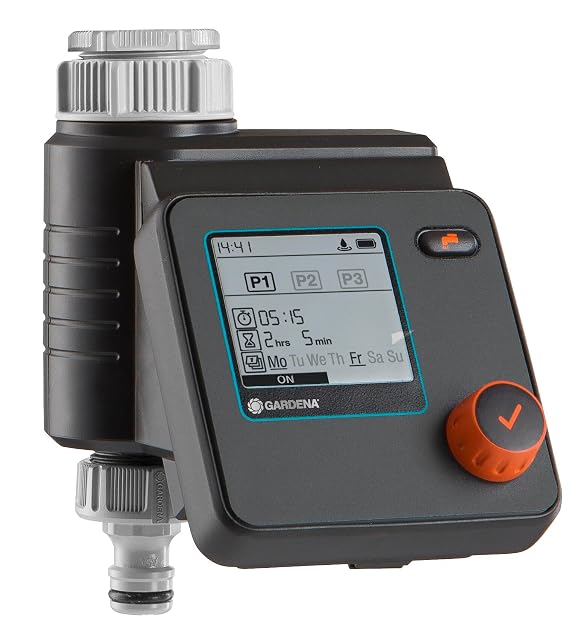
A dial, at the tap. One of these is set by turning and pressing, and gives three
independent schedules by weekday plus a Water Now button. Nothing to pair, nothing to update,
nothing that depends on a network being up in a fortnight’s time.
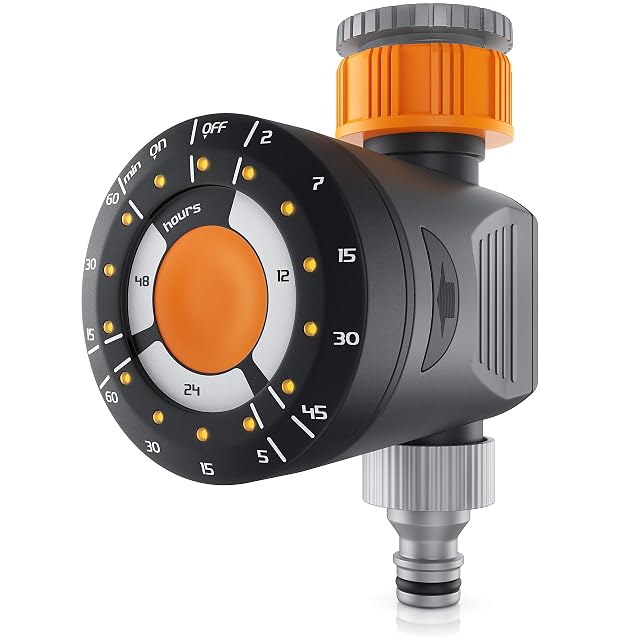
Fixed cycles and LEDs. Another gives three cycles — 12, 24 and 48 hours — with
fourteen LEDs and a start delay of up to 23 hours. Less flexible and entirely
self-contained, and the LEDs mean the state is readable at a glance without a phone.
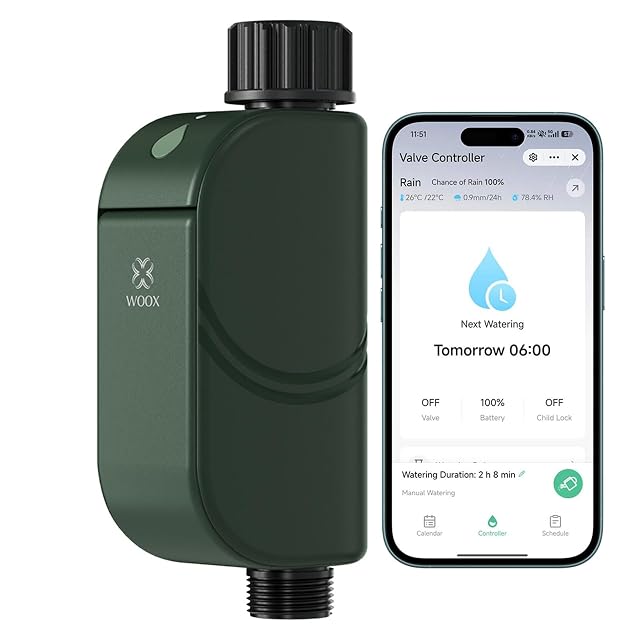
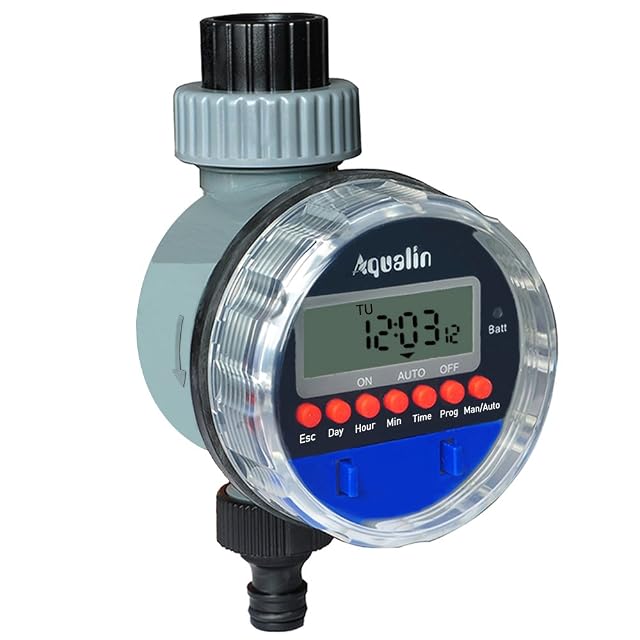
An app. Three of these are app-controlled, and the app is where the flexibility is: one
publishes up to 20 independent schedules, one publishes 8 programmes and 15 frequencies
with an LCD, and one can water by volume as well as by time.
And the app ones split on something that is easy to miss
One needs a hub. One does not.
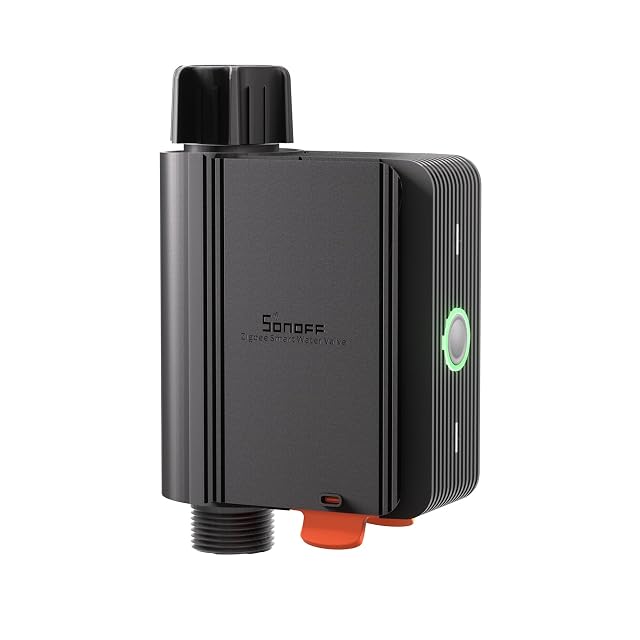
The Zigbee model requires a Zigbee 3.0 gateway, and it names the compatible models — which
is the right thing to publish, because a hub you do not own is a second purchase and a second
box on a socket.
The Wi-Fi model needs nothing but a 2.4 GHz network with no gateway, and adds Alexa and
Google Assistant.
The trade is coverage. Wi-Fi reaches as far as your router does, and a tap at the bottom of
a garden behind a brick wall is frequently just past that line. Zigbee is low-power and forms
a mesh, so it hops through other devices and reaches further — at the cost of the hub.
There is one clear test and it takes a minute: stand at the tap with a phone and look at the
signal. If it is one bar, the Wi-Fi timer will be unreliable exactly when it matters.
Watering by volume, which is the more precise instruction
One of these five can be set to deliver a quantity rather than a duration.
That is a better instruction than minutes, and the reason is pressure.
A schedule set in minutes delivers whatever the mains happened to be doing. Pressure varies
through the day — higher at dawn, lower when the street is showering — so a ten-minute
programme delivers different amounts on different days, and a timer that counts litres does
not.
On a bed of pots, where the difference between enough and too much is small, that is worth
having.
The rain problem, stated honestly
None of these five has a rain sensor.
Two publish a manual rain delay instead — one of them up to 30 days — which is you
looking at a forecast and deciding, from a phone, not to water.
That is useful and it is not automatic. A fortnight of rain while the timer runs its programme
is a fortnight of waterlogged pots, and nothing on this shelf prevents it.
The cheap workaround is a saucer test: if the pots are sitting in water when you get home, the
schedule was too generous, and next year’s setting is shorter.
The sequence that makes any of them work
Test it for three days before leaving. Not the timer — the whole system. Tap open,
timer set, hose laid, and go and look at whether water arrives where it is supposed to. A
timer that opens a valve into a kinked hose is a timer that reports success.
Check the filter. Every one of these is fed from a tap that carries grit, and a blocked
inlet screen is a timer that runs dry. This site’s drip irrigation shelf makes the same point
about emitters, and its sprinkler shelf about nozzles: the water arriving is never as clean as
it looks.
Water fewer times, for longer. A daily two-minute programme wets the top two centimetres
and trains roots to live there, where they dry out fastest. Two or three long soaks a week get
water down to where the roots should be.
And pick the hour. Early morning: the soil is cool, evaporation is lowest, and the leaves
dry during the day. Evening watering leaves foliage wet all night, which is how fungal disease
gets going — and one of these five is the one that will do it at five in the morning without
anybody getting up.