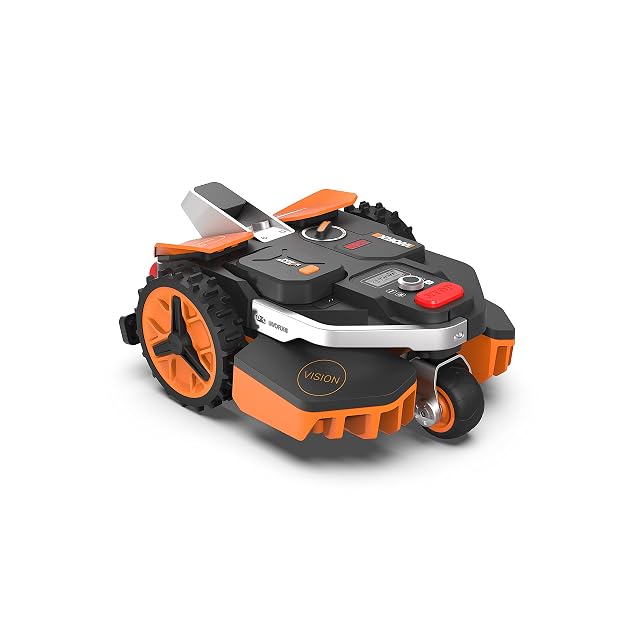
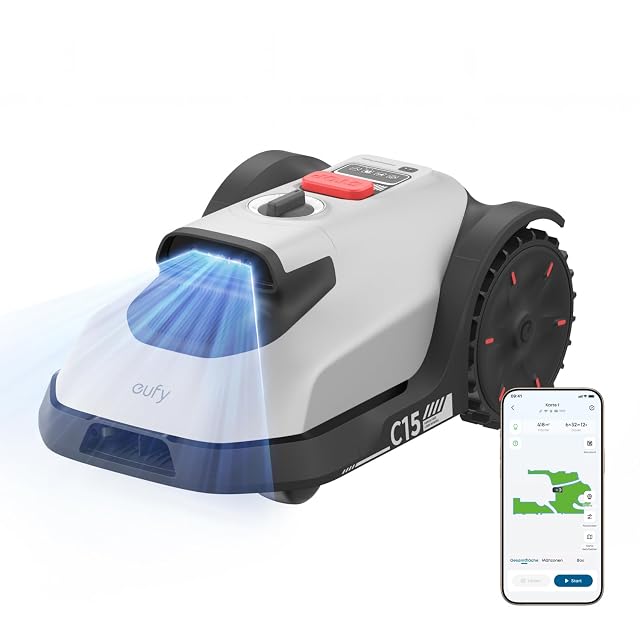
Robot mowers
Robot mowers that need no perimeter wire
Every robot here navigates without a buried wire, which removes a day of work and a permanent fault line from the lawn. What replaces it is a positioning system, and the systems fail in different ways: satellites lose accuracy under trees, cameras need light, and LiDAR needs a shape to recognise. This guide is sorted by the two figures that decide whether a given garden suits a robot at all — the slope limit and the narrowest passage.
By Jean-Benoit Buisson
What the wire was for, and what it cost
A traditional robot mower works inside a perimeter wire pegged or buried just inside the
edge of the lawn. The mower detects the field around it and turns away.
It works, reliably, and it costs three things:
A day. Laying a wire round a garden with beds, trees and a path across it is a real job,
and it has to be done accurately because the wire is the boundary.
A permanent fault line. A wire cut by a spade, a scarifier or a mole is a robot that stops
working and gives almost no clue where the break is.
Flexibility. Moving a bed means moving the wire.
Every robot on this page removes all three. What it puts in their place is a positioning
system, and those fail differently.
The three systems, and how each one breaks
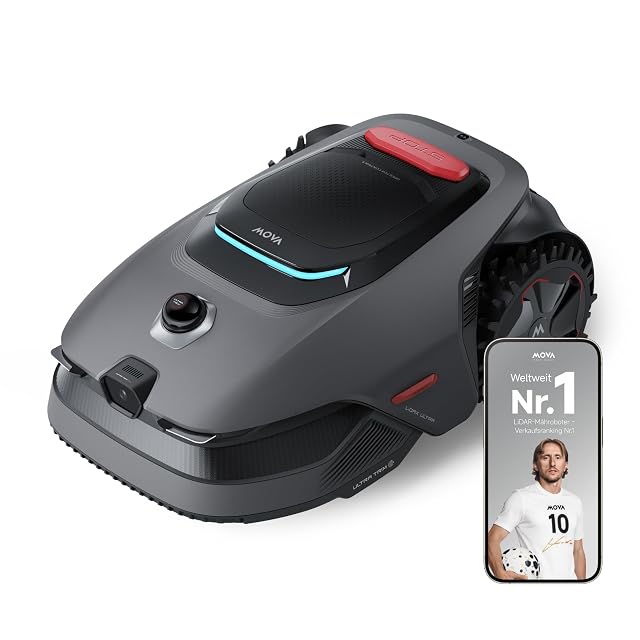
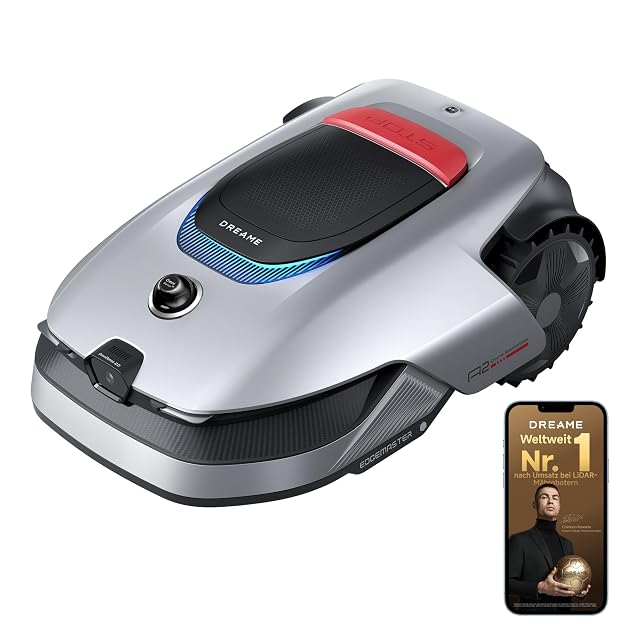
Satellite positioning with a reference station. Two of these use it, one of them backed up
by a visual system specifically for weak-signal areas. It is precise in the open — centimetre
accuracy is the point of a reference station — and it degrades where the sky is obstructed.
A garden with a mature canopy, a high wall or a narrow passage between buildings is exactly
where it struggles, which is why one maker publishes a visual fallback and the other does not.
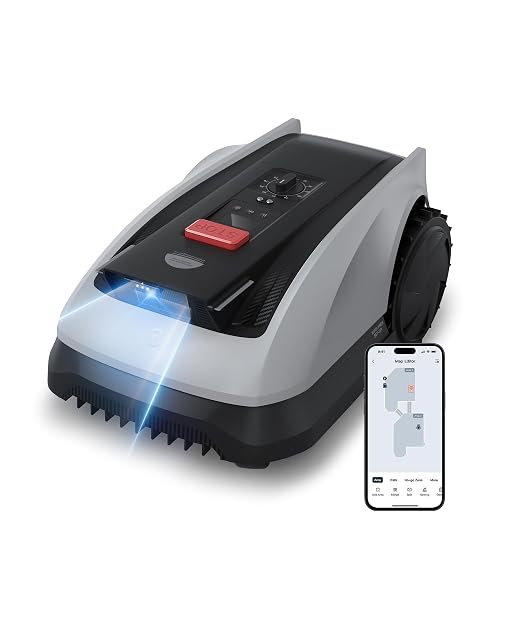
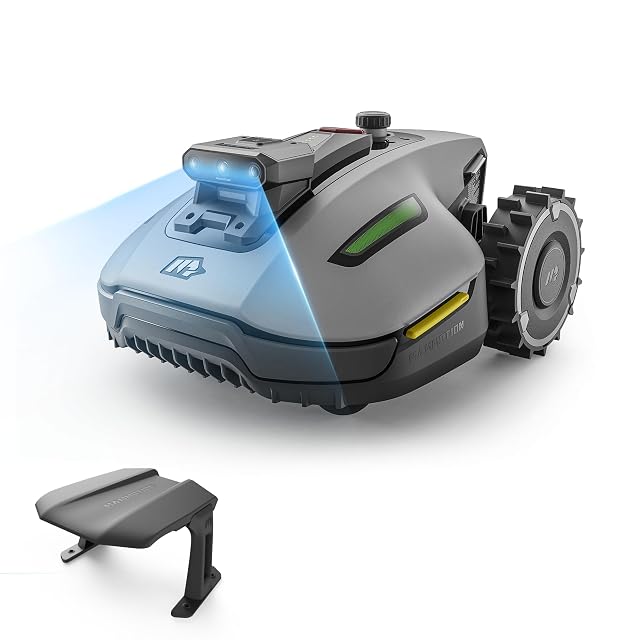
Cameras with on-board recognition. Three of these navigate by vision, one with three
cameras, one with an HDR camera and ultrasound, one with a full-HD camera whose model is
stated to update over the air. Vision needs light and it needs to recognise what it sees. It
does not care about tree cover, and it is the only system on this page that is claimed to
improve after purchase.
LiDAR. One of these uses 3D LiDAR with vision, and it publishes the only accuracy figure
in the group: it follows an edge within 5 cm. LiDAR measures distance directly by timing a
light pulse, which means it works in the dark and does not depend on recognising anything.
None of the six publishes a mapping accuracy figure except that one edge distance, which is
why it is worth reading.
Across these six the published figures are 50 per cent, 45 per cent, 45 per cent
and 45 per cent — and two publish nothing at all.
Forty-five per cent is about 24 degrees. Fifty per cent is 26.
That is the commonest reason a robot mower goes back. A bank steeper than the stated figure
means wheels that spin, a machine that beaches sideways, and a strip of lawn that is never
cut — and a robot that keeps trying is a robot that wears a bare patch at the bottom of the
slope.
Measure the steepest part, not the average. A lawn that runs gently down and then drops the
last two metres to a patio is a 45 per cent lawn at the bottom.
One of these also publishes a 3 cm obstacle clearance, which is the related figure: a lawn
edge, a tree root or the lip of a path is what stops a robot on the flat.
Two of these publish one: 55 cm and 60 cm.
It exists because a garden is rarely one lawn. It is a front and a back, or a main lawn and a
strip behind the shed, connected by a gap — between a fence and a wall, down the side of a
path, through a gate.
A robot that cannot fit through the gap will never cut what is on the other side of it, and no
amount of mapping fixes that. It is a tape-measure question and it takes thirty seconds.
3 000 m² on one. 600 m² on two. 500 m², 190 mm of cut on another, and 100
m² and 150 m² at the small end of the shelf.
Those are the makers’ own figures and they assume the robot runs on a schedule that suits the
lawn. A robot is not a mower that cuts a lawn in one go; it is a machine that removes two or
three millimetres a day and never lets the grass get long.
Which is also why the cutting height range matters more than it looks. Three of these publish
one — 30 to 100 mm, 30 to 80 mm in 10 mm steps, and 20 to 60 mm — and a robot
whose range stops at 60 mm cannot keep a lawn at the height that shades out weeds and survives
a dry August.
And the thing a wire-free robot still cannot do
Cut the edge.
Every robot on this page turns away from a boundary, and the last few centimetres against a
wall, a fence or a bed stay longer than the rest. One of them claims to follow an edge within
5 cm, which is the best figure here and is not zero.
The answer is on two other shelves of this site: a mowing edge that the machine can run
over rather than turn away from, or a pair of hand shears with a rotating head for the
strip against the wall. On a robot-mown lawn, one of those two is not optional.