The order, and the two steps with no machine in them
Step one has no machine. Clear the ground and deal with the perennial weeds before
touching the soil. Couch grass, ground elder and bindweed spread by rhizome, and cultivating a
patch of any of them multiplies it — every fragment is a new plant. This is the step people skip
and it is the one that determines whether the lawn has a weed problem for a decade.
Step two is the tiller, and only if it is needed.
Step three has no machine either, and it is the most important thing on this page: do not
let the seedbed dry out. Not once, not for an afternoon. Germinating seed that has started and
then dried is dead, and no later watering brings it back.
Then the mower, then the seasons.
One: the tiller, and when not to bother
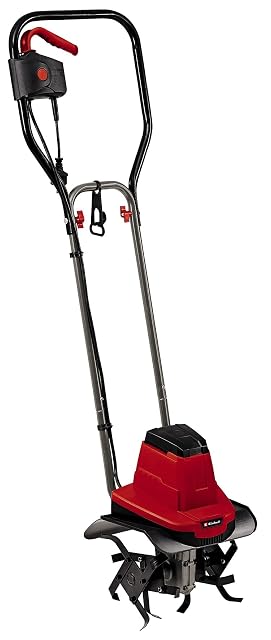
The pick here is a 750 W, 30 cm machine going to 200 mm deep with 4 blades and a
folding handle — and it is deliberately the smallest tiller on this site.
Two hundred millimetres is the right depth for a lawn. Grass germinates in the top
centimetre and roots in the top fifteen; deeper cultivation is a vegetable-bed job, and the
machines on this site’s tiller shelf that reach 330 and 350 mm are doing something else.
Thirty centimetres is the right width, because a garden being prepared for a lawn is usually
one with a fence, a narrow gate and beds already in it.
And the honest caveat: on soil that is already open, a tiller is not needed at all. A rake
and a roller will make a better seedbed than a tiller will, and a great many new lawns are
over-cultivated — tilled into a fluffy layer that then settles unevenly and goes lumpy in the
second year.
A tiller earns its place on compacted ground, on a builder’s finish, and where a dressing
has to be mixed in rather than laid on. That last one is the real argument: this site’s lawn
soil shelf carries washed sand graded at 0.4 to 1.4 mm, and sand laid on clay does nothing
while sand mixed into the top 150 mm changes how it drains.
Then firm it before sowing — tread it or use a light roller — because tilled soil is full of
air pockets, and a seedbed that has not been consolidated settles unevenly afterwards.
Two: the mower, and the setting for a new lawn
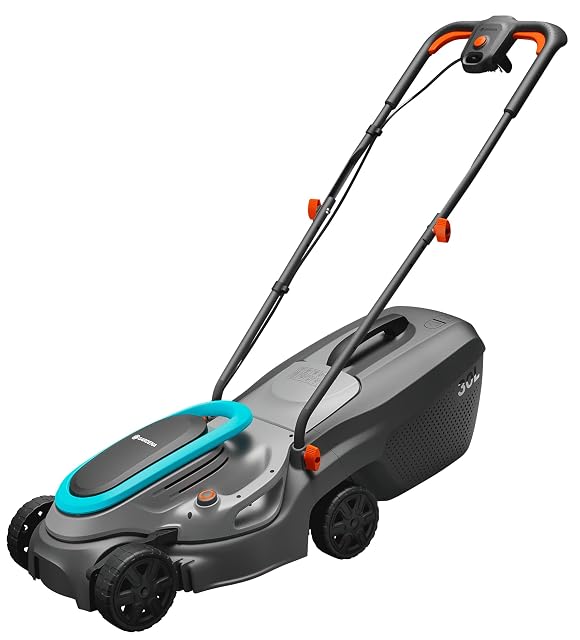
The pick is a 32 cm, 1200 W corded mower at 9.5 kg, cutting 35 to 65 mm in 4 steps,
with a 30 L box and a stated 300 m².
Two of those numbers are chosen for a new lawn specifically, and one condition goes with them.
35 mm as the lowest setting, which sounds like a limitation and is the right one. A new lawn
must not be cut short: a seedling has a small root system and a mower blade catching an unrooted
plant pulls it out rather than cutting it. The first cut takes the top off only, at the
highest setting, and the height comes down over several cuts across several weeks.
9.5 kg. A light mower on a soft new lawn does not mark it. A 35 kg petrol machine on a lawn
six weeks old leaves wheel ruts that are still there in the autumn.
And the blade has to be sharp. A blunt blade tears rather than cuts, and on established grass
that is a cosmetic problem — the torn tips brown off. On a seedling lawn it is a structural one,
because a torn plant that is not yet anchored comes out of the ground.
Three: the watering, which belongs third and not last
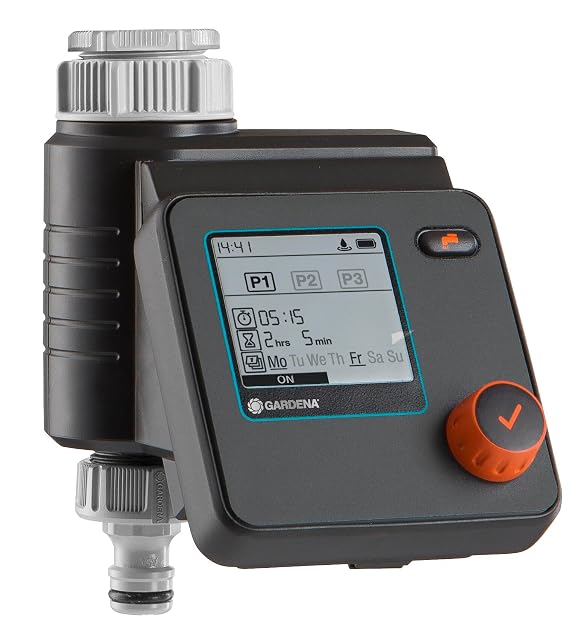
The pick is a mechanical timer set with a dial and a press, giving three independent
schedules by weekday and a Water Now button.
It is third on this list because of the step with no machine in it.
A germinating seedbed must stay damp for a fortnight. Not wet — damp, at the surface, where
the seed is. That is a light watering once or twice a day for two weeks, in the weather that
happens to arrive, and it is the single most common reason a new lawn comes up patchy.
Two weeks of remembering, twice a day, in April, is more than most people manage. A timer does
it.
Why this one rather than an app. It is set standing at the tap, it does not need a network,
and it will still be doing the same thing in five years. This site’s water timer shelf covers the
app-controlled alternatives and the one caveat that applies to all of them: none has a rain
sensor, so a wet fortnight still waters a wet seedbed unless somebody intervenes.
After the first month, invert the habit. Established grass wants fewer, longer soaks — two
or three a week, deeply — because light daily watering trains roots to live in the top two
centimetres, where they dry out fastest.
Four: the scarifier, and not until year two
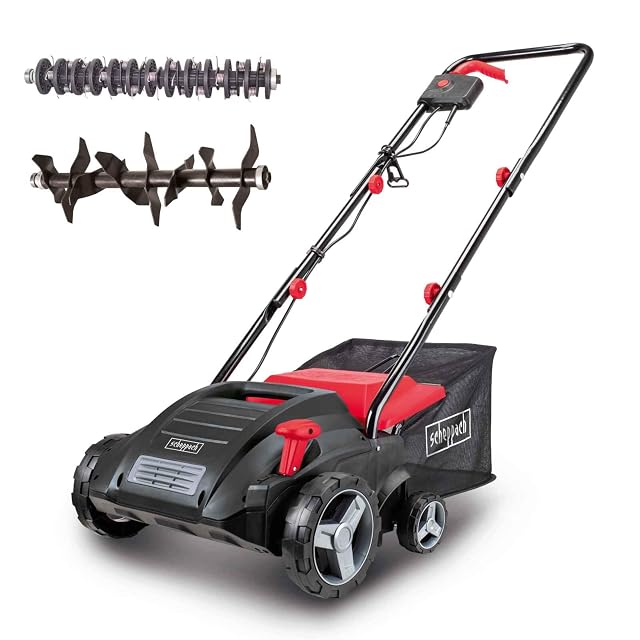
The pick is a 32 cm, 1500 W machine with 16 blades and 36 claws and 4 depth settings
— the smallest scarifier on this site, and chosen for that.
It is a year-two tool at the earliest. A first-year lawn has no thatch worth removing and no
root system to survive the treatment, and the same restriction appears independently on this
site’s moss-and-weed shelf, where the combined product is barred from use in the year of
sowing.
When the time comes, the rule is depth: start at zero and go down three millimetres at a
time, and stop when the bag fills with brown rather than green. The deep settings on this shelf
— down to −15 mm — are for a lawn nobody has touched in a decade.
And the step that makes scarifying worthwhile is the one after it: overseed. Scarifying leaves
bare soil, which is both the only condition in which grass seed works and the exact place the
next weed germinates. This site’s seed shelf publishes rates of 20 to 30 g/m² and thresholds of 8
and 10 °C of soil temperature.
Five and six: autumn, and the choice between brush and air
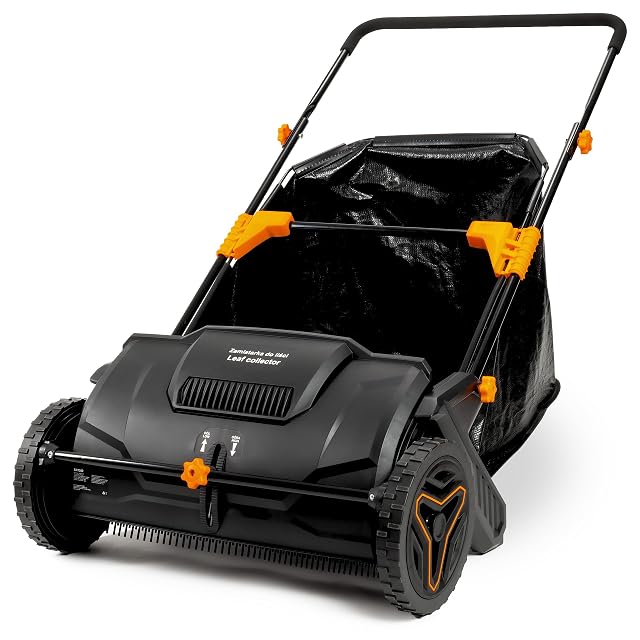
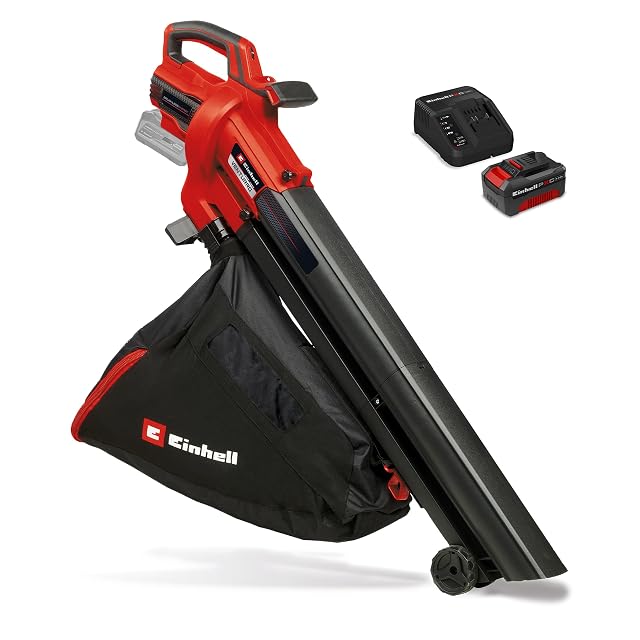
The last two picks are a 53 cm manual sweeper with 3 brushes, 100 L and a 0–40 mm
height adjustment; and an 18 V cordless blower-vac with a 4.0 Ah pack included, 210
km/h, 500 m³/h, a 10:1 shred ratio and a 45 L bag.
They are both here because they fail in opposite conditions, and a garden with trees eventually
wants both.
The sweeper collects in one pass and works in wind, because the leaves go from the grass into
the bag with nowhere to escape. It cannot lift a wet leaf off paving and it cannot reach a border.
The blower reaches everywhere and shreds what it collects — ten bags of leaves into one, which
turns a disposal problem into next year’s soil conditioner. And it is useless in a breeze, because
a pile built in wind unbuilds itself.
Start with the sweeper if the problem is a lawn under a tree. Start with the blower if the
problem is gravel, borders, steps and wet paving.
And the thing to leave alone
A lawn’s first year rewards not intervening.
Cut it high, keep it watered, and do nothing else. No feed until it is established — a starter
dressing in the seedbed is enough, and this site’s fertiliser shelf is entirely autumn feeds for a
lawn that already exists. No weedkiller in the sowing year. No scarifying. No rolling a wet lawn,
which compacts exactly the root zone the tiller was used to open.
The two decisions that matter cost nothing: clear the perennial weeds before you start, and
do not let the seedbed dry out.