Skip to content

Renovating a lawn in spring

Scarifying is the one lawn job where the machine is less important than the setting. Every scarifier here adjusts its depth, and the range is published on five of the six: from six millimetres above the sward to fifteen below it. Set shallow it takes out the thatch that is strangling the grass; set deep it tears the lawn apart. This guide is the depth figures, and the order the rest of the work has to happen in.

What a scarifier actually removes

Between the green grass you can see and the soil underneath it, there is a layer of dead stems, old clippings, roots and moss — matted, springy, and increasingly waterproof as it thickens.

That layer is thatch, and a thin one is normal and useful. A thick one is the reason a lawn looks tired without any obvious problem: water runs off it rather than through it, seed sown on top of it never reaches soil, and the grass roots into the thatch instead of into the ground.

A scarifier drags steel blades through it and pulls it out.

Which makes depth the entire specification

Five of these six publish a depth range, and they run:

−12 to +6 mm, on two machines. −15 to +5 mm. −15 to 0 mm. Four depths, on another. And one publishes an adjustable depth with no figures.

Read those properly, because the sign matters.

Positive is above the sward — the roller lifted clear, which is the transport and aerating position.

Zero is just touching.

Negative is into the surface, and −12 or −15 mm is a long way in.

And the shallow end is where the work is

The single most common way a lawn is ruined is a scarifier set to its deepest setting on the first pass.

At −12 mm the blades are not pulling thatch out. They are cutting into the soil, taking the crowns of the grass plants with the dead material, and what comes off is not a bag of thatch but a bag of lawn.

The method is boring and it works:

Set to zero. Take one pass. Look at what is in the bag.

Go down 3 mm. Take another pass at right angles to the first. Look again.

Stop when the bag fills with brown and not green. That is the depth for that lawn, that year, and it will be shallower than you expect.

A domestic lawn scarified annually rarely needs more than a few millimetres. The deep settings exist for a lawn that has not been touched in a decade, and that lawn needs reseeding afterwards whatever happens.

The four machines that also aerate

Four of these six carry two rollers: a scarifying roller with blades, and an aerating roller with sprung steel tines.

Two publish the counts precisely — 20 blades and 24 tines, on both — and two publish blades only.

The distinction between them is real:

Blades cut. They slice vertically through the thatch layer and lift it.

Tines comb. They drag through the surface and pull loose material out without cutting into the sward.

For an annual tidy on a lawn in reasonable condition, the tine roller is often the right choice and almost nobody uses it — because on two of these machines the roller change is the thing that decides it. One publishes a tool-free change; the other says the rollers are easily interchangeable. A roller swap that needs a spanner happens once.

The order the rest of the work has to happen in

Scarifying is step three of five, and doing it out of order wastes it.

One: mow, short. Lower than usual, and collect. A scarifier cannot reach the thatch through long grass, and long grass wraps the roller.

Two: kill the moss, if there is moss. Moss in a thatch layer comes out with it — and moss treated with iron and then scarified two weeks later comes out far more completely. This site’s moss shelf covers the products and the one caution that matters: iron stains paving permanently.

Three: scarify. Shallow, twice, at right angles, collecting everything.

Four: overseed. This is the step people skip and it is the one that makes the difference. Scarifying leaves bare soil, and bare soil in a lawn is where the next weed germinates. It is also the only condition in which grass seed works — seed that lands on existing turf never reaches ground. The seed shelf on this site publishes rates of 20 to 30 g/m², and a scarified lawn is the one day of the year when overseeding actually takes.

Five: feed, and do not let it dry out. Germinating seed must not dry out once. Two weeks of attention after scarifying is worth more than the scarifying was.

And the figure none of them publishes

Weight.

Not one of these six states it, and on a machine that has to be pushed into a lawn while resisting the drag of blades in soil, it is the figure that decides how hard the job is.

Two of them are petrol, at 182 and 212 cc; one is petrol at 79 cc; two are 2000 W mains; one is cordless and supplied as a bare tool. Every one of those is a different amount of machine to push, and none of them says how much.
The short list, and the reasoning behind its order

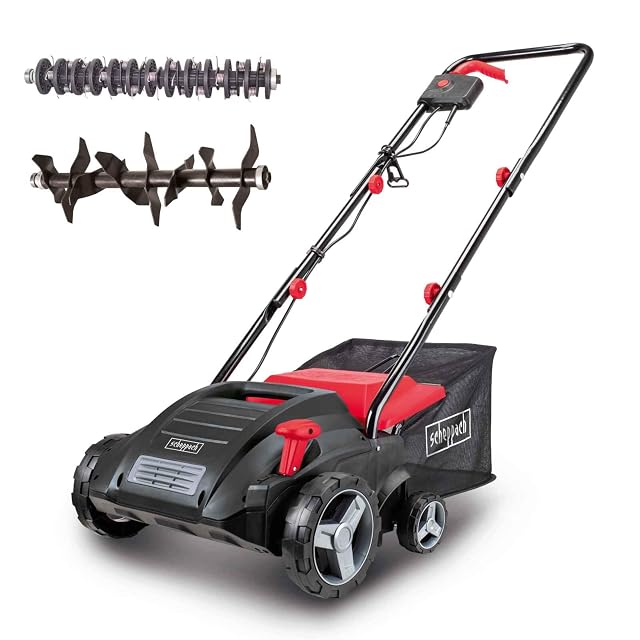
  1. Scheppach SC32

    32 cm, 1500 W, 16 blades + 36 claws, 4 depths, 30 L

    Both cartridges in the box — 16 blades and 36 aerator claws — on a 1500 W mains machine with a 30-litre catcher.

    Best for: A small to medium lawn being scarified for the first time, where both operations will be tried

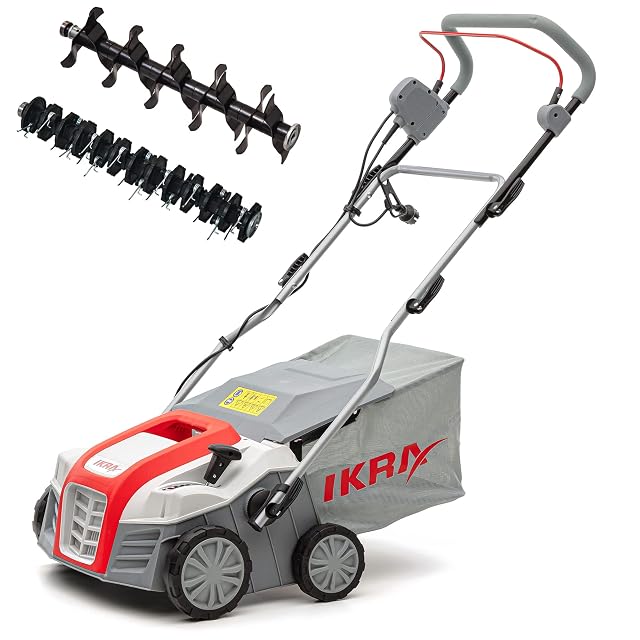
  2. IKRA IEVL 2000

    40 cm, 2000 W, 20 blades + 24 sprung tines, −12 to +6 mm, 55 L

    Tool-free roller changes, a −12 to +6 mm depth range, a 55-litre bag, and the option of working with no bag at all.

    Best for: A large, genuinely thatched lawn where the first pass will be run without the bag

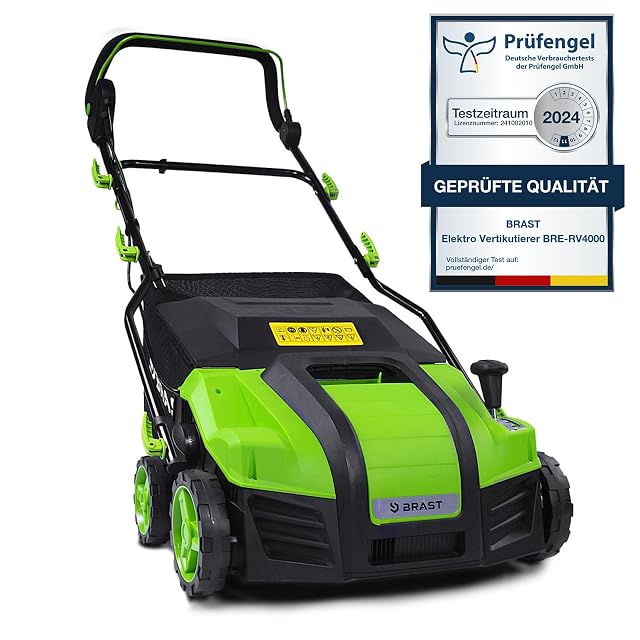
  3. BRAST BRE-RV-4000

    40 cm, 2000 W, 20 blades + 24 tines, −12 to +6 mm, 55 L

    A 2000 W machine with a stated depth range of −12 to +6 mm, a 55-litre bag and both rollers — sold as one of three models in a range.

    Best for: A large lawn with real thatch, where the depth needs setting rather than guessing

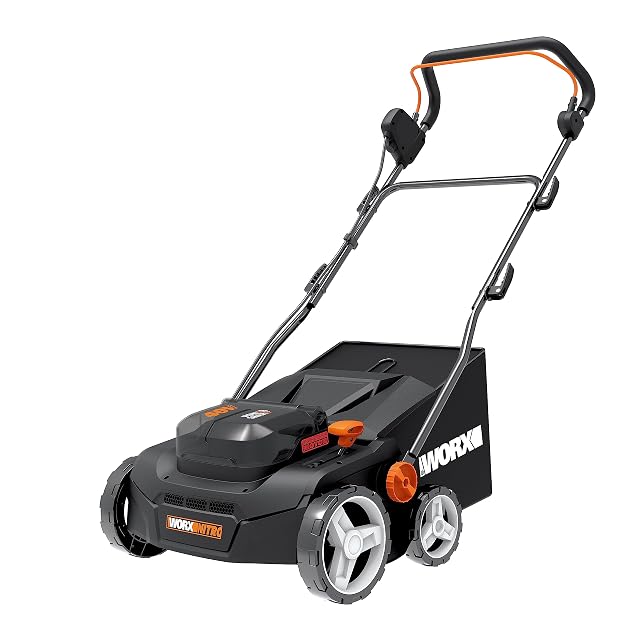
  4. WORX NITRO WG855E.9

    Cordless, bare tool, 2-in-1, 4 heights, 40 L bag

    The only cordless machine on this shelf, supplied without pack or charger, with a curved base stated to reduce pushing resistance.

    Best for: A medium lawn away from a socket, in a shed that already holds this maker’s packs

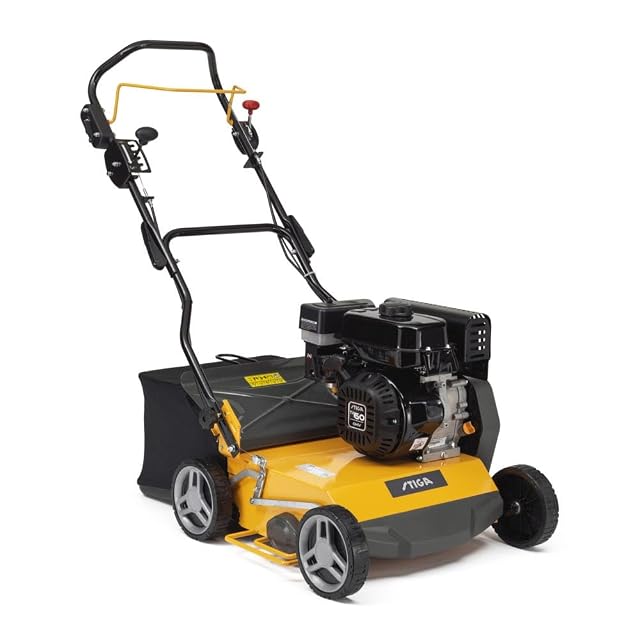
  5. STIGA SVP 40 G

    40 cm, 182 cm³ four-stroke, 32 swinging blades, −15 to 0 mm, 40 L

    Thirty-two free-swinging blades on a 182 cm³ four-stroke, with a depth range that stops at ground level and an easy-start engine.

    Best for: A large, stony or rough lawn where a fixed blade would find something hard

What this guide tends to leave open

What depth should a scarifier be set to?

Shallow — a few millimetres into the surface, not into the soil. The published ranges here run to −12 and −15 mm, and those settings are for a contractor renovating a ruined lawn, not for an annual tidy. Start at zero, take one pass, look at what came out, and go deeper only if the thatch is still there.

What is the difference between scarifying and aerating?

Scarifying pulls dead material out of the mat between the green grass and the soil. Aerating makes holes in the soil below it. Four of these six machines do both with interchangeable rollers — blades for scarifying, sprung tines for aerating — and they are different jobs done at different depths.

When in spring?

When the lawn is growing strongly enough to recover, which is after the first two or three cuts rather than at the first warm weekend. A scarified lawn looks worse before it looks better, and it needs several weeks of growing weather to close the gaps. On a cold late spring, waiting a fortnight is better than scarifying early.

Do I have to collect what comes out?

Yes, and it is most of the work. Five of these six publish a catcher volume — 30, 40, 40, 55 and 55 litres — and a scarified lawn produces far more material than any of them holds in one pass. Whatever is left on the surface becomes thatch again.

Why each one, and for whom

Scheppach 5912006901

For : A small to medium lawn being scarified for the first time, where both operations will be tried

Main strength : Both cartridges supplied, with the blade and claw counts given for each

Main limitation : Four depth positions but no range — so what it can actually reach is unknown

Read the full review →

IKRA 80201010-AZ

For : A large, genuinely thatched lawn where the first pass will be run without the bag

Main strength : Roller changes stated as tool-free, on a job that otherwise means finding a spanner

Main limitation : No weight published

Read the full review →

BRAST 1004172001

For : A large lawn with real thatch, where the depth needs setting rather than guessing

Main strength : A published depth range with ground level at zero — the figure that decides the job

Main limitation : The listing covers three models at once, so width and wattage depend on the variant chosen

Read the full review →

WORX WG855E.9

For : A medium lawn away from a socket, in a shed that already holds this maker’s packs

Main strength : The only cordless machine on a shelf otherwise made of cables and engines

Main limitation : No pack and no charger in the box, so the listed price is not the price

Read the full review →

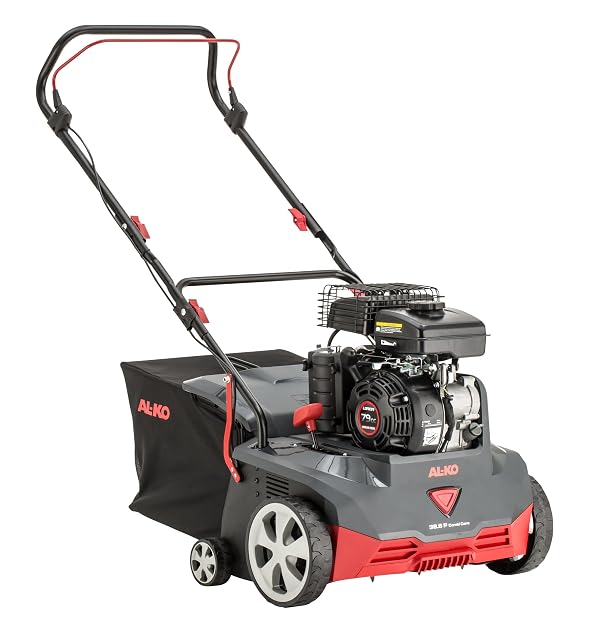
AL-KO 114042

For : A large lawn out of reach of a socket, scarified properly once or twice a year

Main strength : Every headline figure published: power, displacement, width, both roller counts, depth range and catcher

Main limitation : A petrol engine used twice a year means fuel that has to be managed between seasons

Read the full review →

STIGA 211400248/ST1

For : A large, stony or rough lawn where a fixed blade would find something hard

Main strength : Free-swinging blades, which survive a stone rather than stopping on it

Main limitation : No aerating cartridge stated — the blades do both jobs by depth alone

Read the full review →

Useful comparisons

Head-to-heads already published between two models from this guide or this aisle.

How this guide is built

The models here come from the catalogue of this site. Specifications are those published by the manufacturer and on the Amazon product page; prices are what Keepa reported on the date below, and both move. The ranking uses declared specifications, the balance of stated strengths and limitations, and price. No product on this site has been physically tested, and nothing here claims otherwise.

Last checked on

The tool we use ourselves

Model settled? Then find out whether the figure next to it means anything at all.

A mower gets bought when the grass is already too long, which is the worst possible moment to weigh up a price: demand on this shelf climbs from March and drops away after July, so a price struck through in May tells you nothing whatever about what the same reference cost in October. UniverTrack keeps a week-by-week record for each retailer, so a cut price can be set against one somebody really paid rather than one composed for the banner — and it says when ordering is genuinely the moment.

Real price historyBuy-now alertsAI buying assistant
Try free for 14 days →
No commitment · Cancel in one click · 5 languages