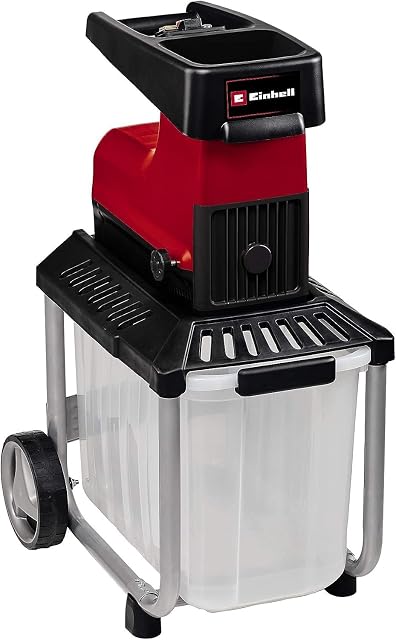
The bottom line The entry point of the shelf, and a blade machine rather than a roller — faster through soft material, louder, and it produces a cleaner chip. 2500 W, 45 mm stated branch capacity, a 45-litre bag, self-feeding, with overload protection and a no-volt release that stops it if the power cuts.
What the maker prints on its own page
A garden shredder in which an innovative blade system gives more efficient
material throughput. A powerful, low-maintenance 2500 W electric motor
shreds branches up to 45 mm thick. The robust bag holds 45 litres. Two large
transport wheels and a stable steel tube frame give mobility and a firm stand.
An integrated overload protection and a no-volt release on the universal motor
stop operation automatically when needed. A feeding aid is supplied.
Blade, not roller
That is the first thing to know about any machine on this shelf, and three of
the nine listings say which they are.
A blade shredder is a disc of flails or knives turning fast. It chops quickly
through soft and woody material alike, it produces a relatively clean chip, and
it is loud — the noise is the blades meeting air as much as wood.
A roller shredder is a toothed cylinder turning slowly against a plate. It
crushes rather than cuts, it pulls material in by itself, and it is much
quieter. It is also slower, and it can jam on soft leafy material that a blade
would have thrown straight through.
Neither is better. They suit different heaps.
The two safety features named
Overload protection stops the motor before it cooks when the machine is
stalled. A no-volt release keeps it stopped when the power comes back.
On a shredder both matter more than on any other machine in this niche. This is
the one garden tool whose whole purpose is to pull material in, and the
operation during which injuries happen is clearing a jam.
The feeding aid
A plunger, supplied in the box. It is the thing you push the last of a branch
with, and the alternative is a hand in a hopper.
The feed opening geometry on any machine sold in Europe is constrained so that
a hand cannot reach the cutting element — that is what EN 13683 is mostly about
— but a plunger is what makes the constraint liveable.
What is not stated
The noise, on a blade machine. The weight. And the reduction ratio, which four
machines on this shelf publish and which decides how often the bag fills.
Availability
From 100 € to 131 €, that being the spread across the German, French, Italian and Spanish Amazon stores on the day of the survey.
Listed and unsold: the British Amazon catalogue holds the reference with nobody behind it.
Nothing came back from the American Amazon store at all; the buy button there runs a search rather than opening an empty page.
Taken from Keepa on the day this page was last revised; stock and prices move without notice.
Prices quoted in this text were read on 26 September 2026. The live price is at the top of the page.
The declared figures, and the point they stop at
Strengths
Overload protection and a no-volt release, both stated — the machine will not restart by itself
A feeding aid supplied, which is the tool you use instead of your hand
The cheapest machine on the shelf by a wide margin
Compromises
A blade system is noisier than a roller, and no noise figure is published
The smallest catcher here at 45 litres
No weight, on a machine with transport wheels
Specifications
Cutting system
Blade system, self-feeding, as stated
Max branch
45 mm, as stated by the maker
Motor power
2500 W universal motor, as stated
Catcher volume
45 L bag
Feed
Self-feeding, with a feeding aid supplied
Guaranteed noise
Not published
Weight
Not published
Amazon reference
B07PGKGZF5 (one reference across 5 Amazon marketplaces)
EAN
4015671943729
What this machine usually gets asked
Blade or roller — which should I want?
A blade machine chops fast and loudly and produces a cleaner chip; a roller crushes slowly and quietly and self-feeds better on soft, bushy material. For a small garden with occasional prunings the blade is the cheaper answer; for a lot of hedge trimmings the roller is the less exhausting one.
Is 45 mm what it will actually take?
It is what the maker states, and no standard defines how a maximum branch diameter is determined. Fresh, straight, green wood at 45 mm and dry knotted hardwood at 45 mm are different jobs. One maker on this shelf says so in its own listing.
A no-volt release — what does it do?
A switch that stays off after a power cut, so the machine does not start by itself when the supply comes back. On a shredder, with a hand near the hopper, that is the requirement the whole safety standard exists for.
Who this one is for
Occasional hedge and shrub prunings on a small garden, at the lowest entry price
A reference exists on these Amazon stores: France, Germany, Italy, Spain, United Kingdom. Listed is not the same as in stock — availability changes daily.
Details checked on September 26, 2026.
Sources
Specifications: manufacturer sheet and Amazon product page. Prices and availability: Keepa. No product on this site has been physically tested.