The modular trade, on a shelf where five of seven are heads
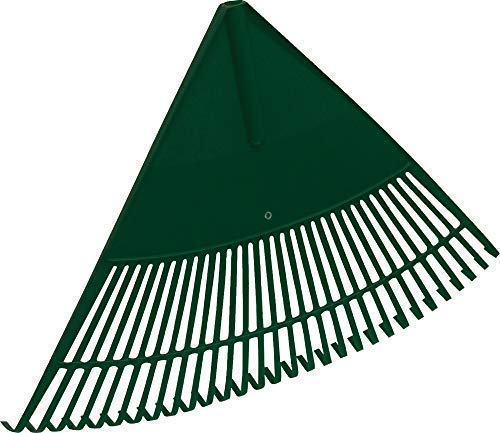
Seven rakes here, and five arrive without a handle.
They divide three ways, and the difference is what a buyer can actually check:
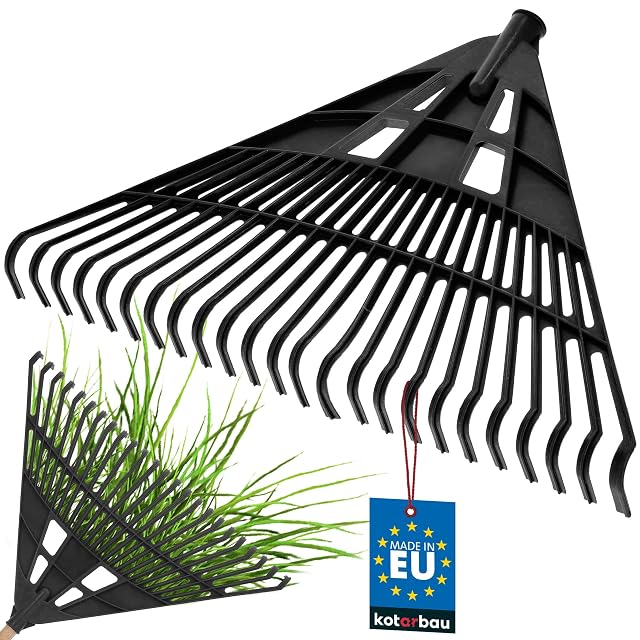
A plain socket, with a published diameter — 30 mm on one, 26 mm on another.
Any handle of that size fits, wooden, plastic or telescopic, including a broom handle
from a hardware shop. A tape measure settles it.
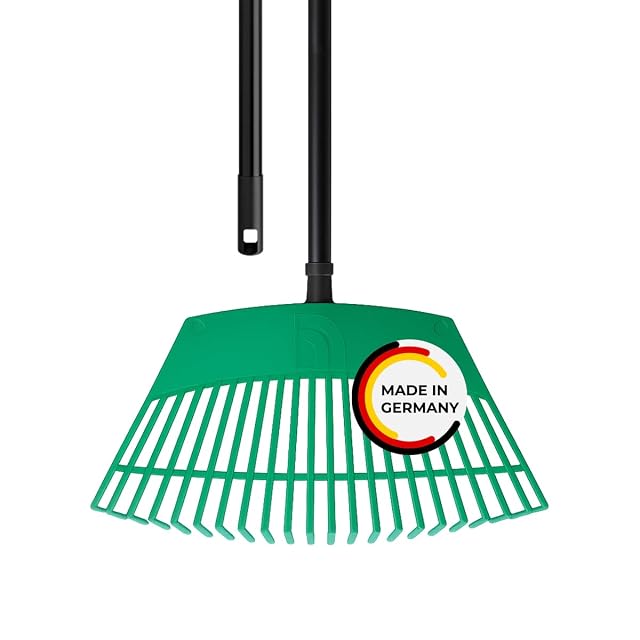
A proprietary part number — one head on this shelf fits one named handle, and the
listing adds that it is not compatible with the same maker’s quick-fit range.
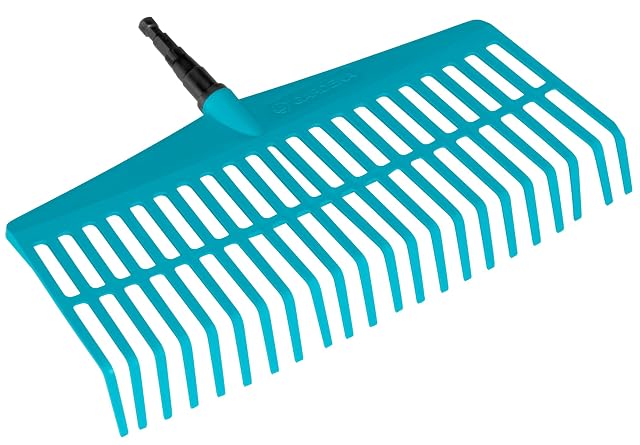
A modular system — this. It fits any handle in this manufacturer’s range, and no
socket diameter is published.
That middle position is better than the proprietary one and worse than a measurement.
Inside the range it is genuinely flexible; outside it there is nothing published to work
from.
And the range is the reason to be in it
“The cs devices can be used with any cs handle — the soft-plastic screw at the grip is
loosened and another handle is fitted.”
That is the actual proposition, and on a rake it matters more than on most tools in
the range.
Raking leaves is done bent forward, pulling, for an hour, in November. It is the job
in a garden most likely to be abandoned because of back ache rather than because it is
finished.
The range includes handles in wood, in aluminium, and in a long back-sparing
pattern — and choosing the long one changes this job more than any feature of the head
does.
The same modular argument appears twice more on this site: the aerator head on the
aerator shelf and the spreader head on the spreader shelf, both from this range, both
sold without a handle. Owning three heads and one handle is the point.
The screw fixing
“Thanks to the reliable combisystem technology, wobble-free and reliable work is
guaranteed.”
A screw through the joint rather than a friction fit, and on a rake it is the right
choice.
Raking is a pull with a twist. Every stroke loads the joint sideways as the head
catches, and a push-fitted head works loose within a season: first a rattle, then play,
then the socket splits where the handle has been hammering it.
A screwed joint does not move. It also means the head can be changed deliberately, in
thirty seconds, rather than being levered off.
43 cm, in context
The working widths on this shelf run 30 cm to 78 cm, with one rake adjustable
between 30 and 50.
Forty-three is at the narrow end, alongside a 42 cm head and a 43.2 cm one.
Narrow is right for a garden with things in it: between shrubs, along a fence line,
under a hedge, around a bed. It also loads fewer tines at once, which in wet leaves is
the difference between dragging and stalling.
Wide is right for open lawn under a large tree, where a 78 cm head halves the number
of passes.
Plastic tines, gentle on lawns
Stated, and it is the honest description.
What plastic does well: it flexes. The tines bend under load so the head rides
over the sward, lifting loose material without digging into it or tearing grass
crowns out. Light, rust-free, and it does not scratch paving.
What plastic does badly: heavy wet leaves. Tines under real load bend back and the
leaves slide over the top of the head instead of being dragged along. The remedy is
smaller bites and more passes.
Two rakes on this shelf have steel tines — flat galvanised on one, spring steel on
the other — and those move matted wet material better while being less kind to a soft
lawn.
A dethatching rake.
It looks similar and it is a different job. This site’s aerator shelf carries a
dethatcher with 21 pairs of spring steel tines across a 43.2 cm head — roughly
twice the tine density of a leaf rake, in steel, with a hooked profile.
A leaf rake rides over the sward. A dethatcher digs into the mat of dead
material between the green grass and the soil and drags it out.
Same width, opposite intentions. This listing is clear about which it is: leaves, grass
clippings and other garden waste, worked in a way that is gentle on the lawn.
What goes unpublished
No tine count. Two rakes on this shelf publish one — 23 and 30 — and the count
across a known width is what gives the spacing, which is what decides whether a
rake is a leaf rake or a dethatcher.
No weight. Two publish one: 560 g and 360 g. On a head at the end of a 1.5 m
lever, held up by your shoulders for an hour, the difference between those two is more
than it sounds.
No socket diameter, because the fitting is the system rather than a dimension.
Availability
From 14 € to 18 €, that being the spread across the German, French, Italian and Spanish Amazon stores on the day of the survey.
Beyond the euro zone, the American and British Amazon stores price it in their own currencies, which the spread above sets aside.
Taken from Keepa on the day this page was last revised; stock and prices move without notice.
Prices quoted in this text were read on 26 September 2026. The live price is at the top of the page.