The warning in its own listing
From the fifth feature line, verbatim in substance:
“Inconsistent insertion depth in the same soil sample can lead to inaccurate pH
readings. To avoid inaccurate measurements, keep the same test depth for every
measurement.”
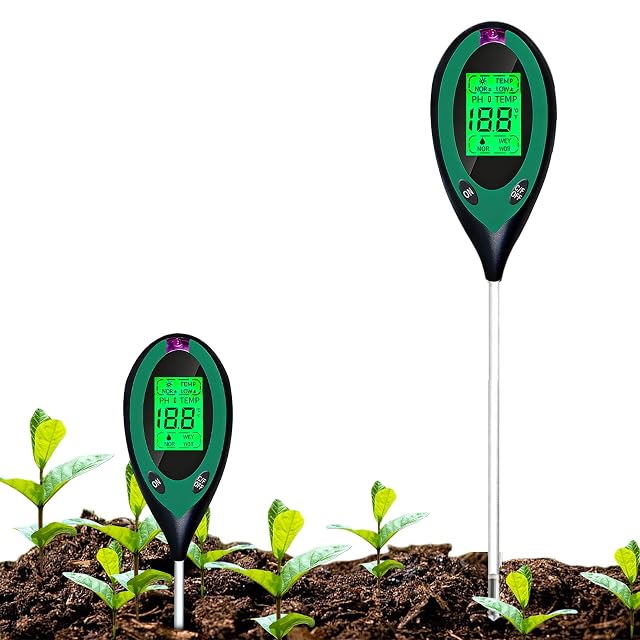
That is the manufacturer saying that the pH number on the screen depends on how far
the probe went in — and asking the user to control it.
Three other meters on this shelf publish comparable notes, independently:
One says that if the pH reads a constant 7, the probe should be cleaned
thoroughly and the measurement taken somewhere else.
The same one says the soil must be compacted before a pH measurement, or the
probe cannot register it.
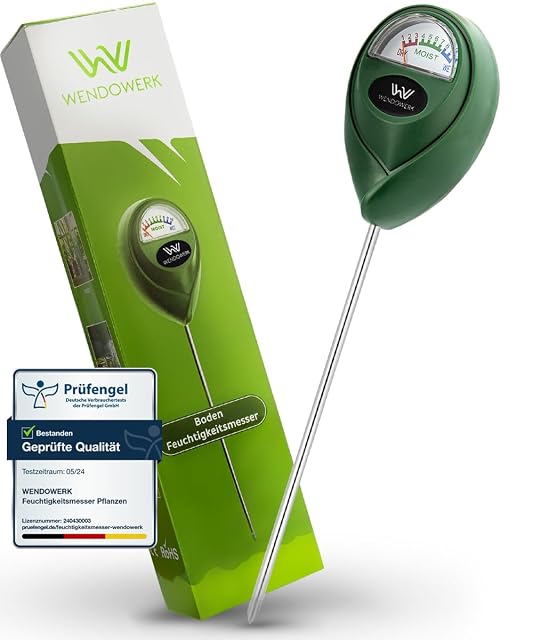
Another says that in soil that is too dry or too hard the probe should not be
forced, and asks the user to moisten the test area and wait ten minutes.
Put those together and four manufacturers have documented four separate variables
the user controls that change the pH reading: insertion depth, probe
cleanliness, soil compaction and soil moisture.
What that says about the method
A probe of this kind infers pH from an electrical property of the soil in contact
with metal surfaces.
The contact is the problem. Soil is not a liquid: it is particles, water films and
air, and how much of the probe is actually touching wet soil depends on exactly the
four things those listings name.
That is why the same soil can read differently twice in a row, and it is why every
one of these listings carries a procedural note rather than a tolerance figure. Not
one of the six probe meters on this shelf publishes an accuracy specification for
pH — no ± figure, no calibration procedure, no reference solution.
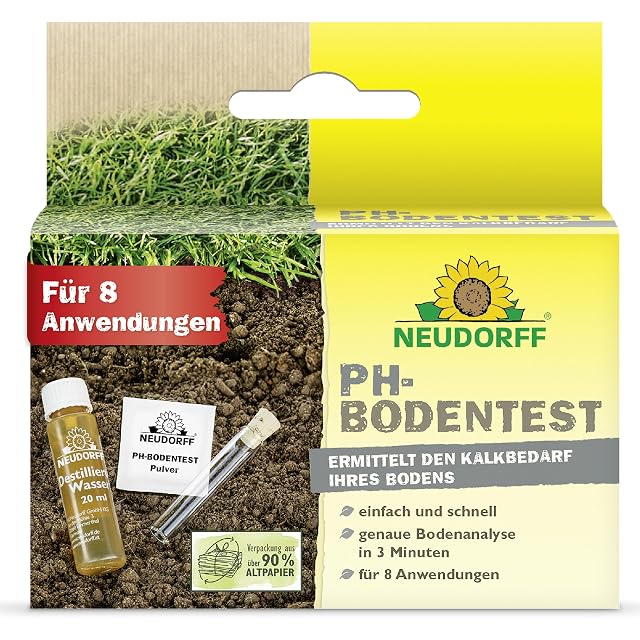
One product on this shelf measures pH by chemistry instead: a reagent powder, a
tube, distilled water and a colour scale, read against a table that gives the lime
requirement. That is the standard domestic method and it does not depend on how
hard you push.
This page does not say the probe reading is wrong. It says the manufacturers
themselves have described what it depends on, and that a liming decision should
rest on the chemical test.
The two readings that are solid
Worth separating out, because the meter is not being dismissed.
Temperature. A thermistor measures temperature by a property that does not care
about contact area. This reading is straightforwardly reliable, and it is genuinely
useful — this site’s lawn seed shelf turns on soil temperature, with three bags
there publishing a germination threshold of 8 °C or 10 °C and seed simply sitting in
the ground below it. A soil thermometer answers the one question the calendar
cannot.
Light. A photocell measures light properly too. Also useful: shade is one of the
four reasons moss gets into a lawn, and knowing how many hours a corner actually
receives is how you decide between a shade seed mix and giving up on grass there.
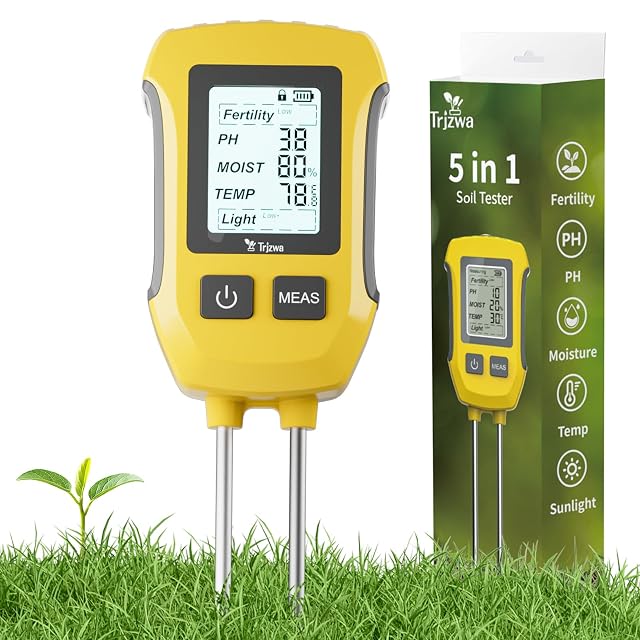
Moisture sits in between. It is a conductivity reading, so dissolved salts
affect it — a lawn fed a week ago reads wetter than the same lawn a month later.
Useful compared against itself; not an absolute figure.
pH is the conditional one.
The single probe
Named as a design point: a single-probe design damages plant roots less and does
not pull too much soil out after the test.
That is a real advantage over the two-prong pattern, and it matters most in pots
and around established plants rather than on a lawn.
Ten centimetres, ten seconds, five minutes
The procedure: insert about 10 cm, wait 10 seconds, read.
Ten centimetres is the right depth for a lawn — it is the root zone, below the layer
that dries first.
The automatic sleep after five minutes is a sensible power feature on a device that
gets put down in a flowerbed and forgotten.
And the observation about the barcode
This meter’s barcode and another 4-in-1 meter on this shelf share the same GS1
company prefix, and the two products carry similar specifications under different
brands.
That is an observation about what is published, not a conclusion. The practical
consequence is the one this site states wherever it appears: a buyer comparing the
two is comparing closely related claims rather than two independent products.
Availability
Around 10 €, read at the German Amazon store on the day of the survey.
Nothing came back from the American, British, French, Italian and Spanish Amazon stores at all; the buy button there runs a search rather than opening an empty page.
Taken from Keepa on the day this page was last revised; stock and prices move without notice.
Prices quoted in this text were read on 26 September 2026. The live price is at the top of the page.