What it measures, and only that
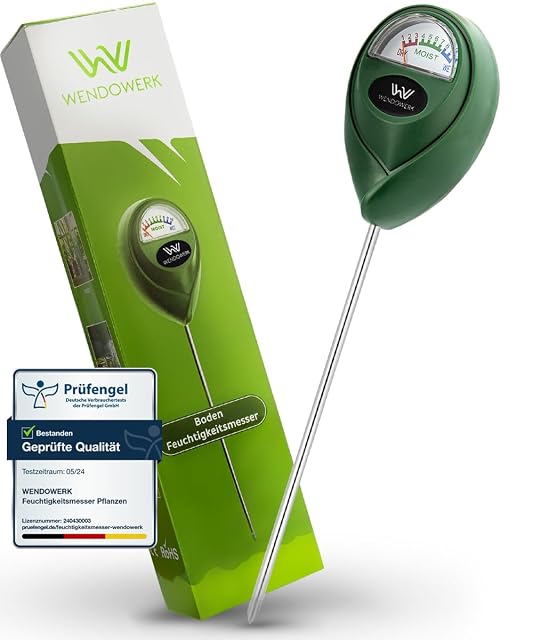
Soil moisture.
No pH. No temperature. No light. No fertility.
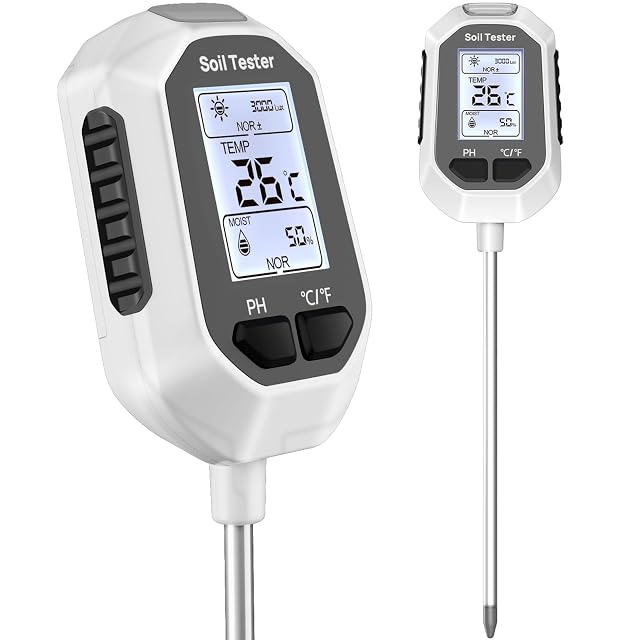
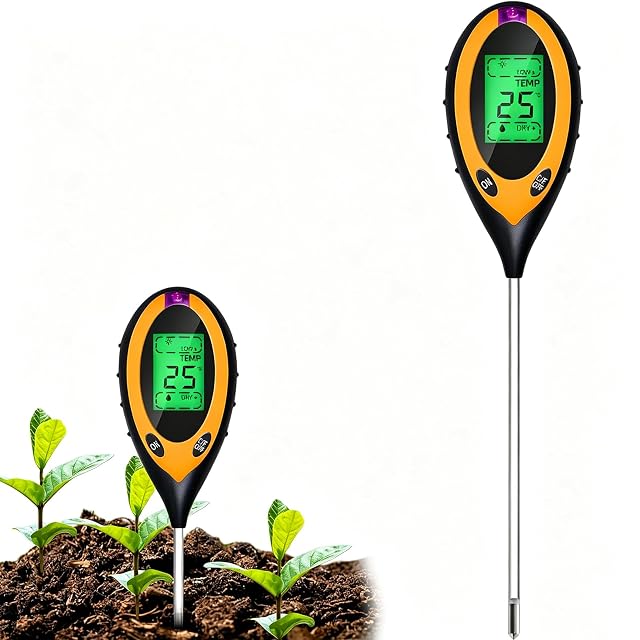
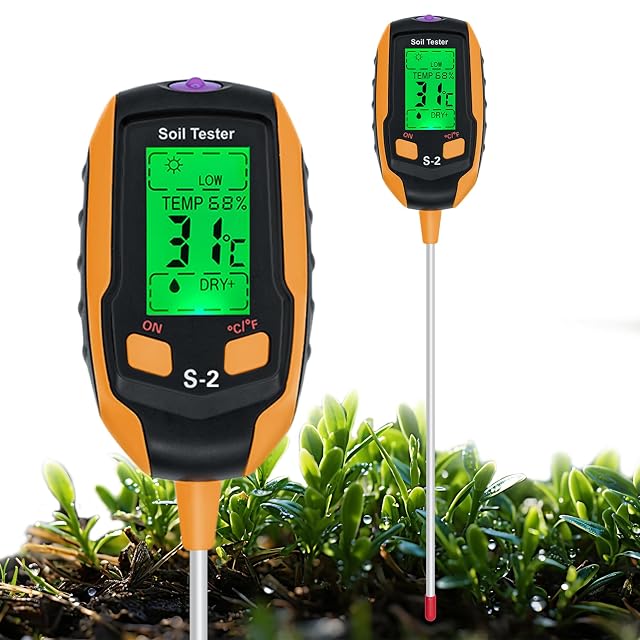
On this shelf that makes it the outlier: five other products claim four or five
readings each, and the seventh measures pH by chemistry.
It is also the cheapest thing here, and the two facts are connected in a way worth
setting out.
No batteries, and what follows from that
The listing leads with it and it is the most informative claim in the listing,
though not for the reason given.
A moisture meter that needs no power measures the soil’s electrical
conductivity. Two dissimilar metal surfaces in moist soil generate a small
current; the current drives a needle. Dry soil conducts almost nothing and the
needle sits at the bottom of the scale, wet soil conducts and the needle rises.
That is why it works out of the box and never goes flat.
And why the reading is comparative rather than absolute
Conductivity responds to dissolved salts as well as to water.
Which means, concretely:
A lawn fed a week ago has more salts in solution than the same lawn a month
later, and it reads wetter at the same true moisture. This site’s fertiliser shelf
is a shelf of concentrated salts, and every one of them raises soil conductivity
after watering in.
A sandy soil and a clay soil at the same water content read differently,
because clay holds more exchangeable ions.
A peat-free substrate and a peat one read differently for the same reason
— and this site’s lawn soil shelf has both.
None of that makes the meter useless. It makes it an instrument for comparing the
same spot over time, or two spots in the same soil, rather than for reading an
absolute figure off a scale.
Used that way — probe it before watering, learn where the needle sits when the
lawn is actually dry — it answers the question people most often get wrong.
Which question is worth stating plainly
Most lawns are watered when they do not need it, and not deeply enough when they
do.
Grass looks thirsty long before it is short of water. A lawn that has gone dull
green and lost its bounce is losing water from the leaf; the soil 10 cm down can
still be damp, and the grass will recover by evening.
And the reverse is worse: a light daily watering wets the top two centimetres and
nothing below, which trains roots to stay at the surface — where they dry out
fastest. A deep soak once a week is the correct pattern and a probe is how you
find out whether the soak got down.
That is a genuinely useful thing for nine euros’ worth of instrument, and it is
the job this one does.
The probe
A long stainless rod, stated as W43 grade.
Length matters more than the grade does. A short probe reads the top few
centimetres, which is exactly the zone that dries first and tells you least about
whether the root zone has water.
Stainless matters because the probe is the electrode: corrosion changes the
reading. Four of the digital meters on this shelf ask specifically for the probe
to be cleaned before use, and one of them warns that a dirty probe produces a
constant, wrong pH reading.
The same principle applies here even though no pH is claimed: a probe left with
soil caked on it does not read the soil it is now in.
Wipe it dry after every use.
What this page will not claim
“Exact soil moisture”, as the listing puts it.
A conductivity meter is not exact. It is repeatable, which is a different and more
useful property — the same probe, in the same soil, at the same depth, gives
comparable readings.
Where it is genuinely honest is in what it does not claim. Six other products
on this shelf put a pH figure on a screen from a metal probe, and four of their own
listings document the conditions that make that figure unreliable: probe
cleanliness, insertion depth, soil compaction and soil moisture.
One reading that is what it says beats four of unequal quality, and this listing at
least does not pretend otherwise.
The 2026 in the title
The listing’s title carries a year and the word “improved”.
It is reported here because it is part of what was published. No version history,
no change list and no earlier model are named, so there is nothing to compare an
“improved” meter against.
Availability
Around 9 €, read at the German Amazon store on the day of the survey.
Beyond the euro zone, the British Amazon store prices it in its own currency, which the spread above sets aside.
Listed and unsold: the Spanish Amazon catalogue holds the reference with nobody behind it.
Nothing came back from the American, French and Italian Amazon stores at all; the buy button there runs a search rather than opening an empty page.
Taken from Keepa on the day this page was last revised; stock and prices move without notice.
Prices quoted in this text were read on 26 September 2026. The live price is at the top of the page.