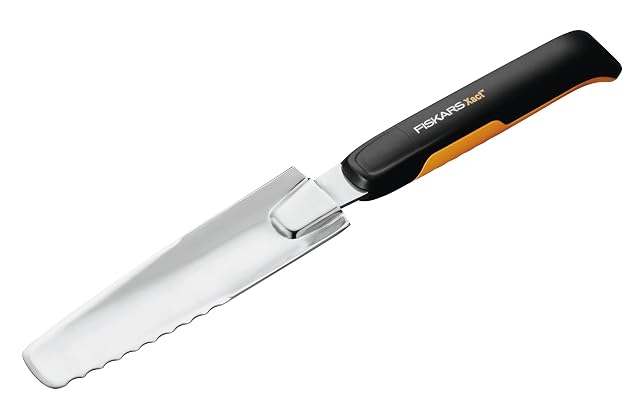
39.6 cm long. 4.3 cm wide. 260 g. Stainless steel and plastic.
Four figures in a delivery line, and this is the only product in the family that
publishes a set like it.
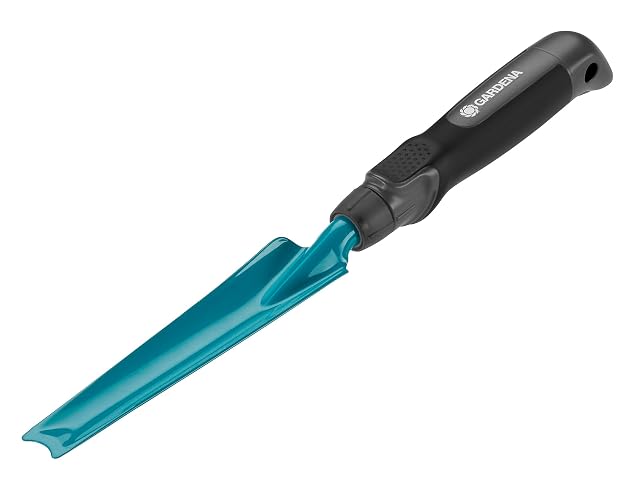
Across the rest of the shelf: one publishes a 7 cm working width, one a 14.5 cm
working length, one a 2.75 inch tooth length, and three publish a total tool or
handle length and nothing else.
Not a joint scraper.
Three products on this shelf are joint scrapers — hooked blades dragged along the
gaps between paving slabs, on a terrace, a path or a drive. They are hard-surface tools
and they do nothing to a weed in grass.
This is a taproot knife: a long blade pushed into soil beside a weed to loosen
and lift the root.
That distinction decides where each tool belongs, and this one belongs in a lawn and in
a bed.
What a taproot actually requires
The weeds this tool is for — the listing says weeds with particularly long roots and low
soil adhesion — are dandelion, dock, thistle and plantain.
They share one property: a single thick root going straight down, with the growing point
at the very top, just at soil level.
And one behaviour: break it and it comes back.
A dandelion left with a few centimetres of root in the ground regenerates from it, and
frequently sends up two or three rosettes where there was one. Pulling the leaves
off achieves precisely nothing; the plant loses a week and regrows.
So the job is not cutting. It is levering: getting steel down alongside the root,
loosening it along its length, and lifting the whole thing out.
Which is why the length is the specification
39.6 cm, with an extended handle stated to give better balance and leverage.
Two things follow.
Reach. A short tool reaches a short way down. A blade that stops above the depth of
the root snaps it, and the plant returns.
Leverage. The force at the blade tip comes from handle length. An extended handle
means the root is prised out by the tool rather than by your wrist — and on a dry
compacted lawn, a taproot in undisturbed soil takes real force.
What is not published is the working depth. The overall length is 39.6 cm, and how
much of that is blade — how deep it actually goes — is unstated.
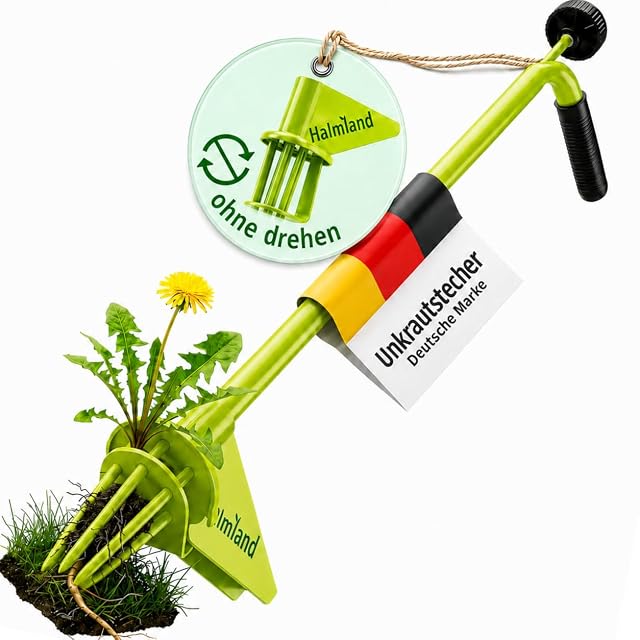
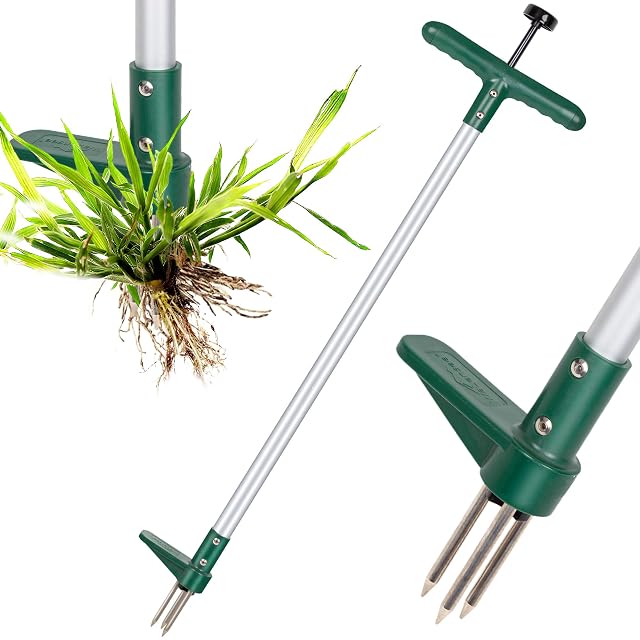
One tool on this shelf publishes a depth figure: 2.75 inches, about 7 cm, on a claw
puller. That is a useful reference point, because a mature dandelion taproot is usually
deeper than 7 cm, and the listing that publishes it also promises the weed will not grow
back.
Named, and it is the right choice for a reason particular to weeding knives.
This is the tool that gets left in the bed. It goes down beside a plant, you move to
the next one, and it is found in October under a shrub.
Carbon steel in that duty is pitted within a season and the edge is gone. Stainless is
still a blade.
The listing also claims a very sharp blade for precision and efficiency. On a
taproot knife the edge does less work than the geometry — it is parting soil rather than
cutting wood — but a sharp edge slices through fibrous roots on the way down instead of
pushing them aside.
260 grams, and the position it is used in
The only weight on this shelf, and light.
On a kneeling tool that is straightforwardly good. The force comes from the handle
length and from your arm, not from the mass of the tool, and a heavy hand weeder is just
harder to hold precisely.
What the weight does not fix is the kneeling.
This is a hand tool with no foot pedal and no long handle. Weeding a lawn with it means
down on the ground, one weed at a time, and a lawn with forty dandelions in it is a
morning.
Two tools on this shelf answer that differently: claw pullers at 100 cm and on a
foot pedal, used standing. They are faster and they reach about 7 cm down, which is
the trade.
The hanging hole, and the soft grip
“A practical hanging hole at the end of the handle for space-saving storage.”
Small and worth having, for the same reason the stainless steel matters: a tool with a
place to live gets put back, and a weeding knife with no hole ends up in a bucket or in
a bed.
“Comfortable soft-grip handle design for different working positions.”
Also relevant, because a taproot knife is genuinely held several ways: pushed down like
a dagger, pulled sideways to lever, and sometimes used as a hook to drag a loosened root
out. A grip that only works one way forces the wrist into the others.
And the one honest caveat about the method
Lifting a taproot leaves a hole in the lawn.
A dandelion root out of a lawn is a 15 mm hole several centimetres deep, and bare soil
in a lawn is where the next weed germinates — which is exactly the sequence this site’s
lawn seed shelf describes in the other direction.
The complete job is: lift the weed, press the hole closed with a heel, and if it is more
than a hole, drop a pinch of seed and a little soil in it. Nothing on this shelf mentions
that, and it is the difference between weeding a lawn and farming weeds in it.
Availability
Around 11 €, read at the German Amazon store on the day of the survey.
Beyond the euro zone, the British Amazon store prices it in its own currency, which the spread above sets aside.
More than 1.6× the cheapest country at the French, Italian and Spanish Amazon stores; a gap of that size normally means forwarded stock rather than a seller on the ground, so the spread above leaves it out.
Listed and unsold: the American Amazon catalogue holds the reference with nobody behind it.
Taken from Keepa on the day this page was last revised; stock and prices move without notice.
Prices quoted in this text were read on 26 September 2026. The live price is at the top of the page.