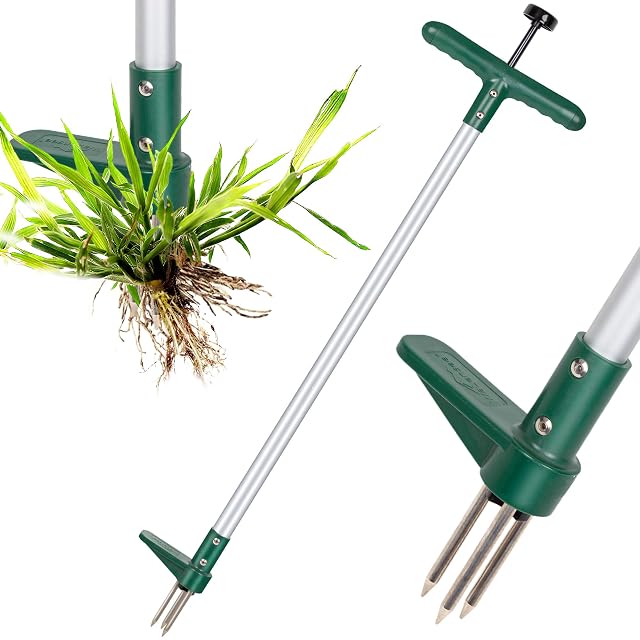
Three steel teeth, 2.75 inches long — about 7 cm.
Seven products in this family, and this is the only one that says how far into the ground
its working end reaches.
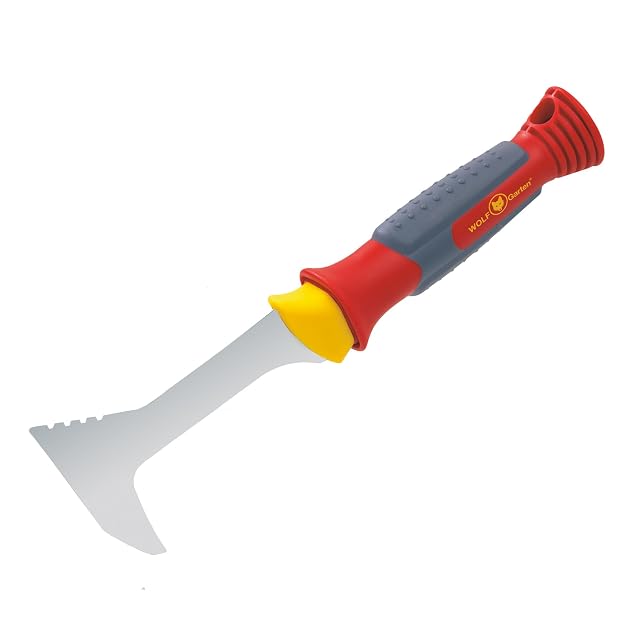
Across the rest: one publishes a 7 cm working width on a paving scraper, one a
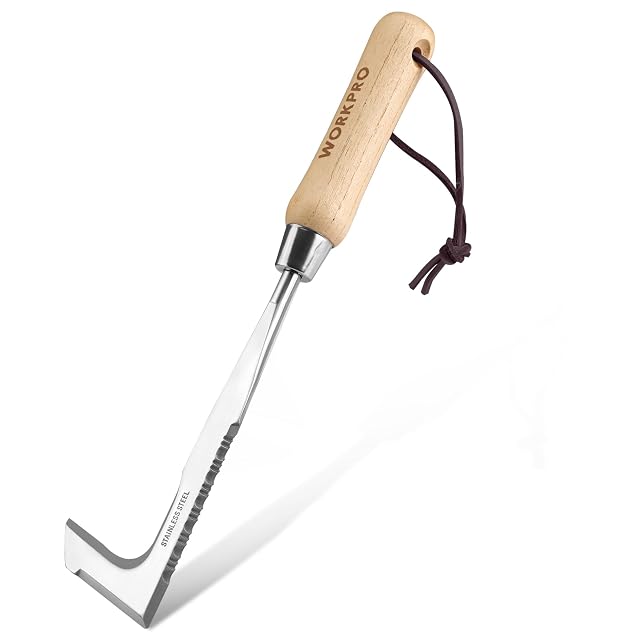
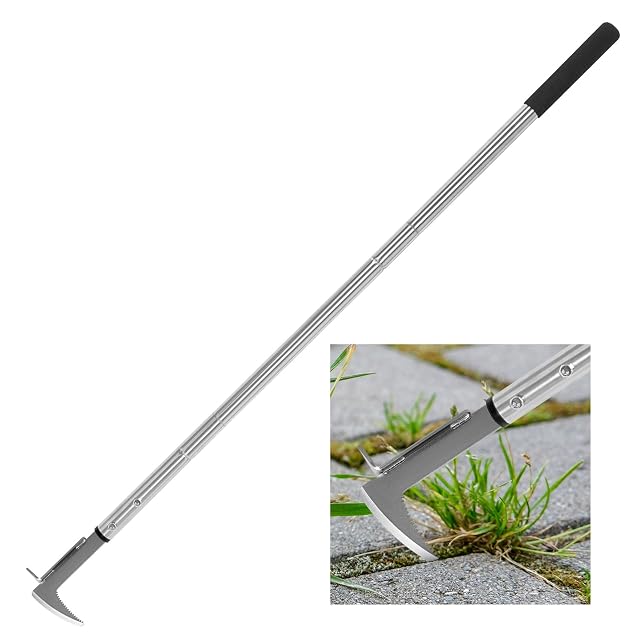
14.5 cm working length, one a 39.6 cm total length, one an adjustable 138 cm
handle, and two publish nothing measurable at all.
The listing says: press the tines into the roots, tilt to one side, and pull the weed out
“including the roots, so that it does not grow again”.
Seven centimetres does not always achieve that.
A mature dandelion in undisturbed soil sends a taproot deeper than 7 cm, often
considerably. A dock goes deeper still. Couch grass and bindweed do not have
taproots at all — they run horizontally by rhizome, and a claw puller takes a piece and
leaves the network.
And the behaviour on failure is specific: a dandelion left with a few centimetres of root
regenerates from it, frequently sending up two or three rosettes where there was
one.
So the honest expectation from a 7 cm claw puller is: most weeds out whole, and the
big established ones not. Which is still a very good tool, and it is not what the
sentence promises.
This page credits the listing for publishing the number that makes the claim
checkable — and declines the claim.
Three claws, against six
The other stand-up puller on this shelf has six, and publishes no claw length.
The trade is real and it runs both ways:
Three long claws concentrate the whole of your body weight on three points. That is
what penetrates a dry compacted July lawn, where six claws spread the same force and
stop at the surface.
Six claws grip a wider circle. They hold a spreading rosette — plantain, daisy clump,
creeping buttercup — that three claws will slide off.
So three long ones suit a single-crown taproot in hard ground, which is a dandelion,
and six suit a spreading weed in soft ground.
Knowing which you have is more useful than knowing which tool is better, and only this
listing publishes enough to tell.
The pedal, and why it is the real mechanism
The listing’s first line: “the foot pedal lets you put enough force on the weed remover
to penetrate the ground and grip the whole weed including the roots.”
That is the correct explanation, and it is the reason this half of the shelf exists.
A hand weeding knife is pushed in by your arm and levered by your wrist. In
dry compacted soil that is not much force, which is exactly why taproots snap off at the
crown instead of lifting.
A pedal tool is driven by your body weight — you stand on it — and levered by a
metre of handle.
That is a different order of magnitude. It is the same argument the hollow-tine aerator on
this site’s aerator shelf makes about its own foot plate, and the same one that shelf’s
spiked-shoe products make about standing rather than pressing.
Hardened stainless steel
Named for both the claws and the pedal, and both halves are the right claim.
Stainless because the tool is driven into wet soil and put away dirty. The other
stand-up puller on this shelf says “solid steel”, which is a strength claim rather than a
corrosion one.
Hardened because the claw tips are prised against stones under a person’s weight and
a metre of lever. Unhardened steel tips bend, and once they have, the claws no longer
close around a root — which is how these tools stop working.
Thickened is also stated, which addresses the same failure from the other direction.
The 100 cm handle
Stated as 39 inches, and it is the figure that makes this a standing tool.
That is the whole ergonomic proposition: weeding a lawn with forty dandelions in it, on
your feet, walking between them, rather than kneeling forty times.
For comparison on this shelf: two taproot knives at 39.6 cm and 14.5 cm working
length are kneeling tools, and a joint scraper adjusts to 138 cm and is sold
explicitly on not bending.
One hundred centimetres suits most adults standing straight. It is short for a tall
person and it is not adjustable, which the 138 cm scraper on this shelf is.
The text, reported as found
The listing’s German is a raw machine translation and is in places hard to read: the
three jaws are rendered as “DREI-Kiefer” — which is the German word for pine trees — and
the handle height appears as an unconverted “39 inch high grip”.
It is reported here because this page describes what was published, and because the
underlying specifications — three claws, 2.75 inches, 100 cm, hardened stainless
steel — are better than almost anything else on this shelf and survive the
translation.
The hole, which nobody on this shelf sells
A claw puller does not extract a root cleanly. It lifts a plug of soil several
centimetres across with the weed inside it.
That leaves a hole, and bare soil in a lawn is where the next weed germinates — the
same mechanism this site’s lawn seed shelf relies on in the other direction, where seed
must reach soil to establish.
Working through a lawn with one of these and doing nothing else produces a lawn with
forty small holes, and by July forty new weeds in the same places.
The complete job: knock the soil off the root, drop the plug back into the hole, tread it
down. Where the hole is larger, a pinch of seed and a little substrate from this site’s
lawn soil shelf closes it.
Not one listing on this shelf mentions it.
What goes unpublished
No weight. One tool on this shelf publishes 260 g; on a standing tool with a metre
of handle, the figure would matter for a different reason — it is carried between weeds
rather than held up.
No ejection mechanism. Many stand-up pullers have a slider that pushes the plug off
the claws so it does not have to be pulled off by hand. Nothing in this listing says
whether this one does, and after forty weeds it is the difference between a clean job and
a muddy one.
Availability
From 25 € to 34 €, that being the spread across the German and French Amazon stores on the day of the survey.
Beyond the euro zone, the American and British Amazon stores price it in their own currencies, which the spread above sets aside.
More than 1.6× the cheapest country at the Italian and Spanish Amazon stores; a gap of that size normally means forwarded stock rather than a seller on the ground, so the spread above leaves it out.
Taken from Keepa on the day this page was last revised; stock and prices move without notice.
Prices quoted in this text were read on 26 September 2026. The live price is at the top of the page.