Skip to content

HYUNDAI HWW12050-IN vs T.I.P. 31372 Jetpumpe

Head or suction: which 1 200 W pump suits my well?

Same motor power, same maximum flow, both with stainless pump housings. The two figures that separate them are the two that decide whether a pump works at all in a given garden: how high it can push water, and how far below the pump the water sits.

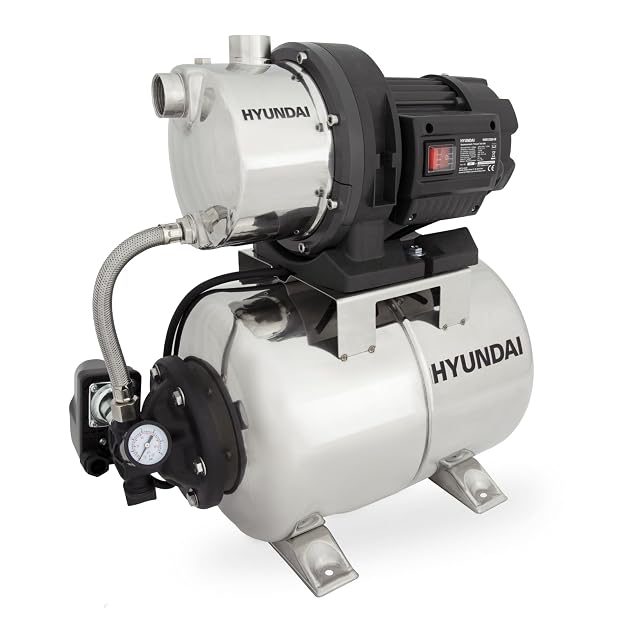
HYUNDAI HWW12050-IN booster set with a 19-litre stainless pressure vessel

HYUNDAI HWW12050-IN

Wins 2 of 7

Check price

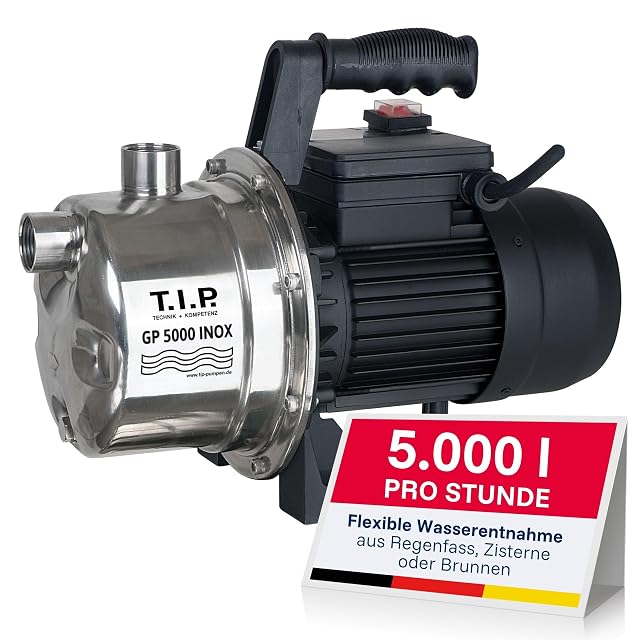
T.I.P. stainless steel jet garden pump with an anti-vibration handle

T.I.P. 31372 Jetpumpe

Wins 2 of 7

Check price

Line by line

Compared on HWW12050-IN 31372 Jetpumpe
Motor power 1 200 W 1 200 W
Flow rate Up to 5 000 l/h at zero head Maximum 5 000 l/h at zero head
Head Maximum 50 m at zero flow Maximum 45 m — equivalently 4.5 bar
Suction height Up to 8 m Maximum 9 m
Pressure vessel 19 L stainless Not published
Hydraulic material Stainless housing Stainless housing, Noryl hydraulic unit
Connections Not published Not published

A tick means one listing published something the other did not, or published a better figure. It does not mean the product is better, and the column is not a score out of anything: a maker who says less loses lines here without losing a comparison. The two verdicts below are where the page is settled.

Which one, for whom

Buy the HYUNDAI HWW12050-IN

Hyundai publishes the higher head — 50 m against 45 — and a 19 litre stainless pressure vessel. The vessel is the part that decides how a booster pump behaves day to day: a larger one means the motor starts less often for a given draw, and a stainless one does not rust from the inside the way a painted steel tank does.

Buy the T.I.P. 31372 Jetpumpe

T.I.P. publishes the deeper suction at 9 m, and that is the figure that decides whether a pump can be used at all. Head is a matter of how far the water goes once it is moving; suction height is a hard physical limit set by atmospheric pressure, and a well one metre too deep is a pump that never primes. It also states its head in bar as well as metres, which is the unit a sprinkler is specified in.

What this pairing usually raises next

Why is suction height a hard limit?

Because a pump does not pull water up — atmospheric pressure pushes it up into the space the pump evacuates, and the theoretical ceiling is about 10 metres at sea level. Real pumps manage 7 to 9. A well deeper than the stated figure cannot be drawn from by a surface pump at all, whatever its power.

Do the flow and head figures happen together?

No, and both listings say so. Maximum flow is measured at zero head and maximum head at zero flow. A pump lifting water 20 metres delivers far less than its headline litres per hour, and a sprinkler on the end needs both pressure and volume at the same time.

What is a pressure vessel for?

Storing a little pressurised water so that a small draw — filling a watering can, a short burst from a tap — is served by the tank rather than by starting the motor. It is what stops a booster pump switching on and off continuously, which is what wears one out.

The full reviews

  • HYUNDAI HWW12050-IN

    1 200 W, 5 000 l/h, 50 m head, 8 m suction, 19 L stainless vessel

    A 19-litre stainless vessel with an automatic pressure switch, 5 000 l/h and 50 m of head, on a stainless pump body.

    Best for: A permanent rainwater or well supply where the water is drawn in short bursts through the day

The live figure beside a product went and asked the shop for it the moment this page opened; any amount written into the text has not moved since the sentence was drafted, and it is the first of the two that counts.