Skip to content

Scheppach MTE460 vs BRAST BRE-AF 1500

Which 1500 W tiller tells you more about itself?

Working width, working depth, input power and blade count are identical on these two machines. What separates them is everything around those four numbers: one publishes a rotation speed, the other publishes a weight, a blade diameter, folding wheels and an anti-jam clutch. On a tool that is dragged through stony soil, those are not decorations.

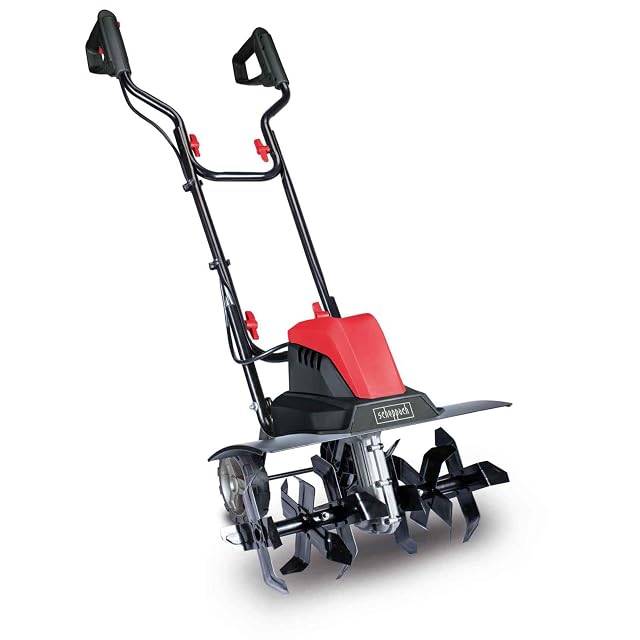
Scheppach MTE460 electric tiller with a 450 mm working width and 24 blades

Scheppach MTE460

Wins 1 of 7

Check price

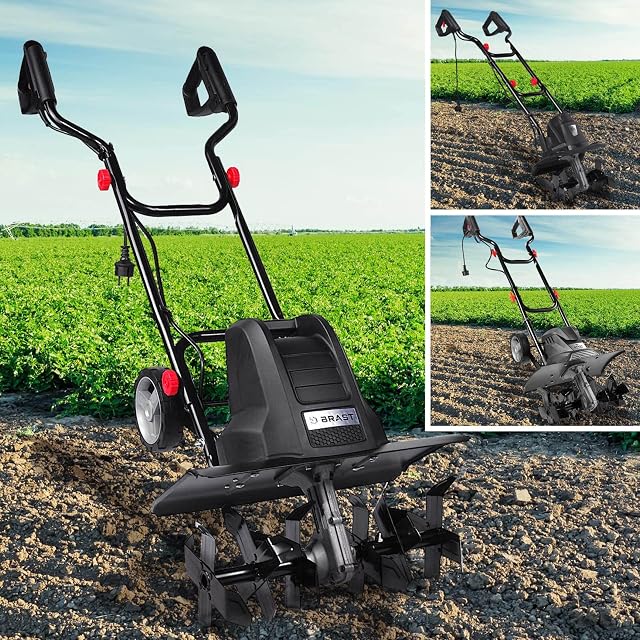
BRAST BRE-AF 1500 electric tiller with a 450 mm working width and 24 blades

BRAST BRE-AF 1500

Wins 4 of 7

Check price

Line by line

Compared on MTE460 BRE-AF 1500
Working width 450 mm 450 mm on the model described
Working depth Up to 220 mm 220 mm
Input power 1500 W 1500 W / 2 PS
Blades 24 at 400 min⁻¹ 24 of 205 mm diameter
Anti-jam clutch Not published Stated, with a guard plate
Transport wheels Not published Folding
Weight Not published About 11 kg

A tick means one listing published something the other did not, or published a better figure. It does not mean the product is better, and the column is not a score out of anything: a maker who says less loses lines here without losing a comparison. The two verdicts below are where the page is settled.

Which one, for whom

Buy the Scheppach MTE460

Scheppach publishes the one figure BRAST does not: 400 revolutions a minute at the tines. That is what decides how finely a tiller works soil and how violently it reacts to a buried stone, and it is the specification most tiller listings omit. Its width figure is also unambiguous, where the competing listing describes a range of models.

Buy the BRAST BRE-AF 1500

BRAST publishes four things Scheppach does not: a weight, a blade diameter, folding transport wheels and an anti-jam clutch. The clutch is the one that matters. A 1500 W motor driving 24 blades into ground that contains a brick has to give way somewhere, and a clutch is the part that decides whether that is the soil or the gearbox.

What this pairing usually raises next

Does 400 rpm matter on a tiller?

It is the figure that describes the work. Faster tines break soil finer and throw stones harder; slower tines dig rather than pulverise. Only one of these two publishes a speed, and on a shelf where most listings publish only width and power that is worth having.

Why is 11 kg worth knowing?

Because a tiller is carried to the bed and lifted out of it, and because its weight is what holds the tines in the ground. Too light and the machine skates across the surface instead of digging; heavy enough and it pulls itself along. One of these publishes the figure.

Is 220 mm deep enough?

For a seedbed, comfortably. Grass seed germinates in the top centimetre or two, and a tilled depth of 22 cm is more than enough to break a compacted surface and mix in a top dressing. Deeper is for vegetable beds rather than lawns.

The full reviews

  • Scheppach MTE460

    1500 W, 450 mm wide, 220 mm deep, 24 blades, 400 rpm

    1500 W and twenty-four blades at 400 rpm across 450 mm, 220 mm deep, with an instant start and a folding handle.

    Best for: A large bed or vegetable plot, and a buyer who wants to check the price against another country

  • BRAST BRE-AF 1500

    1500 W, 450 mm wide, 220 mm deep, 24 blades, 11 kg, 400 rpm

    The only tiller here with a weight, a speed and an anti-jam clutch: 11 kg, 400 rpm, 24 blades on 450 mm.

    Best for: A large vegetable plot worked every year, by somebody who expects to own the machine for a decade

The live figure beside a product went and asked the shop for it the moment this page opened; any amount written into the text has not moved since the sentence was drafted, and it is the first of the two that counts.