The contradiction, which has to come first
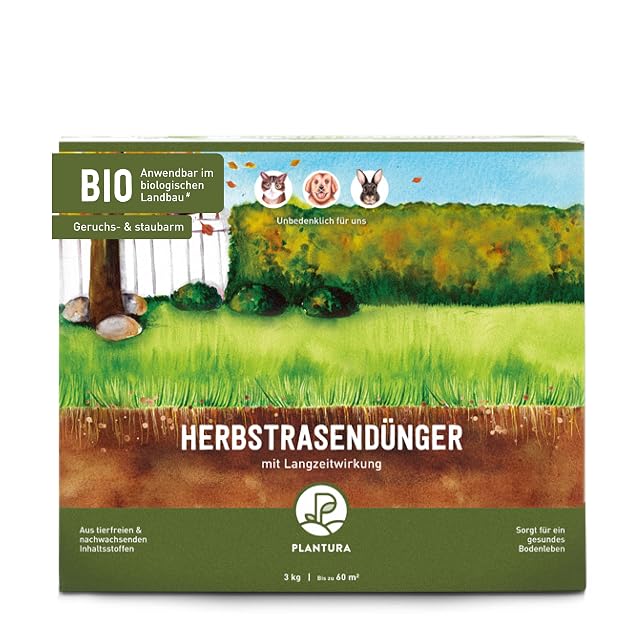
The title says: 3 kg for 60 m².
The fifth feature line says: 3 kg of our organic autumn lawn fertiliser is
enough for 120 m².
Same product, same listing, two coverage figures with a factor of two between
them.
Why that particular error matters on a fertiliser
Working the two figures back gives 50 g/m² and 25 g/m².
Applying 50 when 25 was intended is applying a double dose. On a mineral feed
that is a scorched lawn — brown patches ten days later that take a month to grow
out.
On an organic feed the risk is much lower, because the nitrogen is bound in
plant material and released slowly by soil organisms rather than being
immediately available. That is a real mitigation and it is not a reason to guess.
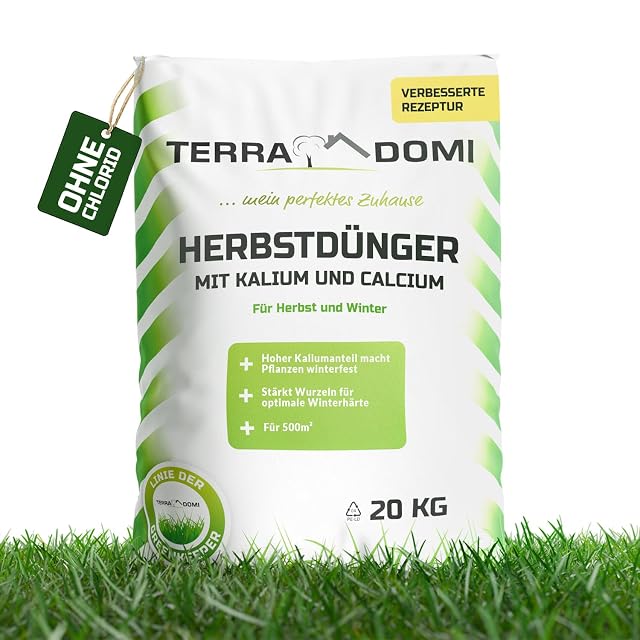
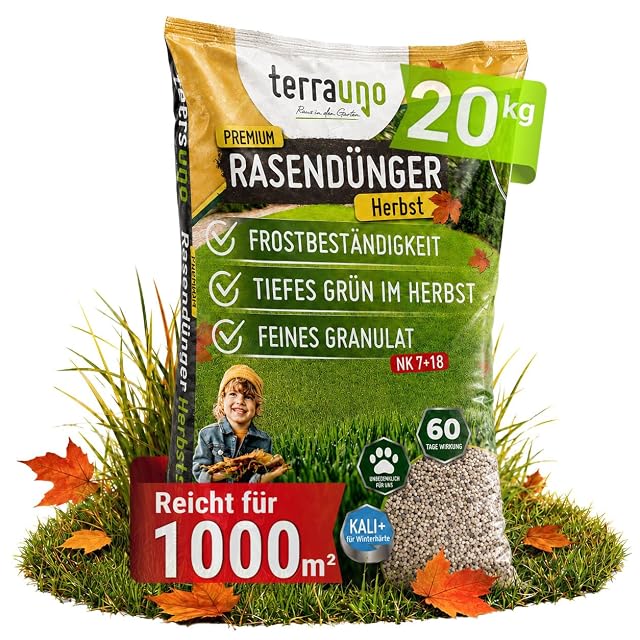
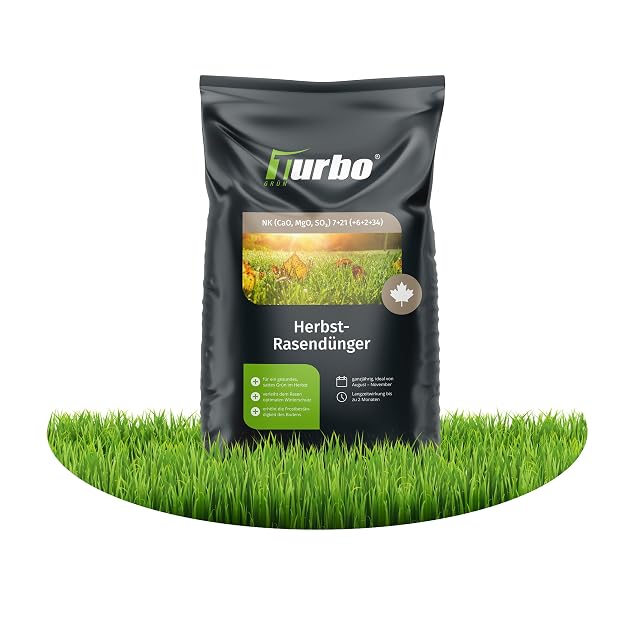
The rest of this shelf publishes rates of 20, 20, 20, and 40 to 45 g/m². Twenty-
five is a plausible figure and so is fifty.
This page reports both and chooses neither, because the one thing a fertiliser
page must not do is invent a dose.
What is genuinely unusual here
Two EU regulations, cited by number.
Regulation 2018/848 on organic production, and 2021/1165 on the inputs permitted
in it.
Across this whole shelf, that is the only reference to any standard maintained
outside the company selling the product. Everything else is adjectives —
premium, power formula, potassium booster, made in Germany.
A numbered regulation can be looked up. It is the same kind of claim as the seed
standard scheme on this site’s lawn seed shelf, and for the same reason it is
worth more than any superlative.
Animal-free organic, which is a real distinction
Most organic fertilisers are animal by-products: horn meal, bone meal, feather
meal, blood.
They work well and they have two drawbacks in a garden. They smell, for days
after application. And dogs dig for them, which is exactly the opposite of what
anybody wants after feeding a lawn.
An animal-free organic feed made from plant material avoids both, and the listing
names low odour as a specific benefit.
“No waiting period after application”
Stated, and it is the sentence a family with a dog or small children actually
cares about.
It is worth contrasting with the other end of this site’s moss killer shelf,
where one product is a plant protection product that requires the lawn to be left
alone for two to three days and may be applied only once a year.
An organic feed has no such restriction, because there is no pesticide in it.
What the listing does ask for is thorough watering after spreading — which is
about getting the granules off the leaf and into the soil, not about safety.
What an autumn feed is, and when not to use it
Every one of the seven products on this shelf is an autumn feed, and this
needs saying because the shelf name does not.
An autumn feed is high in potassium and low in nitrogen.
Nitrogen drives leaf growth. Soft new growth going into winter is exactly what
you do not want: it is what frost damages and what fungal disease colonises.
Potassium does something different — it thickens cell walls, which is the
mechanism behind every “frost resistance” claim on this shelf.
So the sequence is: nitrogen in spring to grow the lawn, potassium in
autumn to harden it.
Using an autumn feed in April will not harm a lawn. It will not green it up
either, and a spring feed is a different product that is not on this shelf.
What goes unpublished
No NPK.
That is the specification of a fertiliser, and five of the seven products here
omit it — including this one, which names potassium without a number.
The two that publish an analysis make something visible that is otherwise
invisible. On those two, the cost of the potassium itself works out at about
23.18 € and 11.86 € per kilogram of K₂O — a factor of two, on the very
element the whole shelf is sold on.
Without an analysis, the only thing comparable is the price of the bag.
No granule size. One product on this shelf publishes 2 to 5 mm, and it is
what a spreader is set for — this site’s spreader shelf carries one machine that
maps its settings to fine seed, medium fertiliser and coarse grit, and the
granule is what decides which.
Availability
Around 14 €, read at the German Amazon store on the day of the survey.
Listed and unsold: the French and Spanish Amazon catalogues hold the reference with nobody behind it.
Nothing came back from the American, British and Italian Amazon stores at all; the buy button there runs a search rather than opening an empty page.
Taken from Keepa on the day this page was last revised; stock and prices move without notice.
Prices quoted in this text were read on 26 September 2026. The live price is at the top of the page.