What is published
One feature line.
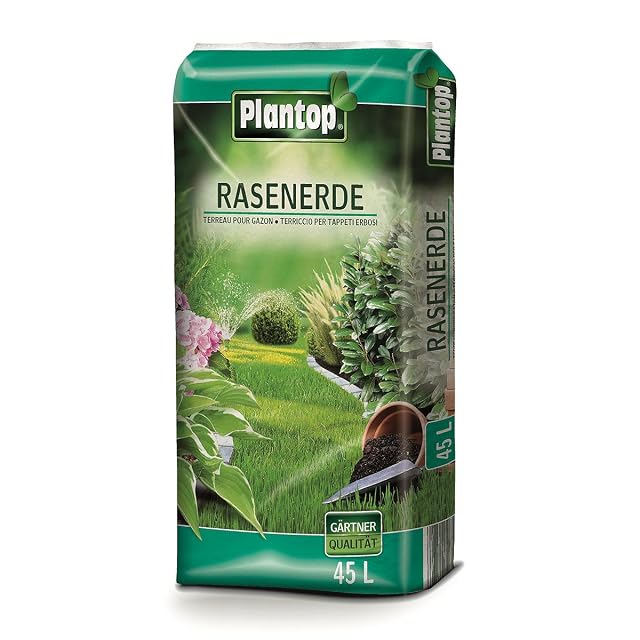
“Plantop: gardener quality!”
The title adds three facts: 45 litres, lawn substrate, and made in Bavaria.
That is all there is. Together with another bag on this shelf whose two feature
lines are both the brand name, these are the thinnest product descriptions in this
family.
What that means for a bag of soil
More than it would for a hand tool.
A spade is visible. You can see what it is made of and judge the handle, and a
listing that says nothing still leaves a photograph that tells you something.
A substrate is opaque in every sense. Two bags of brown crumbly material that
look identical can behave completely differently, and the differences are exactly
the ones nobody can see:
What it is made of. Peat, coir, composted bark, wood fibre, green compost and
perlite hold water, drain and settle in entirely different ways.
Its pH. A substrate at 5.0 and one at 6.5 are different products for a lawn.
Whether it is fed. A starter feed in the bag changes what happens in the first
three weeks.
Whether it contains peat. Which is a decision most buyers now want to make
deliberately.
None of those can be read off a bag, and none of them is published here.
45 litres, at about 0.37 € per litre at the German price recorded here.
That is the cheapest litre of substrate on this shelf, where the four soils run
roughly 0.37 €, 0.40 €, 0.41 € and 0.63 € per litre.
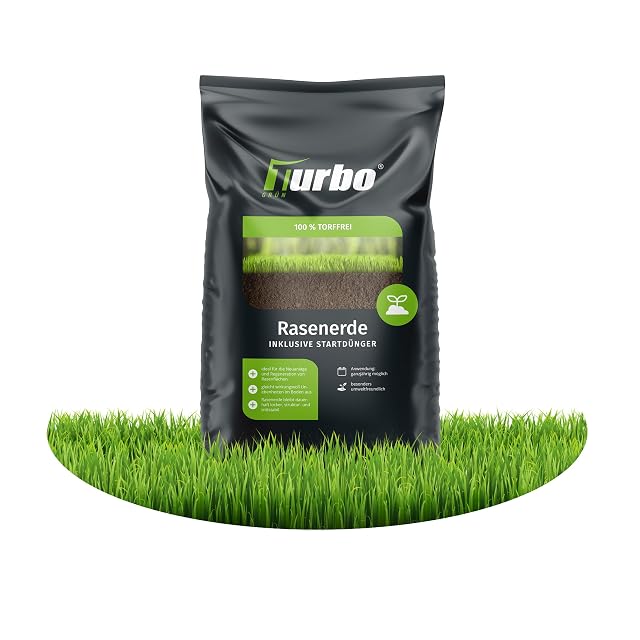
And the dearest of those four is the one that is peat-free — which is the
clearest illustration on this shelf of why a price per litre is not a comparison
on its own.
It is also the largest single bag here at 45 litres. One competitor sells 80 litres
as two 40 litre sacks and another sells 90 as three 30s, so this is the biggest
thing on the shelf to carry in one go — which, for wet substrate, is a real
consideration.
What a lawn substrate is for, and when you need one
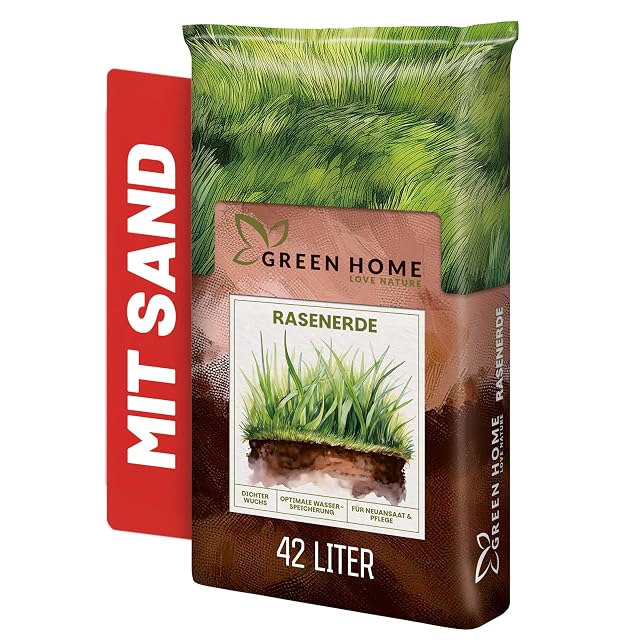
Worth setting out, because this shelf mixes substrate with sand and they do
opposite things.
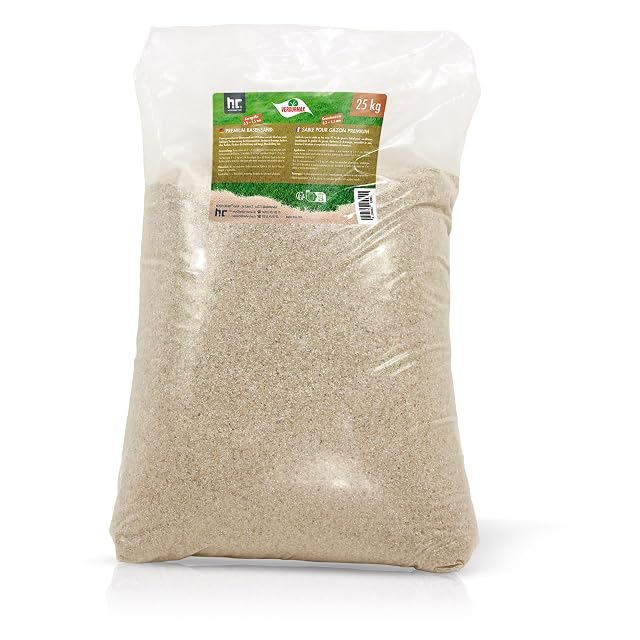
Sand opens a soil and drains it. It is inert and it feeds nothing.
Substrate does the other three jobs:
Filling. A hollow, a rut, a bare patch where something was dug up. Sand in a
hollow is a hollow full of sand, and grass roots badly in pure sand.
Seedbed. Grass seed needs to be in contact with something that holds moisture
for the fortnight it takes to germinate, and a fine crumbly substrate spread thinly
over a sown patch does exactly that. This site’s lawn seed shelf is blunt about the
condition that decides success: the seed must reach soil, and it must not dry out.
Top dressing after scarifying. A light layer across a raked lawn gives new
seed somewhere to sit and adds organic matter to the surface.
A lawn being renovated usually needs sand and substrate — the sand into the
aeration holes, the substrate over the bare patches — and this shelf sells both
without saying they are different.
What this page refuses to do
Guess.
It would be easy to write that a Bavarian gardener-quality lawn substrate probably
contains peat and sand, is probably lightly fertilised, and is probably around pH
6.
Every one of those is a reasonable guess about a garden substrate and none of them
is a fact about this one. One bag on this shelf publishes its four ingredients, its
pH and its NP analysis; another states plainly that it contains no peat at all.
Against those, “gardener quality” is not a specification. It is a slogan, and this
page reports it as one.
Availability
Around 16 €, read at the German Amazon store on the day of the survey.
Nothing came back from the American, British, French, Italian and Spanish Amazon stores at all; the buy button there runs a search rather than opening an empty page.
Taken from Keepa on the day this page was last revised; stock and prices move without notice.
Prices quoted in this text were read on 26 September 2026. The live price is at the top of the page.