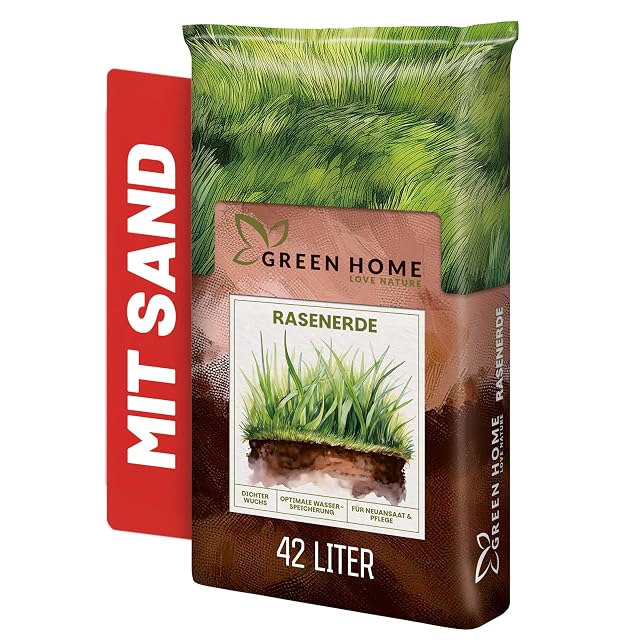
The only fully declared bag on this shelf
Composition: white peat, perlite, Orgapor and substrate wood fibre, plus added
sand.
pH: 6.0.
Starter feed: an integrated NP fertiliser, 23-14.
Set that against the rest of this family: one substrate publishes a single feature
line reading “gardener quality!”, another publishes two lines that are both the
brand name, and the third publishes that it is peat-free and little else.
Three declared properties is not lavish. On this shelf it is exceptional.
What the four components each do
This is worth going through, because it is the only place on this shelf where it
can be done from published information.
White peat. Holds water — a great deal of it — and is structurally stable and
consistent. It is the traditional backbone of horticultural substrate for exactly
those reasons, and it is also the component with an environmental cost, discussed
below.
Perlite. Volcanic glass heated until it pops into light, porous white
granules. It is mineral and does not decompose, which is the point: the air
spaces it creates are still there in year two, after the organic fractions have
broken down and settled. It is what keeps a substrate draining rather than
slumping.
Wood fibre. Defibrated softwood. It gives an open, springy structure and drains
freely, and it is the main peat replacement in modern substrates. Its known
behaviour is that it consumes nitrogen as it decomposes — which is part of why
a mix containing it carries a starter feed.
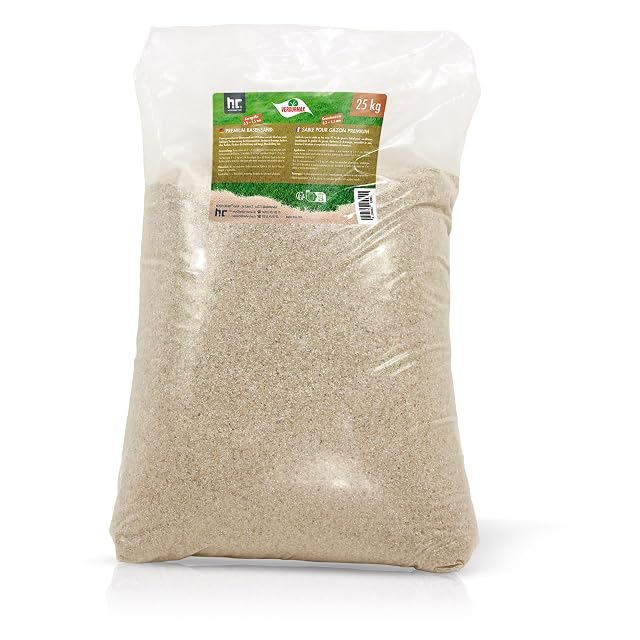
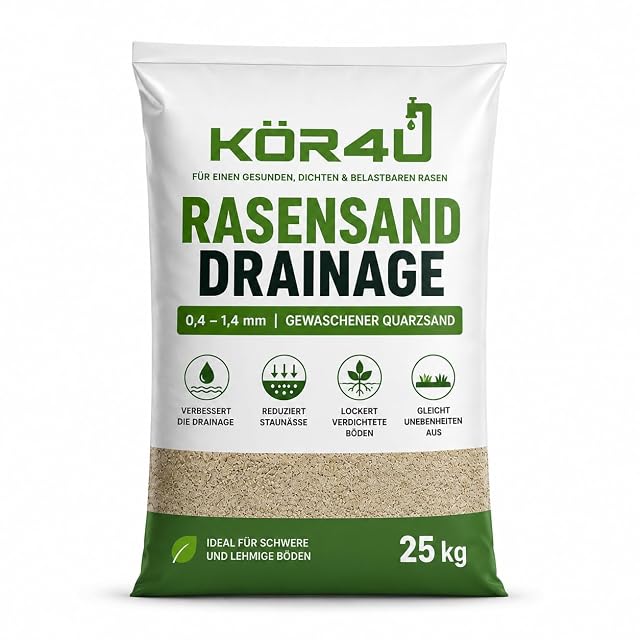
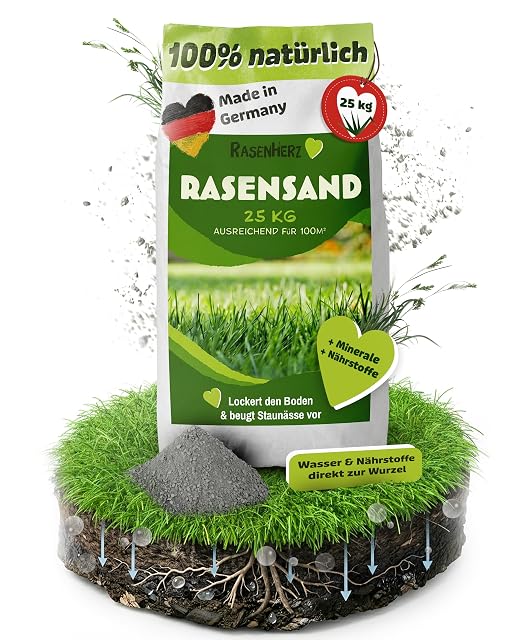
Sand. The listing’s first feature line credits it with improving aeration and
preventing waterlogging, and that is right. It also adds weight and resists
compaction, which a purely organic mix does not.
Together that is a coherent recipe rather than a list of nice words: two components
holding water, two keeping it open.
pH 6.0
The only pH figure on this shelf, and it is in the right place.
Grass does best in slightly acid conditions, broadly pH 6.0 to 6.5. Below
about 5.5 nutrient availability falls away and moss starts to have the
advantage — which is why this site’s moss killer shelf keeps returning to acidity
as a cause rather than a symptom.
Above about 7 the problem inverts: iron and manganese become less available, and
grass goes pale rather than dark green.
Six point zero is the bottom of the ideal band. For a substrate that will be mixed
into whatever soil is already there, that is a sensible place to sit.
What nothing on this shelf tells you is your own soil’s pH. This site’s soil
tester shelf covers that, and the one product there that measures it by chemical
reaction rather than with a metal probe is the one whose result can be relied on.
The starter feed, and the honest note about it
NP 23-14. Twenty-three per cent nitrogen, fourteen per cent phosphate.
The listing calls it a starter fertiliser delivering immediately available main
nutrients for a fast growth boost, supporting the seedlings and encouraging dense
sward formation.
That describes what it will do. It is worth noting what a classic starter
analysis looks like: phosphate-led, because phosphorus is what a germinating
seedling puts into roots, and roots are what it needs before leaf.
Twenty-three per cent nitrogen is a growth figure — for comparison, the autumn
feeds on this site’s fertiliser shelf run 5 % and 6 % nitrogen, and the moss-and-
feed products run 8 % and 14 %.
So this is a mix that will green a repair up quickly. Whether the emphasis is
ideal for a seedbed is a fair question, and the answer depends on how thinly it is
spread — which the listing does not say.
The peat, stated plainly
White peat is named as the first ingredient.
That has to be set against another substrate on this shelf which is declared
100 % peat-free, and which costs about 0.63 € per litre against this one’s
0.40 €.
The difference is not performance. Peat is an excellent substrate component and
that is precisely the problem: it is harvested from peat bogs, which are
carbon stores built over thousands of years and habitats that do not recover on any
human timescale. Extracting it releases carbon that was locked away.
Peat-free mixes replace it with wood fibre, coir and composted bark — which this
mix already contains one of.
It is a decision rather than a defect, and the two products on this shelf let you
make it with about 0.23 € per litre between them.
What goes unpublished
No application rate. No depth.
Those are the practical questions for a substrate: how thick a layer over a sown
patch, and how much over a whole scarified lawn.
Neither is here, and only one product on this shelf publishes a rate of any kind.
The relevant limit is the one this site’s lawn seed shelf states: seed must reach
soil and must not be buried. A light covering — enough to hide the seed and
no more — is the standard, and a 42 litre bag spread thinly goes a long way.
Availability
Around 17 €, read at the German Amazon store on the day of the survey.
More than 1.6× the cheapest country at the French Amazon store; a gap of that size normally means forwarded stock rather than a seller on the ground, so the spread above leaves it out.
Nothing came back from the American, British, Italian and Spanish Amazon stores at all; the buy button there runs a search rather than opening an empty page.
Taken from Keepa on the day this page was last revised; stock and prices move without notice.
Prices quoted in this text were read on 26 September 2026. The live price is at the top of the page.