Not for lawns
This is the sentence that has to lead, because this shelf mixes two kinds of
product that are not substitutes for each other.
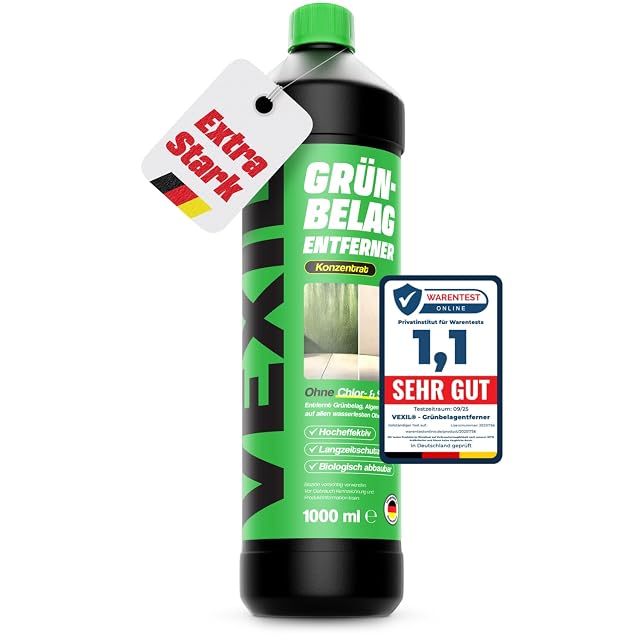
The surfaces named: facades, garden furniture, gravestones, ornamental stone,
terraces, wood, plastic, concrete, natural stone, glass, ceramic and PVC.
This is a biocidal product for killing algae, moss, mould, fungi and lichen on
hard surfaces.
Grass is a plant. It will be killed along with everything else, and no dilution
makes it a lawn treatment.
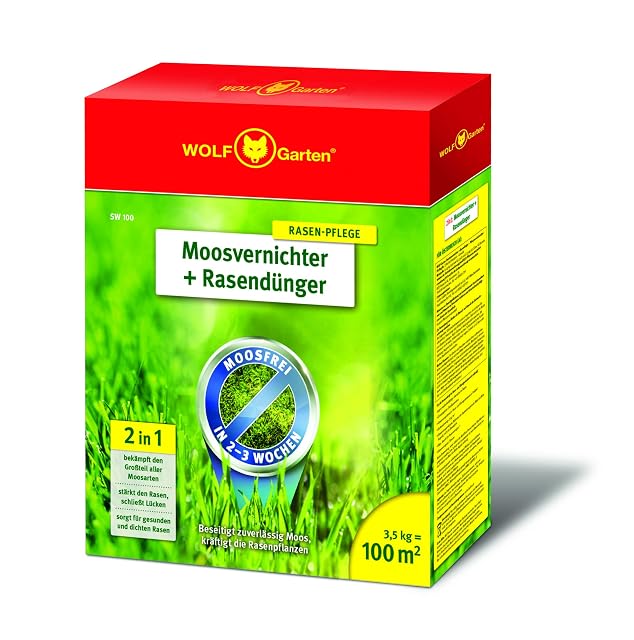
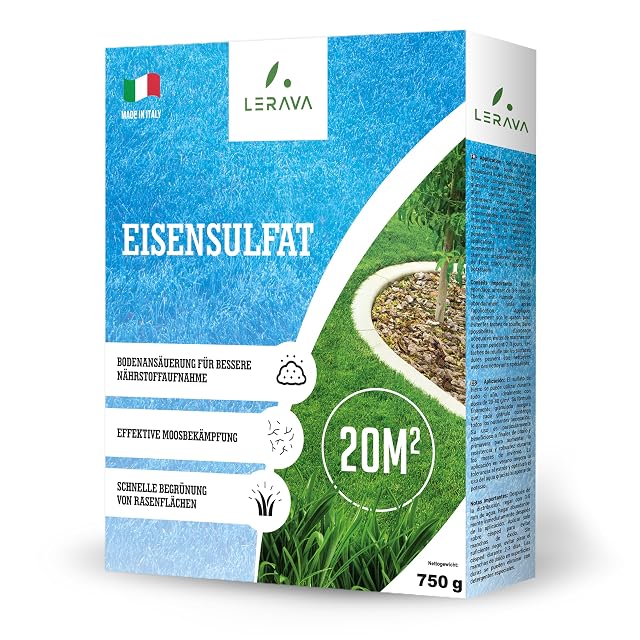
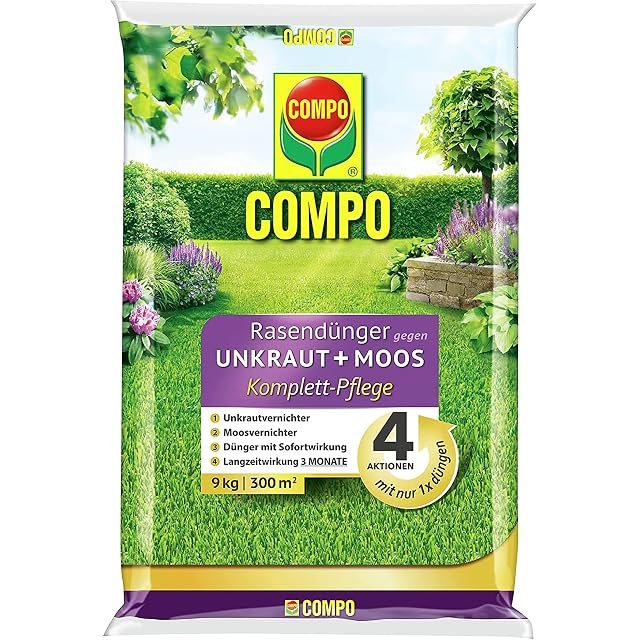
The three lawn products on this shelf are iron fertilisers and one plant
protection product, and they work by entirely different chemistry.
The timings, which is the best thing in this listing
Algae: first visible results in 2 to 3 days.
Moss: 1 to 3 weeks.
Stubborn lichen: 3 to 12 months.
Three organisms, three timescales, published separately. Nothing else on this
shelf does that, and it is worth understanding why the numbers are so far apart.
Algae are a film of single cells on the surface. There is nothing to break
down — kill them and they wash off in the next rain. Days.
Moss is a plant, with stems and leaves and structure. Killing it turns it
brown; the tissue still has to decay and be washed away. One to three weeks.
Lichen is not one organism. It is a fungus and an alga living together, in a
crust bonded to the stone, growing at perhaps a millimetre a year. Killing it does
not detach it. It has to weather off, and that takes seasons.
Anybody expecting a clean terrace in a weekend will be disappointed by every
product on this half of the shelf. This listing says so in numbers, which is more
than the alternatives do.
The dilution, and the trap it reveals
1:10 for light soiling, stated as 1 L for 100 m².
1:5 for heavy soiling, stated as 1 L for 50 m².
Publishing a coverage against each dilution is the right way to do it, and
only this listing manages it.
And then set the word “light” against the rest of this shelf:
One concentrate calls 1:20 its light dose.
Another calls 1:2 its light dose, and uses the product neat for heavy
growth.
So “light soiling” means 1:20, 1:10 or 1:2 depending on the bottle. This one’s
light dose is twice as strong as the weakest here and five times weaker than the
strongest.
The adjectives are useless for comparison. Only the ratio, the volume and the area
together mean anything, and this page does that arithmetic on every product in the
family.
What it costs per square metre
About 0.18 € at the light dilution, against about 0.136 € for the other
hard-surface concentrate here that publishes an area.
The third publishes neither an area nor a rate that can be converted, so it cannot
be placed on the scale at all.
Acid-free and chlorine-free
Stated, and described as particularly gentle on materials — safe on wood,
plastic, concrete, natural stone, glass, ceramic and PVC.
That list is the point of the claim.
Acid attacks limestone, concrete, mortar joints and aluminium. On a natural
stone terrace it etches; on block paving it eats the cement and the jointing.
Chlorine bleach lightens stone unevenly, strips colour out of wood, kills
plants it runs onto, and corrodes metal fixings.
A formulation that is neither can be put on more surfaces without a test patch
turning into a repair — which is why a single product can be recommended for a
gravestone, a timber fence and a glass conservatory roof.
The registration number
BAuA N-114607, published in the feature text, together with the statutory
wording: use biocidal products carefully; always read the label and product
information before use.
Two of the three concentrates on this shelf publish a number like this. One does
not, in its feature text.
This page reports that difference as an observation about what was published,
without drawing a conclusion about any product’s regulatory status.
What a buyer can take from it is practical: a registration number is a pointer to
a public record, and a manufacturer that prints one is inviting the check.
Practical notes this listing implies but does not spell out
Apply to a dry surface. The other two concentrates here both say so
explicitly, and one asks for 24 rain-free hours afterwards. A biocide diluted by
rain before it has acted is a biocide that has not acted.
Mix in a dedicated sprayer. This site’s sprayer shelf carries the tools, and
its standing rule applies here more than anywhere: one sprayer, one purpose.
Residue stays in the dip tube, the hose and the nozzle, and a sprayer that has
held a biocide should never hold a foliar feed.
Keep it off the lawn and off beds. Run-off from a treated terrace onto grass
is the commonest way this product ends up where it should not be.
Availability
Around 18 €, read at the German Amazon store on the day of the survey.
Nothing came back from the American, British, French, Italian and Spanish Amazon stores at all; the buy button there runs a search rather than opening an empty page.
Taken from Keepa on the day this page was last revised; stock and prices move without notice.
Prices quoted in this text were read on 26 September 2026. The live price is at the top of the page.