The sentence that makes this the most honest listing in the family
From the fifth feature line, as published:
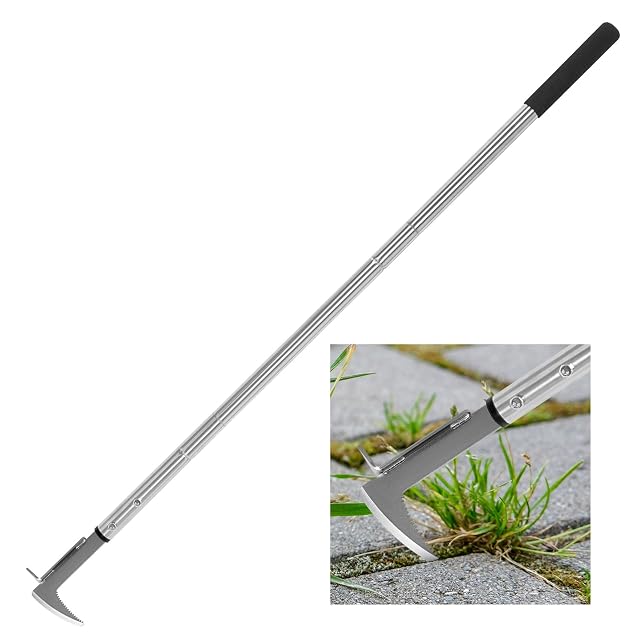
“Note: this weeder is best suited for cracks with a width of at least 0.1 inch
(2.5 mm) and a depth of less than 2 inches (5 cm). For extremely narrow or deep cracks we
recommend specialised tools for optimal results.”
A width minimum, a depth maximum, and a recommendation to buy something else.
Why that is worth more than any claim on this shelf
Seven products in this family and not one other publishes a limit of any kind.
They publish what they are for — moss, weeds, taproots, hard ground — and never what they
are not for.
And the limits here are the real ones, both of them.
Too narrow. A hairline crack in concrete or a tight butt joint between slabs is
under 2.5 mm, and a blade simply will not enter it. What happens instead is that
somebody leans on it, and the tip bends — which on an L-shaped blade means it no longer
sits in a joint at all.
Too deep. A joint between setts on a sand bed can be well over 5 cm deep. A blade
that reaches part way down takes the green off the top and leaves the roots at the
bottom, and the moss is back in a fortnight. That is the commonest disappointment with
this whole category and the only listing to name it is this one.
This is the third self-limiting statement this site has found across all its shelves — a
pressure sprayer that says “only suitable for” two named machines, and a lawn sand that
says it is not suitable for golf courses. All three are worth more than a superlative,
because they can be checked before buying.
Three handle lengths
138 cm. 105 cm. 69 cm.
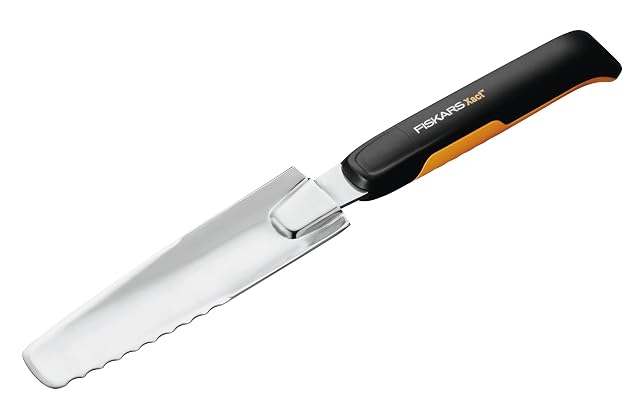
That is what separates this from the two hand scrapers on this shelf, which are 31.5 cm
and one-handed.
And the difference is the position, which is the whole job
A joint scraper is used with a hard repeated pull, along a line, for as long as the
paving lasts.
At 31 cm, that is done kneeling or bent double, at ground level. For a small
terrace it is fine, and the short tool gives better control in a tight joint.
At 138 cm, it is done standing, walking backwards along a joint, with the pull
coming from the shoulders and the body rather than from a bent spine.
A drive with forty metres of joint in it is the case that decides between them: an
afternoon on your knees against an hour on your feet.
And 69 cm is not a redundant setting. Kneeling to do the awkward bit — around a
drain, against a step, in a corner — with a short tool is easier than doing it with a
metre and a half of handle in the way.
Three positions is more adjustment than anything else in this family offers. For
comparison, the other long tool on this shelf is a stand-up weed puller at a fixed
100 cm.
The L-shaped serrated blade
“The sharp L-shaped blade has several sharp sides and is suitable for pushing, pulling,
digging and cutting.”
Four actions from one blade, and the geometry supports the claim.
The L is what every joint scraper on this shelf has in some form. A straight blade can
only be pushed, and pushing along a joint is weak and imprecise because the blade rides
out. A hook drops into the gap and is pulled, staying down against the side of the
slab, where an arm is strong.
The serration is the addition, and it does the same job serration does on the lawn
shears on this site’s shears shelf: grass and moss are slippery and fibrous, and a smooth
edge pushes them along instead of cutting. Teeth grip.
Several working faces is what makes a long-handled tool usable, because at 138 cm you
cannot rotate your wrist to present a different edge — the edge has to already be facing
the right way.
Stainless steel, and a coating as well
Both stated: high-quality stainless steel, and a rust-protective surface treatment for
long-term use in wet or rainy conditions.
That is belt and braces, and on this tool it is reasonable.
Stainless matters because this is the tool used in wet grit and put away dirty — the
last thing used before going indoors.
A coating on top protects the flat of the blade. What it will not survive is the
edge, which is abraded by sand and stone on every single pull and is bare metal within
a season regardless.
Which makes the maintenance the same as everything else on this shelf, and no listing
states it: wipe it dry, store it dry.
A joint scraper. For paving.
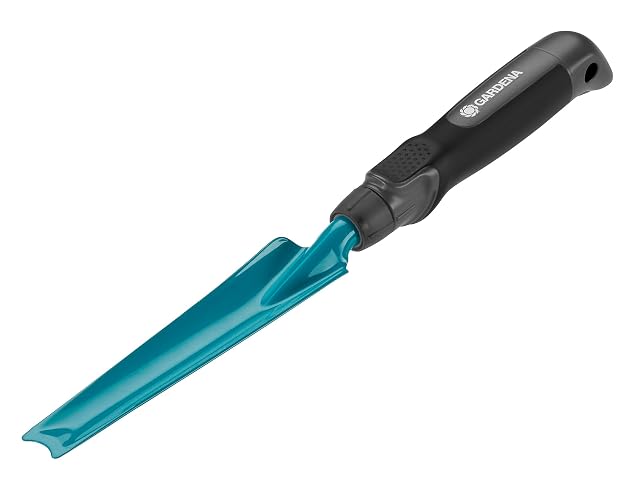
Three products on this shelf are these. Two are taproot knives for lifting weeds out
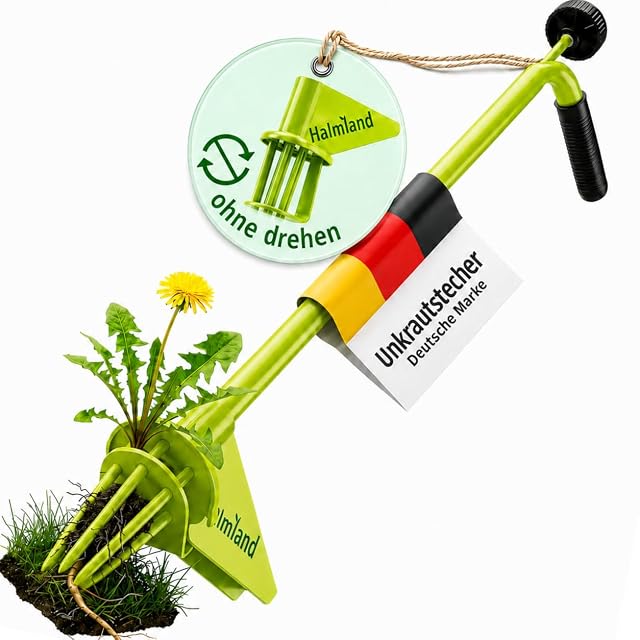
of soil, kneeling. Two are stand-up claw pullers with foot pedals, for lawns.
This does nothing to a dandelion in grass. A blade dragged across a lawn cuts the leaves
off and leaves the root, and the plant is back in a week — which is exactly the failure
the taproot tools on this shelf exist to avoid.
It is a terrace, path, kerb and drive tool, and the listing is clear about it: gaps in
walkways, cracks in driveways, small spaces between terraces and paving stones.
What goes unpublished
No working width.
That is the figure a joint scraper is judged on — the length of joint cleared per pull.
One scraper on this shelf publishes 7 cm, and on forty metres of joint that number
sets the time.
Here there are handle lengths and a crack-size range, and nothing about the blade’s own
width.
No weight. One tool on this shelf publishes 260 g. On a 138 cm tool the figure
matters differently — it is held out and swung rather than gripped — and it is absent.
And the honest note about the price
The dearest tool in this family, at nearly four times the cheapest.
What it buys, itemised: three handle positions, a serrated multi-face blade,
stainless steel plus a coating, and a published limit.
What it does not buy is a different result on a short run. On a small terrace, the 31 cm
hand scrapers on this shelf clear the same joints at a third of the price — and one of
them comes with a 35-year warranty.
Availability
From 30 € to 32 €, that being the spread across the German, French, Italian and Spanish Amazon stores on the day of the survey.
Listed and unsold: the American and British Amazon catalogues hold the reference with nobody behind it.
Taken from Keepa on the day this page was last revised; stock and prices move without notice.
Prices quoted in this text were read on 26 September 2026. The live price is at the top of the page.