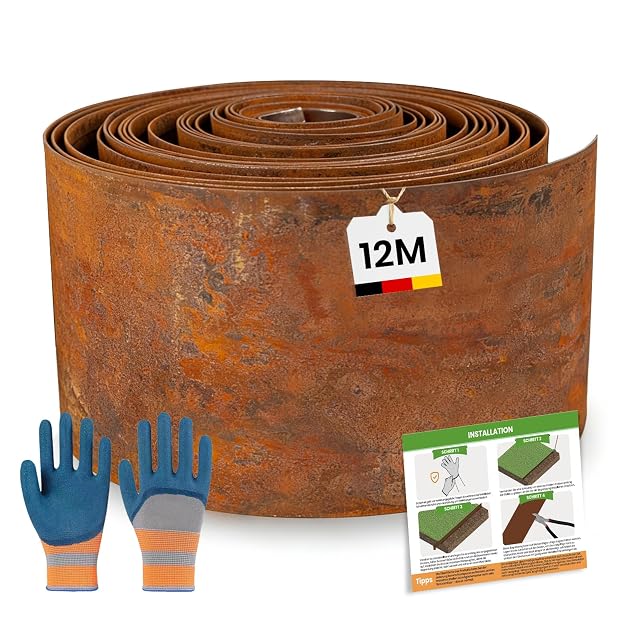
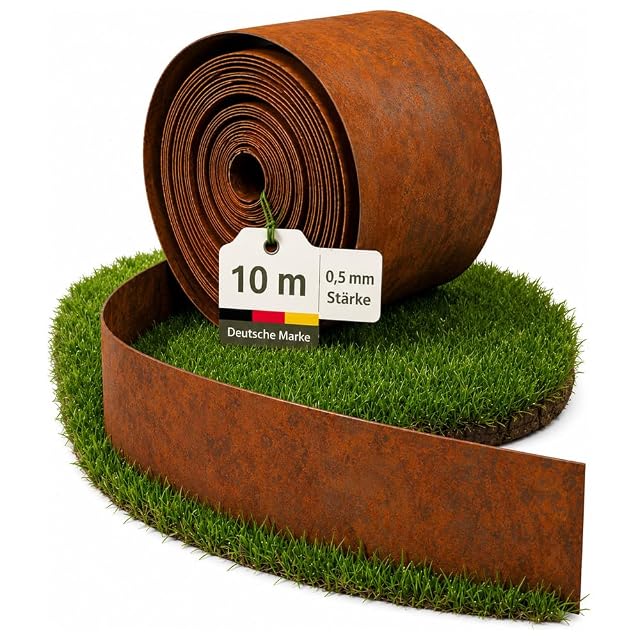
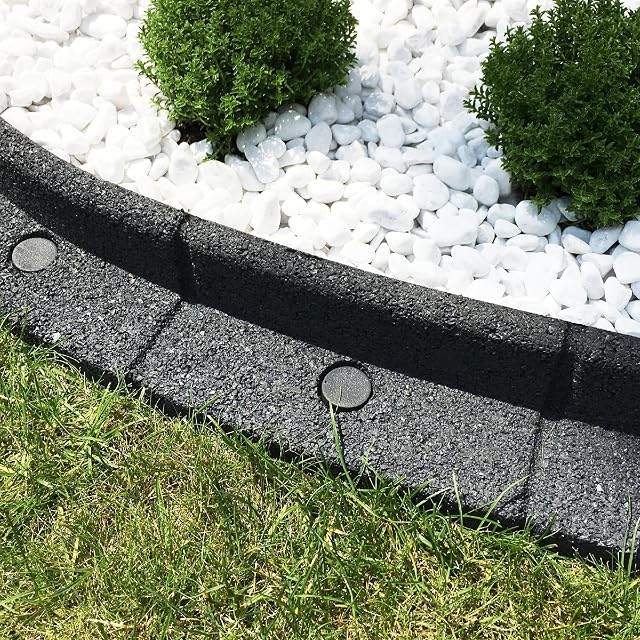
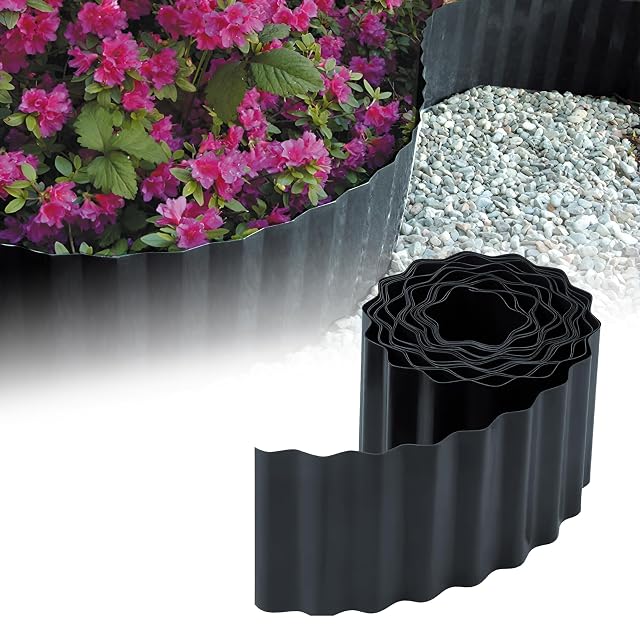
Twelve metres, and the cheapest Corten here
Every other Corten product on this shelf is 10 m. This is 12.
At about 3.83 € per metre, against 4.70 €, 5.00 € and 6.32 € for the other three
Corten runs — and 3.10 € for galvanised steel, 1.11 € for plastic and about 15.00 €
for recycled rubber.
So within its own material it is the cheapest, by a clear margin, and it gives two
extra metres for the money.
What Corten actually is
Worth setting out once, because four products on this shelf are made of it and three
of them describe the rusting differently.
Corten is a steel alloyed with copper, chromium, nickel and phosphorus so that
its rust behaves differently from ordinary rust.
On mild steel, rust is porous and flakes off, exposing fresh metal underneath, and
the process continues until there is nothing left.
On weathering steel, the oxide layer is tight and adherent. It seals the surface
and the corrosion rate drops to almost nothing. The rust is the protection, which is
why the listing says correctly that it is not painted — a coating would prevent
the thing that makes it work.
The visual consequence is the point of buying it: a deep orange-brown that changes
with the weather and reads as deliberate rather than neglected.
The patina, and the honest schedule
This listing is straightforward about it, and that is worth crediting:
“The surface may already show a light patina on delivery. The final, even rust
appearance develops through natural weathering over time. This process is typical of
the material and does not constitute a quality defect.”
That is accurate, and it is a warning: it will not look right when it arrives.
A fresh Corten sheet is grey-brown and blotchy. An even patina takes months, and
it needs alternating wet and dry — steel that stays permanently wet, or permanently
dry under an overhang, patinates unevenly or not at all.
Two other Corten products on this shelf take the opposite approach and supply it
pre-rusted, with one of them adding its own warning that even a pre-patinated
surface “cannot be perfect immediately”.
Neither approach is wrong. This one is cheaper and asks for patience.
The thing no Corten listing on this shelf says
It runs rust while the patina forms.
During the first year or two, before the oxide layer has stabilised, rain washes
iron oxide off the surface and carries it downwards.
Onto pale paving, limestone, rendered walls or light gravel, that
leaves orange-brown staining, and it is the same chemistry as the iron staining this
site’s moss killer shelf warns about at length — iron oxide bound into a mineral
surface does not brush off.
It matters much less against grass, dark soil or bark mulch, which is where most
edging goes.
The galvanised steel product on this shelf does not do this at all, and if the
edging runs alongside a light patio that is the relevant difference between them.
Hemmed edges, which is the real safety answer
“Thanks to the hemmed edges, the garden border can be handled and installed safely,
reducing the risk of injury.”
A hem is the top edge folded back on itself. It does two things at once:
It removes the cut edge. A sheared steel edge at ankle height in a garden is
genuinely sharp, and it is there for twenty years.
It stiffens the sheet. A folded edge roughly doubles the material along the top,
and that is where the bending stiffness of a thin upright sheet comes from — the same
reason the flat panels on this site’s rain barrel shelf are dimpled.
One other product here specifies its fold as 1 cm, which is the more useful
statement.
And the gloves, which are the other kind of answer
A pair of mounting gloves is included.
Three products on this shelf do this, and it is worth reading as what it is: an
admission that thin steel sheet cuts hands.
Gloves plus a hem is belt and braces. Gloves instead of a hem would be the
weaker arrangement, and one steel product on this shelf has neither.
The claim this page does not adopt
“Has a repellent effect on slugs.”
The metal with a documented effect on slugs and snails is copper — a copper
surface reacts with the mucus they move on, and copper tape and copper rings are
sold specifically for it.
Corten contains a small percentage of copper as an alloying element. It is not a
copper surface: what a slug meets is iron oxide.
Nothing in this listing measures or substantiates the claim, and this page reports it
without adopting it.
What goes unpublished
No thickness.
That is the specification of a metal edging. It decides whether the run holds a
clean line or follows every hump in the ground, and whether it buckles when it is
hammered in.
Two of the five metal products on this shelf publish theirs — 0.7 mm galvanised
and 0.6 mm Corten — and it is the figure to compare them on. This one does not.
No fixing. No pegs, anchors or ground clips are described, and no installation
method beyond the gloves. Other products on this shelf variously supply 11 earth
clips, colour-coded pins, or cutting teeth hammered straight into the turf.
And it is a bed border, not a mowing edge. At 15 cm, standing proud, a mower
cannot reach the grass against it — two products on this shelf are sold on being
mower-safe and this is not one of them.
Availability
From 46 € to 60 €, that being the spread across the German, French, Italian and Spanish Amazon stores on the day of the survey.
Beyond the euro zone, the British Amazon store prices it in its own currency, which the spread above sets aside.
Nothing came back from the American Amazon store at all; the buy button there runs a search rather than opening an empty page.
Taken from Keepa on the day this page was last revised; stock and prices move without notice.
Prices quoted in this text were read on 26 September 2026. The live price is at the top of the page.