A rate that agrees with its own packet
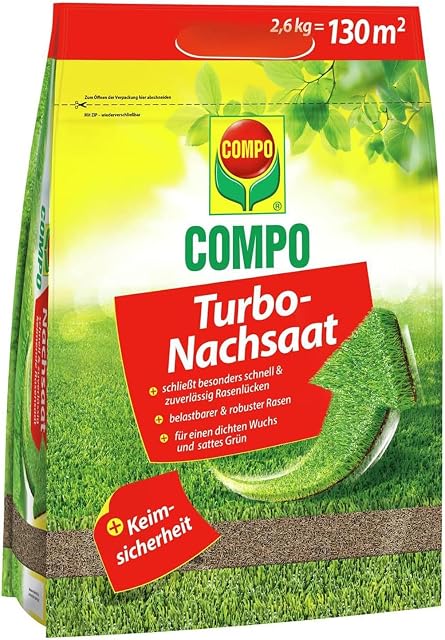
2.6 kg. 130 m². 20 g/m².
Divide the first by the second and you get the third exactly.
That sounds like a low bar and it is not one this shelf clears reliably. One bag
here publishes a coverage and no weight at all, so its rate cannot be
calculated. Others publish a weight and an area and leave the rate implicit.
This one publishes all three and they agree, which means somebody checked.
Twenty grams, which is the lowest here
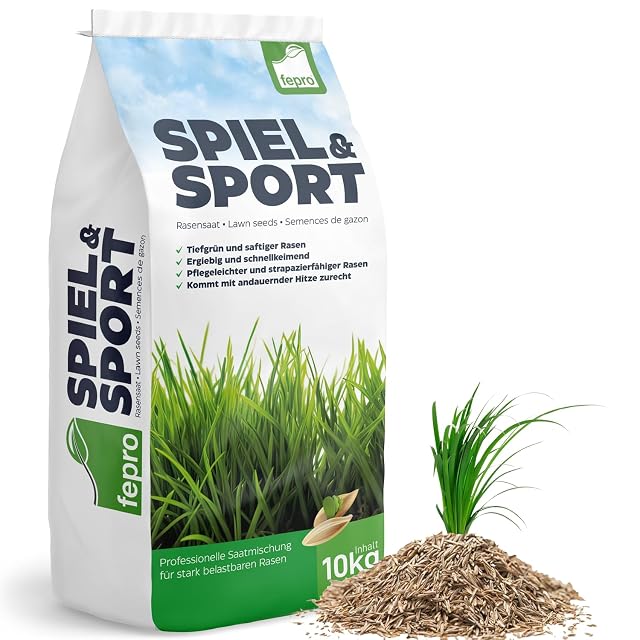
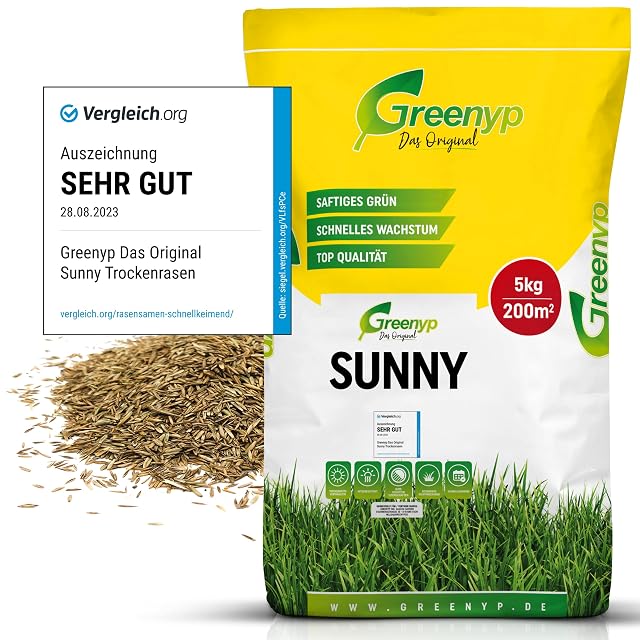
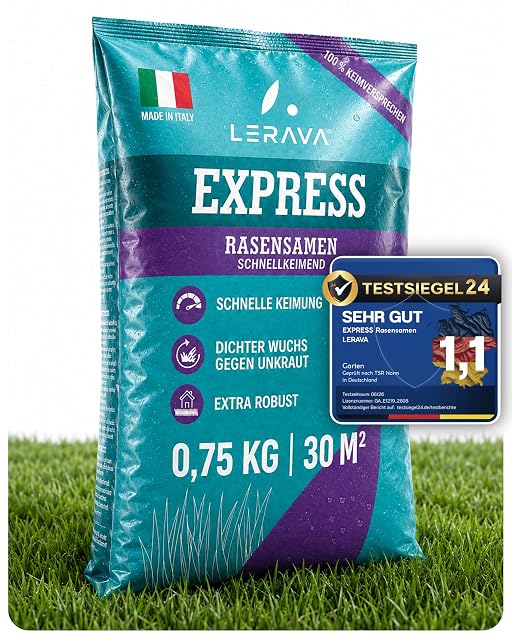
Across this shelf the published or derived rates are 20, 25, 25, 25–29 and
25–30 g/m².
So a kilogram of this covers 50 m², against 40 m² for most of the others — a
quarter more ground.
And that is defensible for overseeding, for a specific reason
Overseeding is not sowing.
On bare soil, every seed has a chance: it falls on ground, it takes up water,
it germinates. Sowing rate translates fairly directly into cover, and a higher
rate gives faster, denser establishment.
On an existing lawn, most of the seed never touches soil. It lands on grass
blades, works down into the thatch layer, and sits there — and a seed in thatch
does not germinate however many of its neighbours are with it.
So beyond a certain point, more seed on an unprepared lawn is simply more seed for
the birds.
What changes the outcome is soil contact: scarifying first so the surface is
open, and a light top-dressing afterwards so the seed is covered. This site’s
aerator and lawn soil shelves carry the tools for exactly that.
A lower stated rate on an overseeding product is consistent with that reality
rather than a corner cut.
Ten degrees
The germination threshold, and two other bags on this shelf agree; a third says
8 °C.
Below it, seed does not germinate — it waits, in cold wet ground, where birds find
it and damp rots it. The bare patch it was meant to close stays open for another
three weeks, and weeds get there first.
The practical proxy, since almost nobody owns a soil thermometer: when the lawn
starts growing and needs its first cut, the soil is warm enough to sow into.
Before that, it is not, whatever the date is.
The rate per kilo, and where it sits
About 8.84 € per kilo, and about 0.18 € per square metre.
Across this shelf the range runs from 4.40 € per kilo and 0.11 € per
square metre up to 15.87 € and 0.40 € — a factor of 3.6 either way.
So this sits in the middle, and it is the cheapest of the small and medium packs:
the two products below it on price per kilo are 5 kg and 10 kg sacks.
At 2.6 kg it is the size that suits the job it is sold for. A 10 kg sack of
overseeding mix is more seed than a domestic lawn needs in three years, and grass
seed does not improve in storage.
The claim this page does not carry
“Number one lawn seed in Germany.”
No source, no year, no measure — units, value, market share, or a retailer’s own
ranking, all of which would mean different things.
It is reported as published and treated as a marketing statement.
The species mix.
Nothing in the listing says what grasses are in it.
One bag on this shelf names its mix — 90 % perennial ryegrass, 10 %
smooth-stalked meadow grass — and that line makes every other claim on the packet
checkable, because each property of a lawn belongs to a species. Fast germination
is ryegrass. Fine texture and drought tolerance are fescues. A sward that knits
together and lasts is meadow grass, and it is slow.
“Dense and hard-wearing”, “deep green”, “high germination reliability” and “all
soils” are all properties of grasses that are not named here.
Availability
From 23 € to 31 €, that being the spread across the German and French Amazon stores on the day of the survey.
Beyond the euro zone, the British Amazon store prices it in its own currency, which the spread above sets aside.
Listed and unsold: the Italian and Spanish Amazon catalogues hold the reference with nobody behind it.
Nothing came back from the American Amazon store at all; the buy button there runs a search rather than opening an empty page.
Taken from Keepa on the day this page was last revised; stock and prices move without notice.
Prices quoted in this text were read on 26 September 2026. The live price is at the top of the page.