The only bag on this shelf that says what is in it
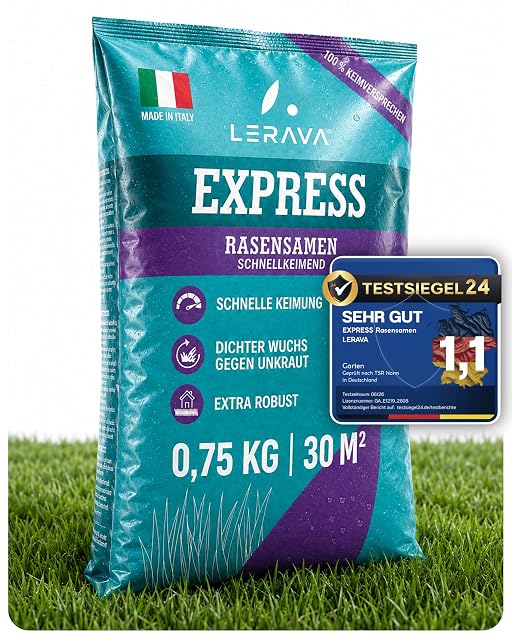
90 % perennial ryegrass. 10 % smooth-stalked meadow grass.
Six of the seven seed products in this family publish no species at all. They
publish adjectives: fast-germinating, hard-wearing, drought-resistant,
deep-green, premium.
Every one of those properties belongs to a species, and without the species
none of them can be checked.
What the two named grasses actually do
Perennial ryegrass — the 90 %.
It germinates in days rather than weeks, which is where “express” comes from. It
takes heavy foot traffic better than any other common lawn grass, which is where
“hard-wearing” comes from. It establishes fast enough to hold a bare patch before
weeds find it.
And it is coarse. A wide, shiny blade, a tufted habit, and no creeping
growth — ryegrass grows where the seed landed and nowhere else. It is also not
long-lived by lawn standards, and it is not drought-tolerant.
Smooth-stalked meadow grass — the 10 %.
Slow. Genuinely slow: weeks to germinate and most of a season to amount to
anything.
And it is the only one of the two that spreads. It puts out underground
rhizomes and knits into a continuous turf, filling the gaps between the ryegrass
tufts over a year or two. It is what makes a lawn a sward rather than a
collection of plants.
So the mix is honest about itself
A 90/10 ratio is a fast mix that becomes a durable one slowly.
The ryegrass gives you green in a week and something you can walk on in a month.
The meadow grass gives you a lawn in two years, if the mowing and feeding let it.
That is exactly what a repair seed should be, and it is exactly not a fine
ornamental lawn. An ornamental mix is mostly fescues — fine leaves, dense
growth, drought tolerance, and no tolerance of being walked on.
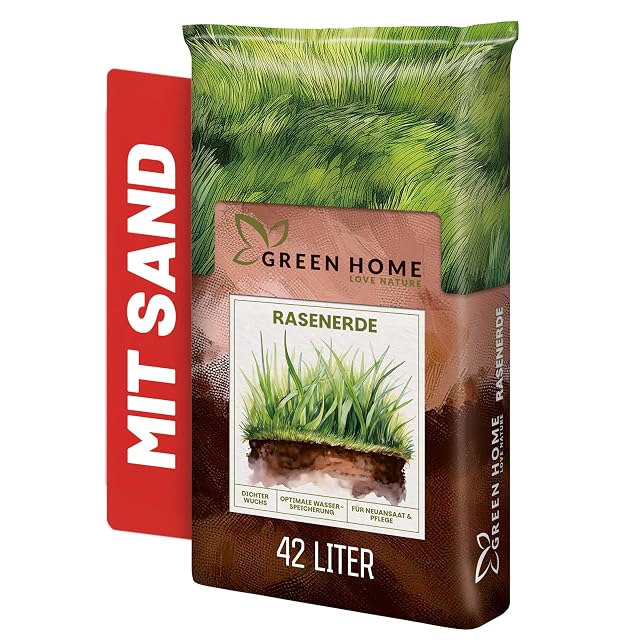
“Pure seed, without soil or fertiliser”
Stated, and it is worth more than it sounds.
A number of repair products on the market are bulked: seed mixed with
substrate, a starter feed, or a water-retaining granule, sold by weight. They
work, and they mean the kilogram on the bag is not a kilogram of seed.
A bag that says pure seed is a bag whose sowing rate can be compared with another
bag’s. This one’s is 25 g/m², from 0.75 kg over 30 m².
The price, stated plainly
About 15.87 € per kilo at the German price recorded here, and about 0.40 €
per square metre.
Across this shelf those figures run from 4.40 € per kilo and 0.11 € per
square metre.
That is a factor of 3.6, and it is the ordinary shape of this market: small
bags are dear per gram because the bag, the label and the shelf space cost the
same whatever is in them.
For 30 m² of repair that hardly matters — the whole purchase is small. For a new
lawn it matters a great deal, and the 10 kg sacks on this shelf exist for that
reason.
The scores this page does not accept
The listing publishes four ratings: 5 out of 5 for establishment speed,
5 out of 5 for colour, 5 out of 5 for fineness of texture, and superior
wear tolerance — attributed to the manufacturer’s own testing.
No scale is named, no method, and no comparison group.
They are reported here because they were published, and they are treated as the
maker’s own scoring rather than as measurements. The species mix in the same
listing is worth more than all four of them, because it can be reasoned about.
The sowing window, and the temperature that really decides it
March to June, and September to October.
That is a calendar, and the calendar is a proxy for the thing that actually
matters: soil temperature.
Three bags on this shelf publish one — 8 °C in one case and 10 °C in two others —
and below it seed simply sits. A warm week in March can be sowable and a cold
April can not, and the date on the packet does not know which year it is.
The autumn window is the better one where it is available: warm soil, cooler air,
reliable moisture, and no summer drought coming.
Availability
From 12 € to 16 €, that being the spread across the German, French, Italian and Spanish Amazon stores on the day of the survey.
Listed and unsold: the British Amazon catalogue holds the reference with nobody behind it.
Nothing came back from the American Amazon store at all; the buy button there runs a search rather than opening an empty page.
Taken from Keepa on the day this page was last revised; stock and prices move without notice.
Prices quoted in this text were read on 26 September 2026. The live price is at the top of the page.