Two litres, and what that is for
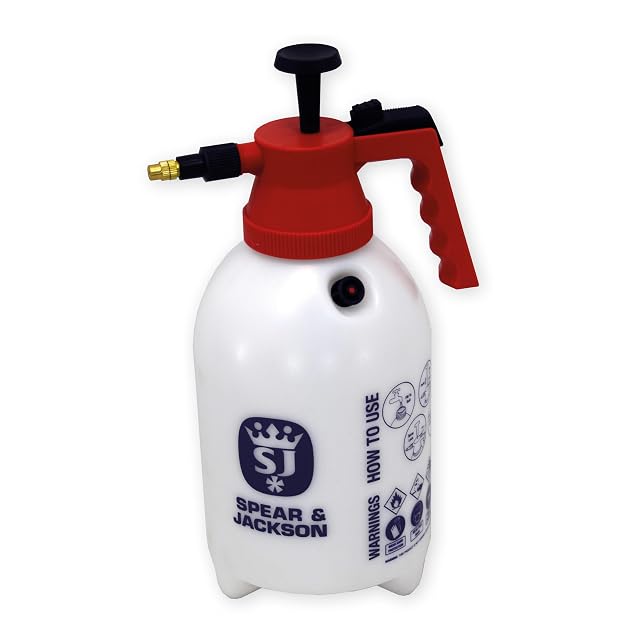
Two litres is a spot-treatment sprayer.
It is a few shrubs, a tray of seedlings, a patio’s worth of weeds between slabs,
the greenfly on a rose. It is not a lawn and it is not a hedge.
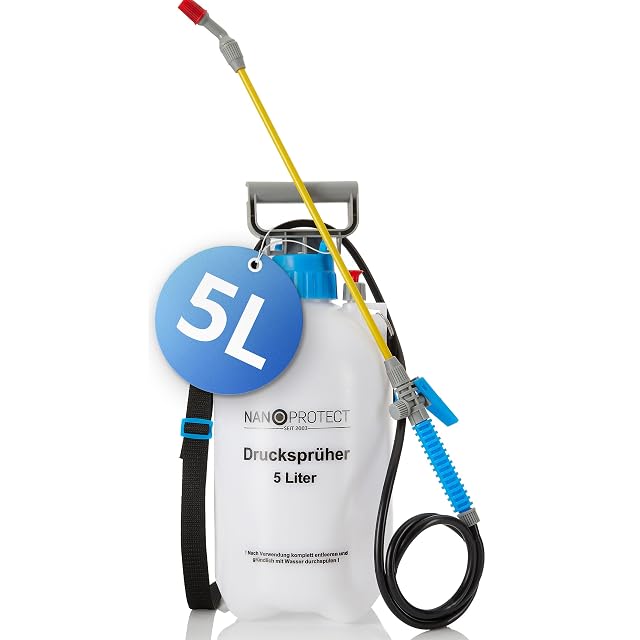
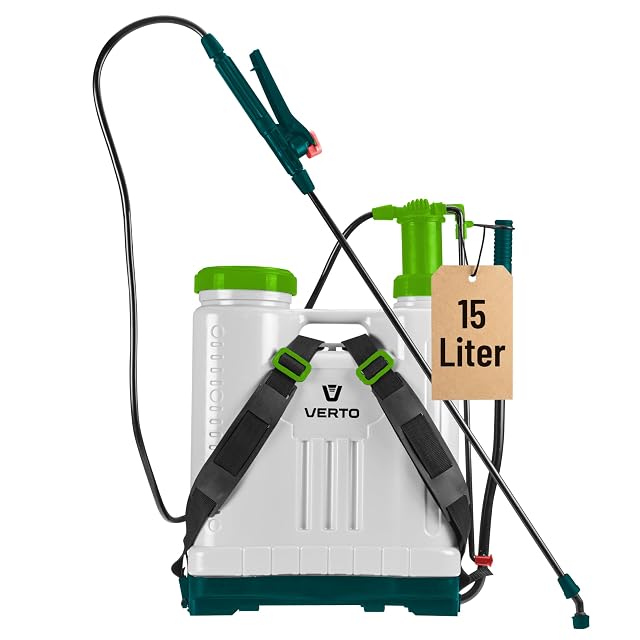
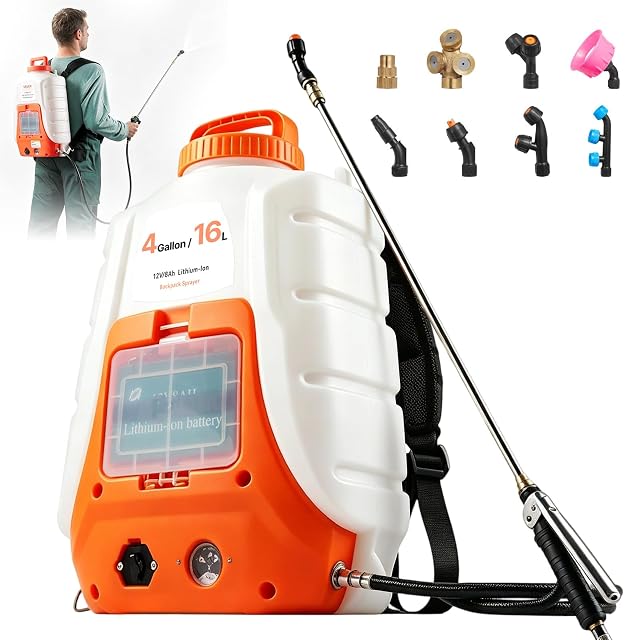
That matters on a shelf where capacity runs from 2 litres to 16, because the
number decides how many times you stop, unscrew, refill and re-pressurise.
Doing that four times is a job. Doing it twenty times is why the sprayer ends up
in the shed.
The brass nozzle
The reason this is the one to consider at the bottom of the shelf.
Two of the seven sprayers here have a brass nozzle. The rest are plastic or
unstated.
A nozzle orifice is a precisely sized hole, and the shape of the spray depends
entirely on it staying that size. What widens it is whatever passes through:
fertiliser salts, the fine grit in a diluted powder, an acid-based cleaner.
Plastic widens. A fine mist becomes a coarse spray, then a dribble, and the
usual conclusion is that the sprayer is worn out — when only one part is.
Brass also tolerates more of what people actually put in sprayers. One listing
on this shelf names vinegar, brake cleaner and stone impregnation among its
uses, and a plastic tip is not indifferent to any of those.
The graduated bottle
Marked in both litres and gallons.
This is more useful than it sounds, because it changes where mixing happens.
Garden chemicals are dosed by dilution — so many millilitres per litre of water
— and without markings on the sprayer you mix in a jug, in a bucket, or you
guess. Guessing with a herbicide is how a lawn ends up with brown stripes, and
guessing with a feed is how leaves get scorched.
Markings on the bottle mean you fill to the line, add the dose, and shake. One
vessel, no jug, no transfer.
Frost-proof, and it is the only one here that says so
Stated: designed to survive seasonal temperature swings.
That is worth having because of where sprayers live. They go in a shed or a
garage in October, with a few centimetres of something in the bottom, and they
freeze.
What breaks is usually the bottle — a split at the base seam — or the pump
cylinder. Neither is repairable on a sprayer at this price.
The claim is about the plastic rather than about the water inside it. Water
expands as it freezes and will split anything, so emptying it before winter
remains the rule. It just means a sprayer stored dry survives the cold.
What goes unpublished
No pressure.
That is the specification of a pressure sprayer, and four of the seven listings
on this shelf omit it. The three that give it say up to 3 bar, 2.5 to 3 bar, and
6.2 bar.
No flow rate either — one product on this shelf publishes one, and it is the
battery model.
And the habit nobody’s listing mentions
This listing names fertilisers, herbicides, pesticides, insecticides and
fungicides as its intended uses, which is normal for the category.
What none of them says is that those should not share a sprayer.
Herbicide residue stays in the bottle, in the hose, in the dip tube and in the
nozzle. Rinsing helps and does not clear it. A sprayer that has held weedkiller
and then holds a foliar feed will damage the plants it was meant to feed.
The answer is a second sprayer and a permanent marker. At the price of this one,
that is the cheapest insurance in the garden.
Availability
From 7 € to 9 €, that being the spread across the German, French, Italian and Spanish Amazon stores on the day of the survey.
Beyond the euro zone, the American and British Amazon stores price it in their own currencies, which the spread above sets aside.
Taken from Keepa on the day this page was last revised; stock and prices move without notice.
Prices quoted in this text were read on 26 September 2026. The live price is at the top of the page.