Skip to content

Woox R2603 vs SONOFF SWV-BSP

Do I need a hub to run a water timer from my phone?

Both of these are single-channel tap timers controlled from a phone, and neither has a rain sensor. The difference is the radio: one talks to your home Wi-Fi directly, the other needs a Zigbee hub you either own or must buy. And one of them can water by the litre rather than by the minute.

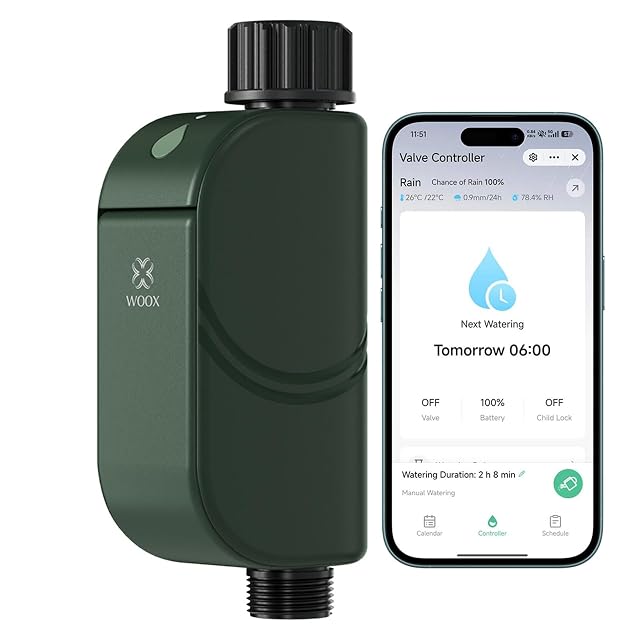
WOOX R2603 Wi-Fi water timer with IP65 housing and sealed battery compartment

Woox R2603

Wins 4 of 7

Check price

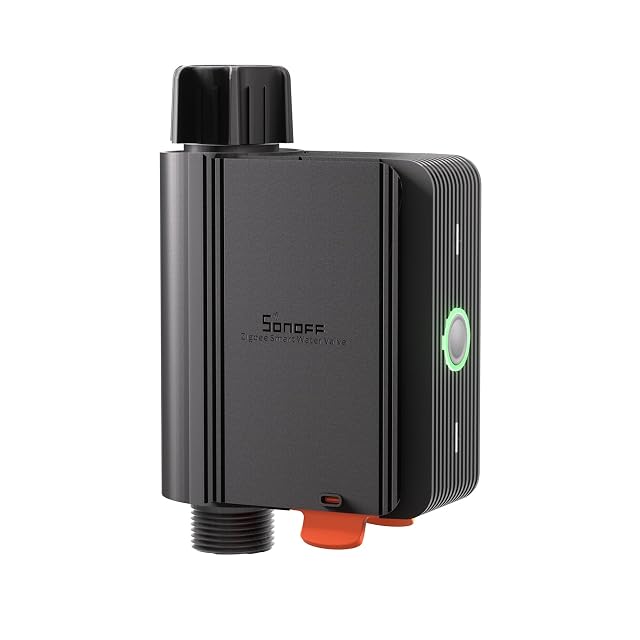
SONOFF SWV-BSP smart water valve for Zigbee networks

SONOFF SWV-BSP

Wins 1 of 7

Check price

Line by line

Compared on R2603 SWV-BSP
Channels 1 1
Radio 2.4 GHz Wi-Fi with no gateway Zigbee 3.0 — a hub is required, with compatible models named
Programmes Up to 20 independent schedules, plus cyclic soaking and manual Scheduled and quantitative watering — time and volume both settable
Rain handling No sensor — a 1 to 30 day rain delay set manually None
Power Standard batteries, stated to last several growing seasons; double-sealed compartment Not published
Voice assistants Alexa and Google Assistant Not published
Connection thread Not published Not published

A tick means one listing published something the other did not, or published a better figure. It does not mean the product is better, and the column is not a score out of anything: a maker who says less loses lines here without losing a comparison. The two verdicts below are where the page is settled.

Which one, for whom

Buy the Woox R2603

WOOX needs nothing but a Wi-Fi network, which for most gardens is the whole argument — a hub is another box, another power socket and another thing to fail. It also publishes what a timer on a tap actually needs: twenty schedules, a manually set rain delay of up to a month, and a sealed battery compartment, because the commonest way one of these dies is water in the batteries.

Buy the SONOFF SWV-BSP

SONOFF can water by volume as well as by time, and that is the more precise instruction. A bed needs a quantity of water rather than a duration, and a timer that counts litres delivers the same amount whether the mains pressure is high at dawn or low in the evening — which a minutes-based schedule does not.

What this pairing usually raises next

Is Wi-Fi or Zigbee better for a tap timer?

Wi-Fi needs no extra hardware and reaches only as far as your router does — and a tap at the end of a garden is often exactly where the signal stops. Zigbee is low-power and forms a mesh, so it reaches further with hops, and it requires a hub. One of these publishes which compatible hubs it accepts.

Does a rain delay replace a rain sensor?

No. A rain delay is you deciding not to water, from a phone, up to a month ahead. A sensor decides on its own. Neither of these has a sensor, and only one publishes a delay function — which is the honest version of the feature rather than an automatic one.

Why does the battery compartment matter?

Because a tap timer lives outdoors on a tap, in the rain, all season. Water reaching the batteries corrodes the contacts and the unit stops mid-schedule, usually while nobody is there. A double-sealed compartment is the single most relevant durability claim a tap timer can make, and one of these makes it.

The full reviews

  • Woox R2603

    2.4 GHz Wi-Fi, no hub, IP65, 20 schedules, 1–30 day rain delay

    Wi-Fi without a gateway, IP65 with double silicone seals, twenty schedules, a rain delay and offline alerts.

    Best for: A tap within Wi-Fi range, where the watering should be checkable from somewhere else

  • SONOFF SWV-BSP

    Zigbee 3.0, hub required, volume control, 6 months of history

    A Zigbee valve with quantitative watering and six months of history — and it needs a hub, which the listing says twice.

    Best for: A household that already runs a Zigbee hub and wants watering in the same automation as everything else

The live figure beside a product went and asked the shop for it the moment this page opened; any amount written into the text has not moved since the sentence was drafted, and it is the first of the two that counts.