The only glove on this shelf that does the thing gardens require
Thorn resistance.
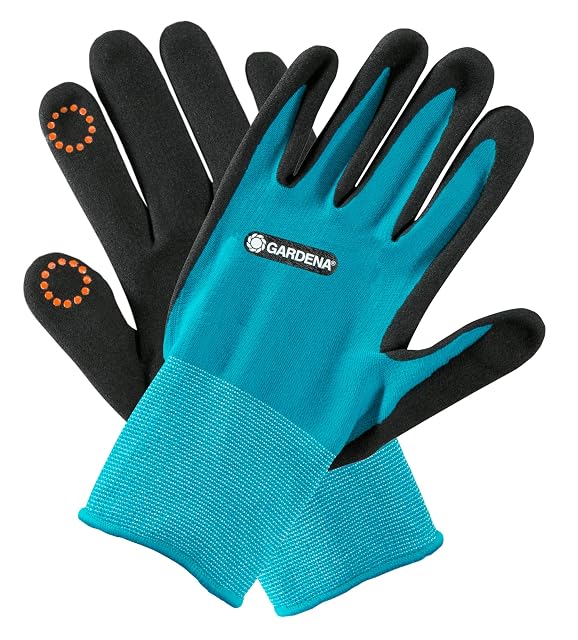
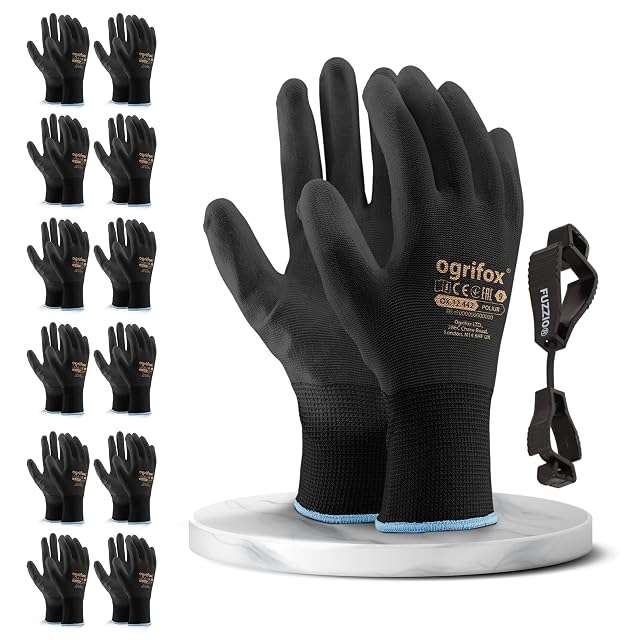
Six of the seven products in this family are coated knits — a knitted liner with a
rubber or plastic film dipped onto the palm. They are comfortable, dexterous, breathable and
cheap, and they offer no puncture protection at all.
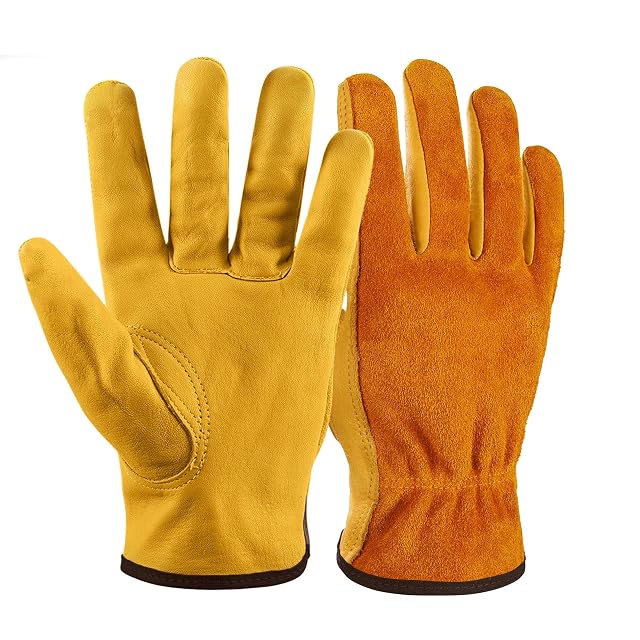
This is leather.
Why a coated knit cannot stop a thorn
It is worth setting out mechanically, because the gloves feel substantial and it is
counter-intuitive.
A knit is loops of yarn with gaps between them. The coating is a thin flexible film
sitting on top of it — thin on purpose, because thickness is what destroys dexterity.
A thorn is a rigid point a fraction of a millimetre across. It does not have to cut
anything: it pushes between the loops, stretching the coating film until it parts, and
then it is in your finger.
Leather is different in kind. It is the dense fibrous structure of an animal’s skin,
with collagen fibres interwoven in three dimensions. There are no gaps to push between, so a
thorn has to cut its way through — and against a grain cowhide palm, most garden thorns
do not.
Which matters because of what gardens actually contain
Roses. The single most common reason a gardener bleeds. Pruning a mature rose means
reaching into the middle of it.
Brambles. Recurved thorns that hook on the way out as well as in.
Blackthorn. The worst of them: long, hard spines that snap off under the skin and can
cause a persistent inflammation.
Holly, berberis, pyracantha, hawthorn. All of them routine in a hedge.
And beyond thorns: splinters from a wooden stake, the cut edge of a steel edging strip
— three products on this site’s lawn edging shelf supply gloves for exactly that reason —
and the abrasion of moving paving or stone.
Against every one of those, this is the only glove on this shelf that helps.
Grain and split leather, both named
“Made of high-quality grain cowhide, which is light and breathable… made of hard-wearing
cowhide split leather and cowhide, to keep your hands cool and dry and to offer higher
abrasion and puncture resistance.”
Two leathers, and the distinction is real.
Grain leather is the outer surface of the hide — the side the hair was on. It is the
densest, strongest part, with the fibre structure tightly packed, and it is what gives
puncture and abrasion resistance.
Split leather is the fibrous underlayer, separated off when the hide is split to
thickness. It is softer, more flexible and more breathable, and it is weaker.
Naming both normally means grain where protection is needed — the palm and the
fingertips — and split where flexibility matters, on the back and between the fingers.
That is the correct way to build a work glove, and this is the only listing on this shelf
that says anything about its material structure at all.
Solid seams is the third relevant claim. A leather glove fails at its stitching long
before the leather gives up, and the thread has to be as abrasion-resistant as the hide.
Fleece lined, which changes when it can be used
Named, and it is the one feature that extends the season.
A coated knit glove in February is a cold wet glove. The knit soaks up water, the nitrile
or latex palm conducts heat straight out of your hand, and there is no insulation anywhere in
it.
A fleece-lined leather glove is warm. Which matters because the jobs this glove is for —
rose pruning, bramble clearing, hedge work — are winter jobs. Roses are pruned in late
winter; brambles are cleared when everything else is dormant.
So the material and the lining point at the same season, which is coherent design rather
than a feature added on.
What it gives up, plainly
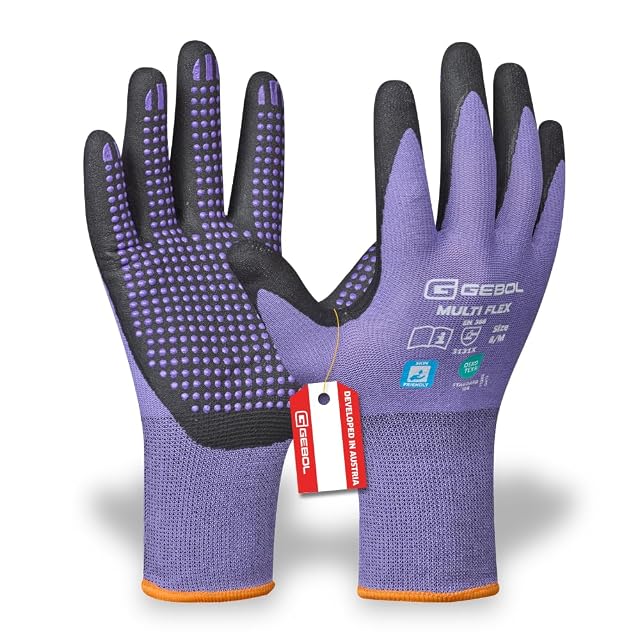
Dexterity. This is not a glove for sowing seed, pricking out or handling seedlings.
Leather with a fleece lining is thick, and you cannot feel a seed through it. One glove on
this shelf is built for exactly the opposite — a seamless fine knit with a dotted nitrile
palm, for delicate work.
Washability. A coated knit survives a cool machine wash, and one listing on this shelf
says so. Leather does not. It can be brushed off and wiped, and that is all.
And it must not be dried fast. Leather soaked through and then dried on a radiator or in
a hot car goes hard, permanently — the collagen fibres set. Hardened leather then
cracks at the knuckles, which is where the glove fails.
Dry it slowly, at room temperature, away from heat. Nothing on this shelf says so.
The price, in context
About 9.99 € for one pair — the most expensive pair on this shelf.
Across the family, per pair: 0.92 € (twelve-pack, polyurethane), 1.17 € (twelve-pack,
latex, the only EN 388 citation here), 1.90 € (ten-pack, latex), 2.33 € (three-pack,
latex, washable), 4.59 € (single pair, nitrile, women’s fit), 7.99 € (single pair,
nitrile, touchscreen), and this 9.99 €.
A factor of nearly eleven.
And the honest conclusion is not that one of them is better value. It is that a garden
needs two kinds of glove:
A box of cheap coated knits for everything ordinary — weeding, potting, raking, moving
compost, handling tools — replaced or washed when they are filthy.
One pair of leather gloves that live on a hook and come out for the rose bed and the
bramble patch.
Buying only the first is how people get thorns in their hands. Buying only the second is how
they end up gardening in gloves they cannot feel anything through.
What goes unpublished
No standard and no rating.
The listing claims “highest abrasion and puncture resistance” and cites nothing.
EN 388 is the European standard for gloves protecting against mechanical risks, and it
produces a four-character code: resistance to abrasion, blade cut, tear and
puncture, each scored on a scale.
That is exactly the claim this listing is making in words, and the standard exists to
express it in numbers. One glove on this shelf cites EN 388 — and even that one cites the
standard without the digits.
On the one product here whose entire purpose is puncture resistance, a puncture rating is
what would prove it.
Availability
From 10 € to 13 €, that being the spread across the German, French, Italian and Spanish Amazon stores on the day of the survey.
Beyond the euro zone, the British Amazon store prices it in its own currency, which the spread above sets aside.
Nothing came back from the American Amazon store at all; the buy button there runs a search rather than opening an empty page.
Taken from Keepa on the day this page was last revised; stock and prices move without notice.
Prices quoted in this text were read on 26 September 2026. The live price is at the top of the page.