What it claims, and what would be needed to check it
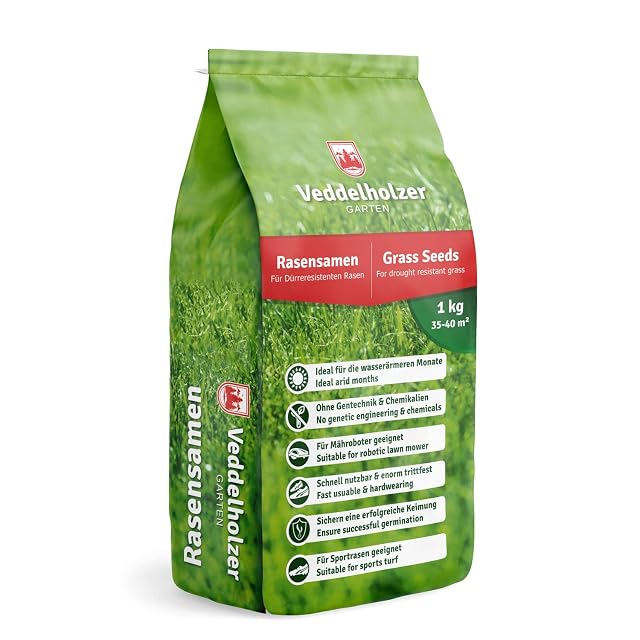
Drought-resistant. Shade-tolerant. Predominantly fast-germinating.
Hard-wearing. Suitable for sport and play. Suitable for robot mowers.
Six claims, and no species named.
One bag on this shelf publishes its mix — 90 % perennial ryegrass and 10 %
smooth-stalked meadow grass — and that single line makes every claim on that
packet checkable. This one cannot be checked at all.
And two of these claims sit awkwardly together
Fast germination in a lawn mix means perennial ryegrass. Nothing else in
common use comes up in days, and it is what almost every “fast” mix is mostly
made of.
Drought tolerance in a lawn means fescues — fine-leaved grasses that root
deeply and go dormant rather than dying. They are slow to establish, several
weeks rather than several days.
A mix that was genuinely drought-tolerant would be fescue-heavy, and therefore
not fast. A mix that is fast is ryegrass-heavy, and therefore not
drought-tolerant.
Both are possible in one bag, at a ratio. That ratio is precisely what is not
published.
This page states the tension rather than resolving it, because nothing in the
listing resolves it either.
Dry shade, which is worth saying something true about
The listing names shade caused by trees.
That is the hardest place on any lawn, and it is worth understanding why before
buying seed for it.
A tree takes light and it takes water, and it takes the water first. The
soil under a mature tree canopy is dry even after rain, because the canopy
intercepts the rain and the roots take what gets through.
So grass under a tree is fighting drought and shade at once, in root competition
with something vastly larger.
No seed mix fixes that. What helps is a shade mix sown thickly, a higher
cut so the grass has more leaf to work with, and accepting thinner grass than
elsewhere on the lawn. Sowing a fast ryegrass mix under a tree produces a flush
of green that fails by August.
The rate, which can at least be calculated
1 kg for 35 to 40 m², which is about 25 to 29 g/m².
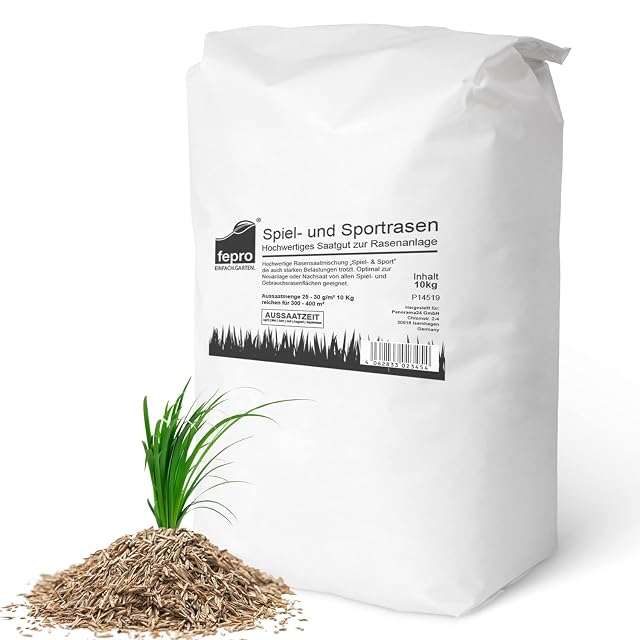
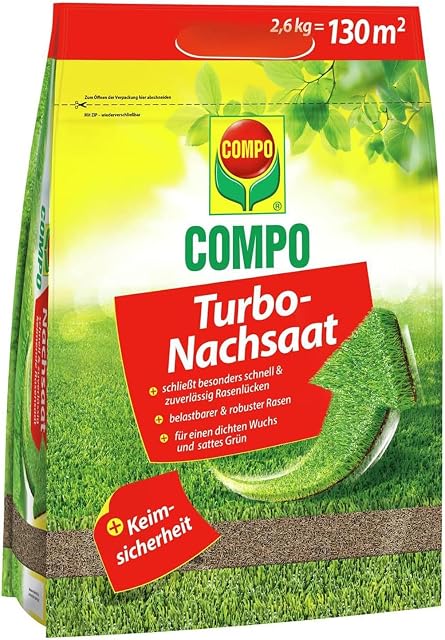
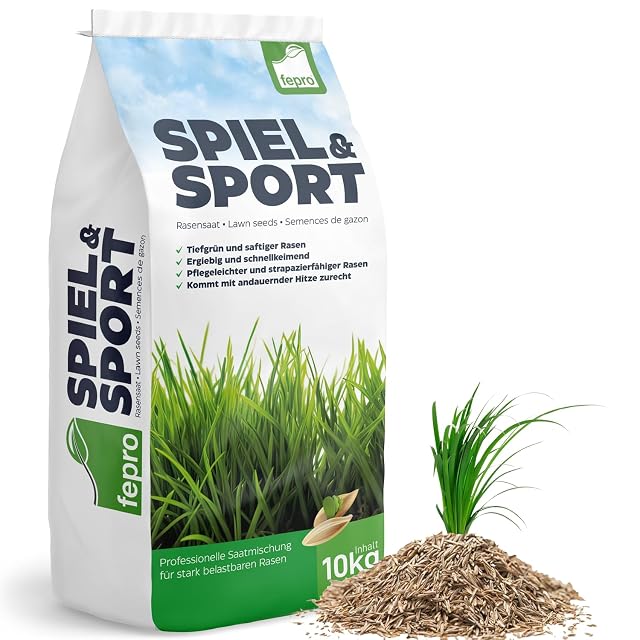
Across this shelf the published rates are 20, 25, 25, 25 to 29, and 25 to 30
g/m². So this sits at the upper end, and a range rather than a single number is
the more honest form — seed rate depends on whether you are starting bare soil or
overseeding existing grass.
For a new lawn, sow at the top of the range: there is no competition and the
whole cover comes from this bag.
For overseeding, the top of the range is usually wasted. Seed that lands on
existing turf rather than on soil does not germinate, and more seed does not
change that — what changes it is scarifying first, so the seed reaches ground.
The cross-reference to a spreader
The listing names spreaders from two specific brands as suitable for sowing it.
That is an unusually practical note, and this site’s spreader shelf explains why
it matters: seed is fine, light and slippery, and it flows through a gap that a
coarse fertiliser granule would bridge across.
A spreader set for fertiliser dumps seed. One spreader on that shelf maps its
settings explicitly — levels 1 to 3 for fine seed, 4 to 6 for fertiliser — and it
is the only one that acknowledges the difference.
If the seed is going out by spreader rather than by hand, that setting is the
thing to get right.
About 12.70 € per kilo
Across this shelf the range is roughly 4.40 € to 15.87 € per kilo, and
0.11 € to 0.40 € per square metre.
At about 0.32 € per square metre this is in the upper half — cheaper per gram
than the smallest bag here and nearly three times the price of the 10 kg sacks.
For a kilogram used on bare patches that is the right way round. For a whole
lawn it is not.
What goes unpublished
No species. No germination temperature. No sowing window.
Three bags on this shelf publish a soil temperature — 8 °C once and 10 °C twice —
and it is the only reliable green light in the calendar. Below it, seed sits in
the ground and waits, and a bag sown too early is a bag eaten by birds.
Availability
Around 13 €, read at the German Amazon store on the day of the survey.
More than 1.6× the cheapest country at the Italian Amazon store; a gap of that size normally means forwarded stock rather than a seller on the ground, so the spread above leaves it out.
Listed and unsold: the British, French and Spanish Amazon catalogues hold the reference with nobody behind it.
Nothing came back from the American Amazon store at all; the buy button there runs a search rather than opening an empty page.
Taken from Keepa on the day this page was last revised; stock and prices move without notice.
Prices quoted in this text were read on 26 September 2026. The live price is at the top of the page.