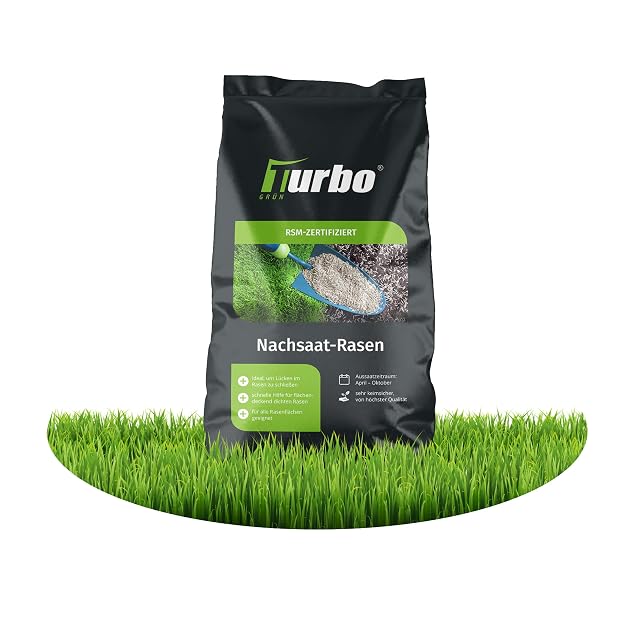
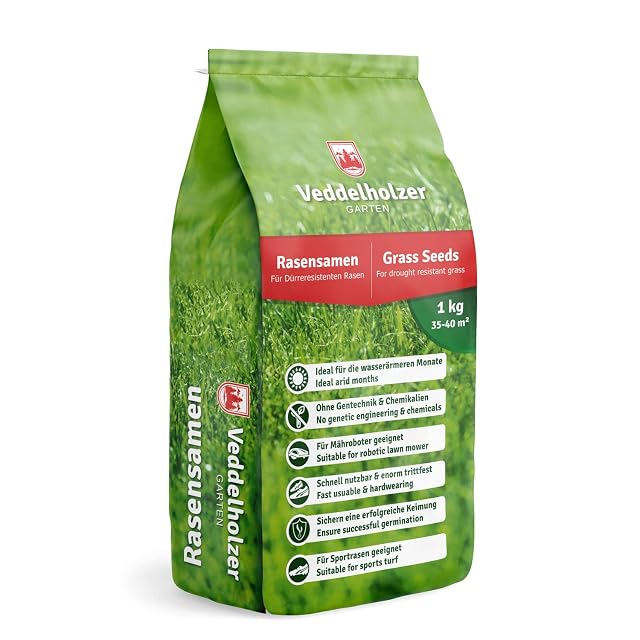
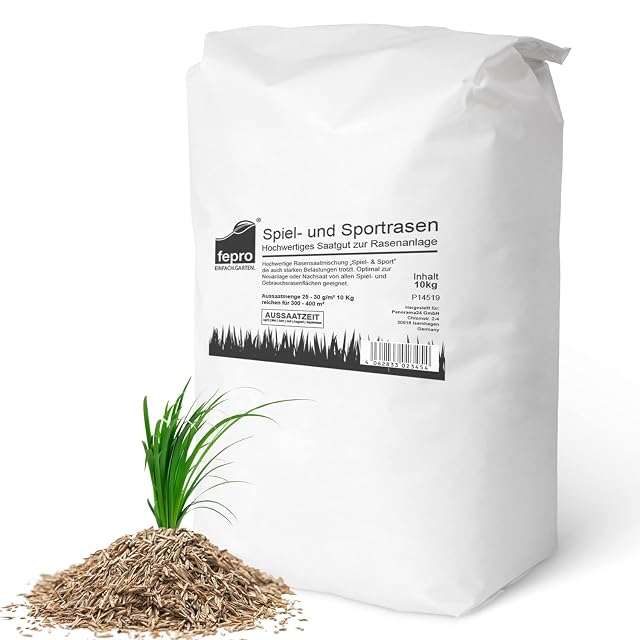
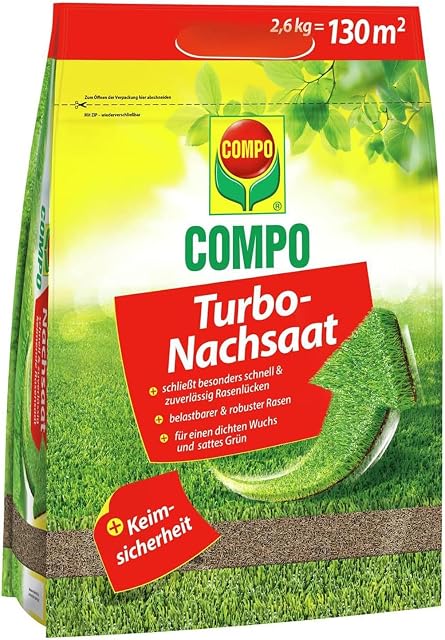
The only external standard on this shelf
“The seed corresponds to the Regel-Saatgut-Mischung.”
Every other claim in this family is the manufacturer’s own: premium, number one
in Germany, five out of five awarded by the seller to itself, proven quality.
RSM is different in kind. It is a published specification, maintained outside
any one company, that says which grass species — and which named cultivars of
those species — may go into a mixture for a stated purpose, and in what
proportions.
A mix that complies is a mix whose composition is constrained by something the
seller does not control. On a shelf of adjectives, that is the only claim with a
document behind it.
And the reason it is still half a claim
There is not one RSM. There are many.
There is an RSM for a hard-wearing utility lawn, one for an ornamental lawn, one
for shade, one for sports pitches, one for embankments and roadsides. They contain
different species in different proportions, and that is the whole point of the
scheme.
So “corresponds to the RSM” tells you the seed comes from within a quality system.
It does not tell you which mixture, and therefore it does not tell you what is in
the bag.
One product on this shelf simply lists its species — 90 % perennial ryegrass and
10 % smooth-stalked meadow grass — and that plain sentence is more useful than a
scheme name without a number.
The weight, which is absent
“For 50 m².”
And no kilograms, anywhere in the listing.
Two consequences, and both are the figures this shelf is compared on.
The price per kilo cannot be calculated. Across this family it runs from about
4.40 € to 15.87 € — a factor of 3.6 — and this product cannot be placed on that
scale at all.
The sowing rate cannot be calculated. The other bags here work out at 20, 25,
25, 25 to 29 and 25 to 30 g/m², and the rate is what tells you whether 50 m² is a
generous coverage or a thin one.
What can be worked out is the area price: about 0.40 € per square metre,
which is the joint highest on this shelf. Across the family it runs from 0.11 €.
Eight degrees
The lowest germination temperature published here, against 10 °C from two other
bags.
That difference is small on paper and large in a spring. Soil warms slowly and
unevenly, and the gap between 8 °C and 10 °C is often two or three weeks in
March — which is why this figure is the most practical number in the listing.
What happens below the threshold is the reason it matters. Seed sown into cold
ground does not germinate, it waits. While it waits it is available to birds, it
can rot in wet soil, and the bare patch it was meant to close stays open for weeds
instead.
The honest version of the advice: buy a soil thermometer or use the standard
proxy — grass that has started growing and needs its first cut is soil warm enough
to sow into.
Fourteen days
A number, where most of this shelf says “fast”.
Two weeks to first visible results is a realistic figure for a mix with ryegrass
in it, and it is worth knowing because it sets expectations for the fortnight
after sowing, which is the fortnight when people conclude the seed has failed.
The thing that actually decides it is moisture. Germinating seed must not dry
out, not once, and a seedbed that dries at midday on day four kills the seed that
had already started. Fourteen days means fourteen days of keeping the surface
damp.
Overseeding, and the step that makes it work
The listing is sold as an overseeding mix and names the right moments:
after scarifying, after aerating, and with a little topsoil on the bare patches.
That is correct and it is worth being blunt about why.
Seed needs to touch soil. Seed scattered on top of existing turf lands on
leaves, sits in the thatch layer, and never reaches ground — and no quantity of
seed changes that.
So overseeding is really a soil-contact job: scarify to open the surface, sow,
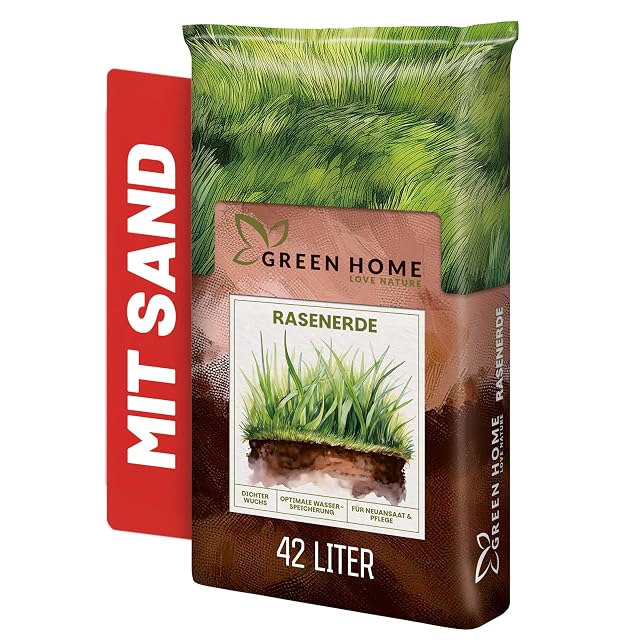
then rake or top-dress lightly so the seed is covered. This site’s aerator shelf
and its lawn soil shelf carry the tools and the dressing for exactly that
sequence.
Availability
From 20 € to 30 €, that being the spread across the German and French Amazon stores on the day of the survey.
Listed and unsold: the British, Italian and Spanish Amazon catalogues hold the reference with nobody behind it.
Nothing came back from the American Amazon store at all; the buy button there runs a search rather than opening an empty page.
Taken from Keepa on the day this page was last revised; stock and prices move without notice.
Prices quoted in this text were read on 26 September 2026. The live price is at the top of the page.